

102
P. Liu
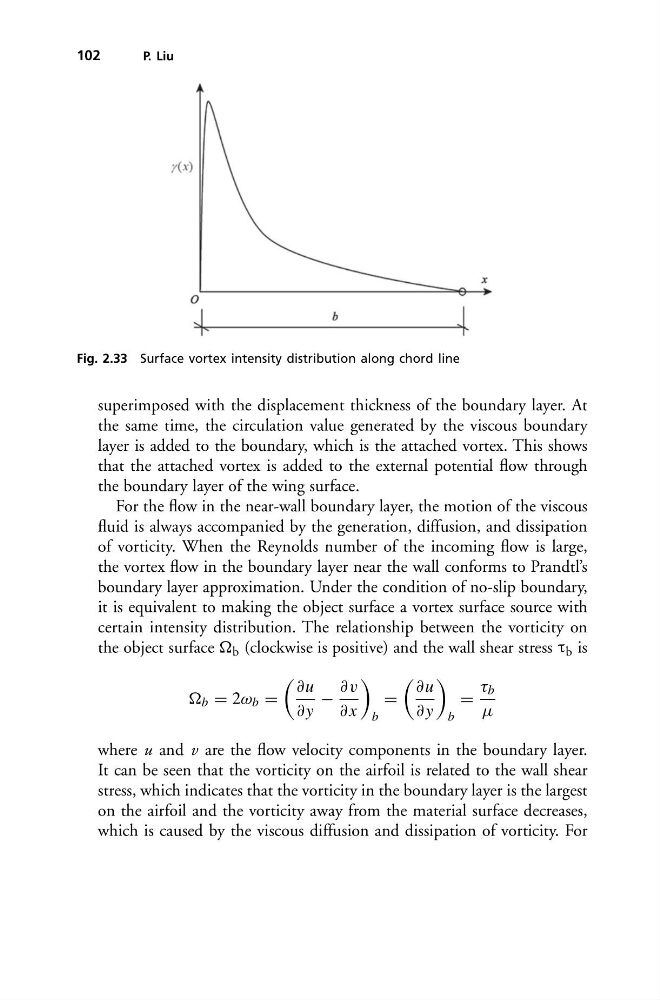
Fig. 2.33 Surface vortex intensity distribution along chord line
superimposed with the displacement thickness of the boundary layer. At
the same time, the circulation value generated by the viscous boundary
layer is added to the boundary, which is the attached vortex. This shows
that the attached vortex is added to the external potential flow through
the boundary layer of the wing surface.
For the flow in the near-wall boundary layer, the motion of the viscous
fluid is always accompanied by the generation, diffusion, and dissipation
of vorticity. When the Reynolds number of the incoming flow is large,
the vortex flow in the boundary layer near the wall conforms to Prandtl’s
boundary layer approximation. Under the condition of no-slip boundary,
it is equivalent to making the object surface a vortex surface source with
certain intensity distribution. The relationship between the vorticity on
the object surface b (clockwise is positive) and the wall shear stress τ b is
b = 2ω b =
∂u
∂ y
−
∂v
∂ x
b
=
∂u
∂ y
b
=
τ b
μ
where u and v are the flow velocity components in the boundary layer.
It can be seen that the vorticity on the airfoil is related to the wall shear
stress, which indicates that the vorticity in the boundary layer is the largest
on the airfoil and the vorticity away from the material surface decreases,
which is caused by the viscous diffusion and dissipation of vorticity. For
P. Liu
Fig. 2.33 Surface vortex intensity distribution along chord line
superimposed with the displacement thickness of the boundary layer. At
the same time, the circulation value generated by the viscous boundary
layer is added to the boundary, which is the attached vortex. This shows
that the attached vortex is added to the external potential flow through
the boundary layer of the wing surface.
For the flow in the near-wall boundary layer, the motion of the viscous
fluid is always accompanied by the generation, diffusion, and dissipation
of vorticity. When the Reynolds number of the incoming flow is large,
the vortex flow in the boundary layer near the wall conforms to Prandtl’s
boundary layer approximation. Under the condition of no-slip boundary,
it is equivalent to making the object surface a vortex surface source with
certain intensity distribution. The relationship between the vorticity on
the object surface b (clockwise is positive) and the wall shear stress τ b is
b = 2ω b =
∂u
∂ y
−
∂v
∂ x
b
=
∂u
∂ y
b
=
τ b
μ
where u and v are the flow velocity components in the boundary layer.
It can be seen that the vorticity on the airfoil is related to the wall shear
stress, which indicates that the vorticity in the boundary layer is the largest
on the airfoil and the vorticity away from the material surface decreases,
which is caused by the viscous diffusion and dissipation of vorticity. For