

gas sensing application (Tai et al. 2008). It was also reported that the polyaniline–
titanium dioxide nanocomposite was found to show the superior sensor for ammonia
vapor over carbon monoxide (Tai et al. 2007). The SWNT functionalized with
polyaniline nanocomposite network were found to have superior sensitivity of
2.44% resistance change per ppmv ammonia, and the performance was more than
60 times higher than intrinsic SWNT-based sensors with low detection of 50 ppbv as
well as good reproducibility (Zhang et al. 2006). The highly porous nanocomposite
of polypyrrole-coated titanium dioxide–zinc oxide nanofibrous mat exhibited a fast
response over a wide dynamic range of ammonia vapor with a detection limit of
60 ppb (Wang et al. 2009). The stable and reproducible ammonia vapor sensor with
average sensitivity of 86.75Æ2.9% has been reported using poly(m-aminophenol)–
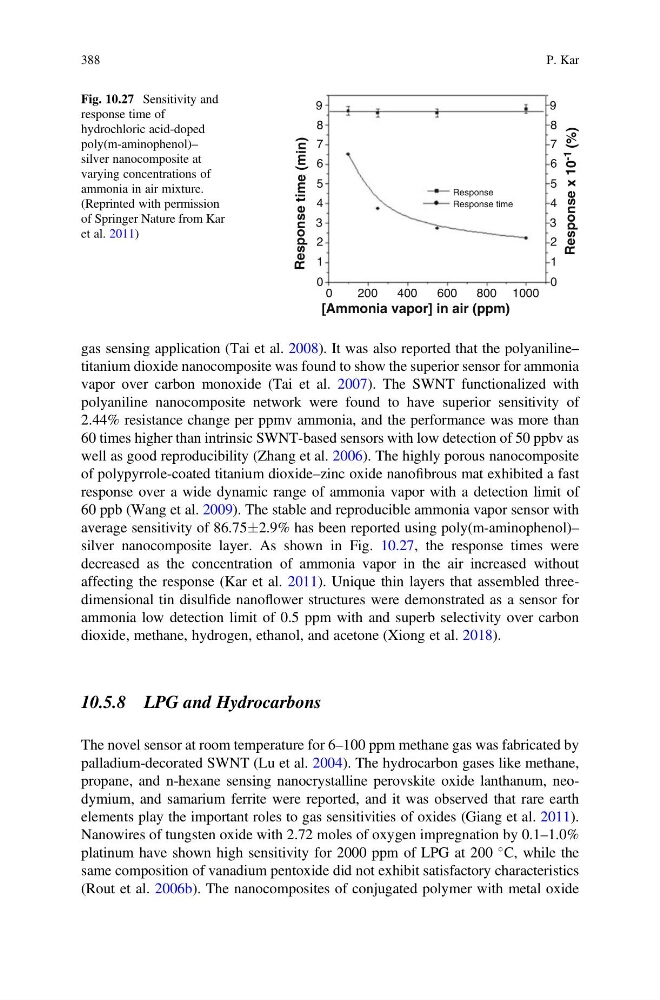
silver nanocomposite layer. As shown in Fig. 10.27, the response times were
decreased as the concentration of ammonia vapor in the air increased without
affecting the response (Kar et al. 2011). Unique thin layers that assembled threedimensional tin disulfide nanoflower structures were demonstrated as a sensor for
ammonia low detection limit of 0.5 ppm with and superb selectivity over carbon
dioxide, methane, hydrogen, ethanol, and acetone (Xiong et al. 2018).
10.5.8 LPG and Hydrocarbons
The novel sensor at room temperature for 6–100 ppm methane gas was fabricated by
palladium-decorated SWNT (Lu et al. 2004). The hydrocarbon gases like methane,
propane, and n-hexane sensing nanocrystalline perovskite oxide lanthanum, neodymium, and samarium ferrite were reported, and it was observed that rare earth
elements play the important roles to gas sensitivities of oxides (Giang et al. 2011).
Nanowires of tungsten oxide with 2.72 moles of oxygen impregnation by 0.1–1.0%
platinum have shown high sensitivity for 2000 ppm of LPG at 200
C, while the
same composition of vanadium pentoxide did not exhibit satisfactory characteristics
(Rout et al. 2006b). The nanocomposites of conjugated polymer with metal oxide
9
8
7
6
5
4
3
2
1
0
9
8
7
6
5
4
3
2
1
0
0
200
400
600
800 1000
Response
Response time
[Ammonia vapor] in air (ppm)
Response time (min)
Response x 10
-1 (%)
Fig. 10.27 Sensitivity and
response time of
hydrochloric acid-doped
poly(m-aminophenol)–
silver nanocomposite at
varying concentrations of
ammonia in air mixture.
(Reprinted with permission
of Springer Nature from Kar
et al. 2011)
388
P. Kar
titanium dioxide nanocomposite was found to show the superior sensor for ammonia
vapor over carbon monoxide (Tai et al. 2007). The SWNT functionalized with
polyaniline nanocomposite network were found to have superior sensitivity of
2.44% resistance change per ppmv ammonia, and the performance was more than
60 times higher than intrinsic SWNT-based sensors with low detection of 50 ppbv as
well as good reproducibility (Zhang et al. 2006). The highly porous nanocomposite
of polypyrrole-coated titanium dioxide–zinc oxide nanofibrous mat exhibited a fast
response over a wide dynamic range of ammonia vapor with a detection limit of
60 ppb (Wang et al. 2009). The stable and reproducible ammonia vapor sensor with
average sensitivity of 86.75Æ2.9% has been reported using poly(m-aminophenol)–
silver nanocomposite layer. As shown in Fig. 10.27, the response times were
decreased as the concentration of ammonia vapor in the air increased without
affecting the response (Kar et al. 2011). Unique thin layers that assembled threedimensional tin disulfide nanoflower structures were demonstrated as a sensor for
ammonia low detection limit of 0.5 ppm with and superb selectivity over carbon
dioxide, methane, hydrogen, ethanol, and acetone (Xiong et al. 2018).
10.5.8 LPG and Hydrocarbons
The novel sensor at room temperature for 6–100 ppm methane gas was fabricated by
palladium-decorated SWNT (Lu et al. 2004). The hydrocarbon gases like methane,
propane, and n-hexane sensing nanocrystalline perovskite oxide lanthanum, neodymium, and samarium ferrite were reported, and it was observed that rare earth
elements play the important roles to gas sensitivities of oxides (Giang et al. 2011).
Nanowires of tungsten oxide with 2.72 moles of oxygen impregnation by 0.1–1.0%
platinum have shown high sensitivity for 2000 ppm of LPG at 200
C, while the
same composition of vanadium pentoxide did not exhibit satisfactory characteristics
(Rout et al. 2006b). The nanocomposites of conjugated polymer with metal oxide
9
8
7
6
5
4
3
2
1
0
9
8
7
6
5
4
3
2
1
0
0
200
400
600
800 1000
Response
Response time
[Ammonia vapor] in air (ppm)
Response time (min)
Response x 10
-1 (%)
Fig. 10.27 Sensitivity and
response time of
hydrochloric acid-doped
poly(m-aminophenol)–
silver nanocomposite at
varying concentrations of
ammonia in air mixture.
(Reprinted with permission
of Springer Nature from Kar
et al. 2011)
388
P. Kar