

air quality in order to control the air pollution. In general, much attention has been
paid to address the outdoor air pollution issues. However, as a person spends average
90% time in a day within indoor environment, indoor pollution issues should be
given primary importance. It was not only recently that the international scientific
community worried about reducing the indoor air pollution as well. The list and
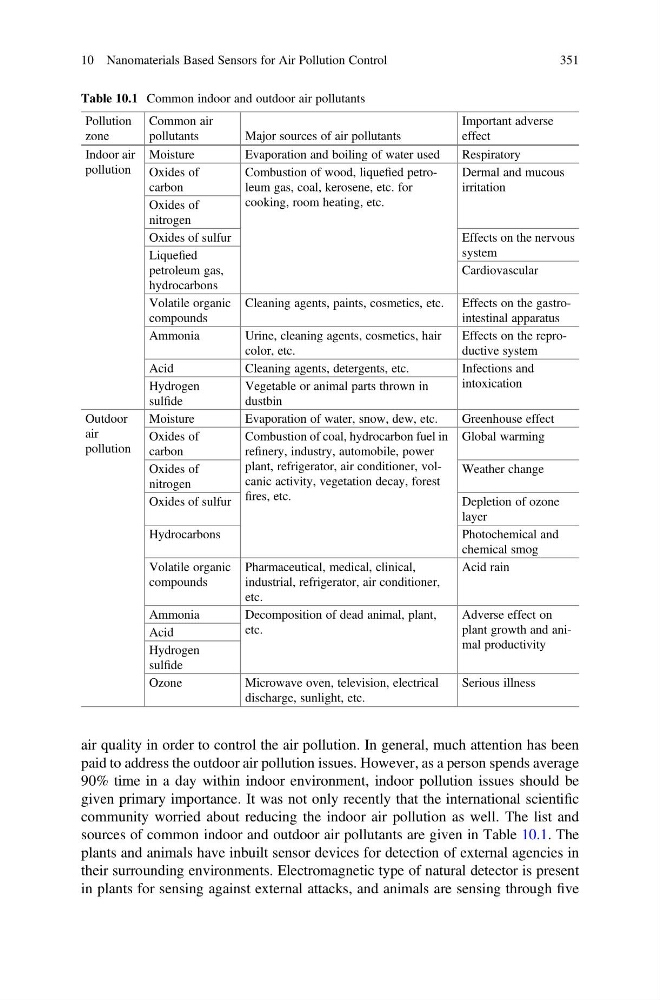
sources of common indoor and outdoor air pollutants are given in Table 10.1. The
plants and animals have inbuilt sensor devices for detection of external agencies in
their surrounding environments. Electromagnetic type of natural detector is present
in plants for sensing against external attacks, and animals are sensing through five
Table 10.1 Common indoor and outdoor air pollutants
Pollution
zone
Common air
pollutants
Major sources of air pollutants
Important adverse
effect
Indoor air
pollution
Moisture
Evaporation and boiling of water used
Respiratory
Oxides of
carbon
Combustion of wood, liquefied petroleum gas, coal, kerosene, etc. for
cooking, room heating, etc.
Dermal and mucous
irritation
Oxides of
nitrogen
Oxides of sulfur
Effects on the nervous
system
Liquefied
petroleum gas,
hydrocarbons
Cardiovascular
Volatile organic
compounds
Cleaning agents, paints, cosmetics, etc. Effects on the gastrointestinal apparatus
Ammonia
Urine, cleaning agents, cosmetics, hair
color, etc.
Effects on the reproductive system
Acid
Cleaning agents, detergents, etc.
Infections and
intoxication
Hydrogen
sulfide
Vegetable or animal parts thrown in
dustbin
Outdoor
air
pollution
Moisture
Evaporation of water, snow, dew, etc.
Greenhouse effect
Oxides of
carbon
Combustion of coal, hydrocarbon fuel in
refinery, industry, automobile, power
plant, refrigerator, air conditioner, volcanic activity, vegetation decay, forest
fires, etc.
Global warming
Oxides of
nitrogen
Weather change
Oxides of sulfur
Depletion of ozone
layer
Hydrocarbons
Photochemical and
chemical smog
Volatile organic
compounds
Pharmaceutical, medical, clinical,
industrial, refrigerator, air conditioner,
etc.
Acid rain
Ammonia
Decomposition of dead animal, plant,
etc.
Adverse effect on
plant growth and animal productivity
Acid
Hydrogen
sulfide
Ozone
Microwave oven, television, electrical
discharge, sunlight, etc.
Serious illness
10 Nanomaterials Based Sensors for Air Pollution Control
351
paid to address the outdoor air pollution issues. However, as a person spends average
90% time in a day within indoor environment, indoor pollution issues should be
given primary importance. It was not only recently that the international scientific
community worried about reducing the indoor air pollution as well. The list and
sources of common indoor and outdoor air pollutants are given in Table 10.1. The
plants and animals have inbuilt sensor devices for detection of external agencies in
their surrounding environments. Electromagnetic type of natural detector is present
in plants for sensing against external attacks, and animals are sensing through five
Table 10.1 Common indoor and outdoor air pollutants
Pollution
zone
Common air
pollutants
Major sources of air pollutants
Important adverse
effect
Indoor air
pollution
Moisture
Evaporation and boiling of water used
Respiratory
Oxides of
carbon
Combustion of wood, liquefied petroleum gas, coal, kerosene, etc. for
cooking, room heating, etc.
Dermal and mucous
irritation
Oxides of
nitrogen
Oxides of sulfur
Effects on the nervous
system
Liquefied
petroleum gas,
hydrocarbons
Cardiovascular
Volatile organic
compounds
Cleaning agents, paints, cosmetics, etc. Effects on the gastrointestinal apparatus
Ammonia
Urine, cleaning agents, cosmetics, hair
color, etc.
Effects on the reproductive system
Acid
Cleaning agents, detergents, etc.
Infections and
intoxication
Hydrogen
sulfide
Vegetable or animal parts thrown in
dustbin
Outdoor
air
pollution
Moisture
Evaporation of water, snow, dew, etc.
Greenhouse effect
Oxides of
carbon
Combustion of coal, hydrocarbon fuel in
refinery, industry, automobile, power
plant, refrigerator, air conditioner, volcanic activity, vegetation decay, forest
fires, etc.
Global warming
Oxides of
nitrogen
Weather change
Oxides of sulfur
Depletion of ozone
layer
Hydrocarbons
Photochemical and
chemical smog
Volatile organic
compounds
Pharmaceutical, medical, clinical,
industrial, refrigerator, air conditioner,
etc.
Acid rain
Ammonia
Decomposition of dead animal, plant,
etc.
Adverse effect on
plant growth and animal productivity
Acid
Hydrogen
sulfide
Ozone
Microwave oven, television, electrical
discharge, sunlight, etc.
Serious illness
10 Nanomaterials Based Sensors for Air Pollution Control
351