

altering gas or moisture permeability, nanoparticles can increase mechanical and high
temperature-resistant characteristics of food pack and consequently increase shelf life
span (Rashidi and Khosravi-Darani 2011). Scientists are trying to develop devices for
detection of very minute fractions of pathogens in food by exploiting unique attributes
of nanomaterials. Biosensors are used to identify target analytes through alteration in
biological reactions. Nanobiosensors may be applied for the detection and
identification of pathogens in processing plants and distributors according to food
safety standards (Cheng et al. 2006; Helmke and Minerick 2006). Rivas et al. (2006)
developed a nanofabricated electrochemical glucose biosensor for identification and
quantification of glucose in food items. Development of liposome nanovesicles has
helped to detect peanut protein causing allergy in chocolate (Wen et al. 2005). A gold
nanoparticle-coated quartz crystal microbalance-based DNA sensor has been
developed by Mao et al. (2006) for the detection of E. coli O157:H7 synthesized
oligonucleotides.
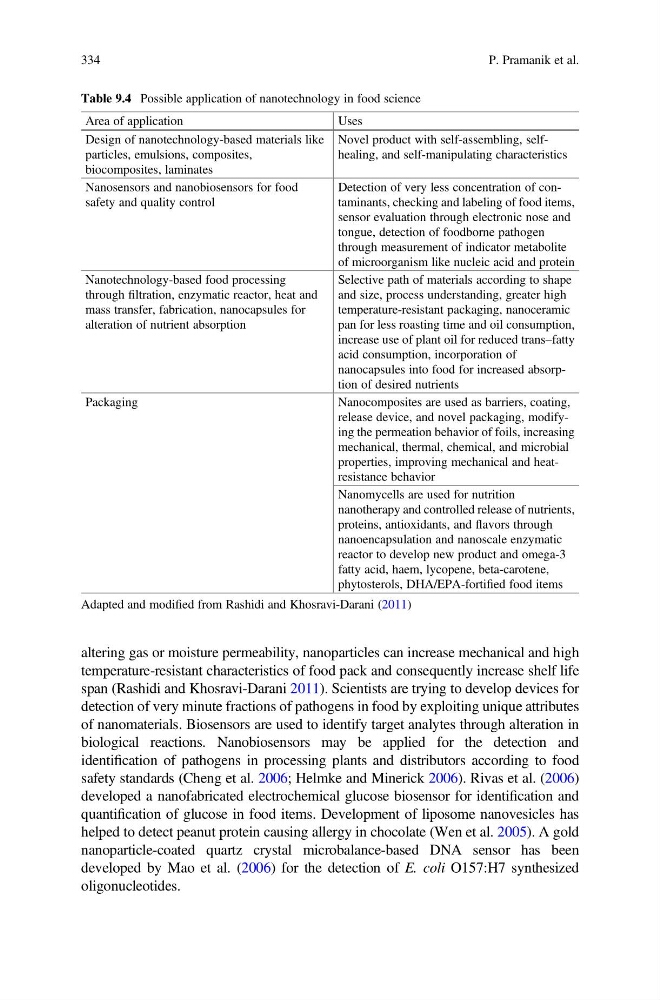
Table 9.4 Possible application of nanotechnology in food science
Area of application
Uses
Design of nanotechnology-based materials like
particles, emulsions, composites,
biocomposites, laminates
Novel product with self-assembling, selfhealing, and self-manipulating characteristics
Nanosensors and nanobiosensors for food
safety and quality control
Detection of very less concentration of contaminants, checking and labeling of food items,
sensor evaluation through electronic nose and
tongue, detection of foodborne pathogen
through measurement of indicator metabolite
of microorganism like nucleic acid and protein
Nanotechnology-based food processing
through filtration, enzymatic reactor, heat and
mass transfer, fabrication, nanocapsules for
alteration of nutrient absorption
Selective path of materials according to shape
and size, process understanding, greater high
temperature-resistant packaging, nanoceramic
pan for less roasting time and oil consumption,
increase use of plant oil for reduced trans–fatty
acid consumption, incorporation of
nanocapsules into food for increased absorption of desired nutrients
Packaging
Nanocomposites are used as barriers, coating,
release device, and novel packaging, modifying the permeation behavior of foils, increasing
mechanical, thermal, chemical, and microbial
properties, improving mechanical and heatresistance behavior
Nanomycells are used for nutrition
nanotherapy and controlled release of nutrients,
proteins, antioxidants, and flavors through
nanoencapsulation and nanoscale enzymatic
reactor to develop new product and omega-3
fatty acid, haem, lycopene, beta-carotene,
phytosterols, DHA/EPA-fortified food items
Adapted and modified from Rashidi and Khosravi-Darani (2011)
334
P. Pramanik et al.
temperature-resistant characteristics of food pack and consequently increase shelf life
span (Rashidi and Khosravi-Darani 2011). Scientists are trying to develop devices for
detection of very minute fractions of pathogens in food by exploiting unique attributes
of nanomaterials. Biosensors are used to identify target analytes through alteration in
biological reactions. Nanobiosensors may be applied for the detection and
identification of pathogens in processing plants and distributors according to food
safety standards (Cheng et al. 2006; Helmke and Minerick 2006). Rivas et al. (2006)
developed a nanofabricated electrochemical glucose biosensor for identification and
quantification of glucose in food items. Development of liposome nanovesicles has
helped to detect peanut protein causing allergy in chocolate (Wen et al. 2005). A gold
nanoparticle-coated quartz crystal microbalance-based DNA sensor has been
developed by Mao et al. (2006) for the detection of E. coli O157:H7 synthesized
oligonucleotides.
Table 9.4 Possible application of nanotechnology in food science
Area of application
Uses
Design of nanotechnology-based materials like
particles, emulsions, composites,
biocomposites, laminates
Novel product with self-assembling, selfhealing, and self-manipulating characteristics
Nanosensors and nanobiosensors for food
safety and quality control
Detection of very less concentration of contaminants, checking and labeling of food items,
sensor evaluation through electronic nose and
tongue, detection of foodborne pathogen
through measurement of indicator metabolite
of microorganism like nucleic acid and protein
Nanotechnology-based food processing
through filtration, enzymatic reactor, heat and
mass transfer, fabrication, nanocapsules for
alteration of nutrient absorption
Selective path of materials according to shape
and size, process understanding, greater high
temperature-resistant packaging, nanoceramic
pan for less roasting time and oil consumption,
increase use of plant oil for reduced trans–fatty
acid consumption, incorporation of
nanocapsules into food for increased absorption of desired nutrients
Packaging
Nanocomposites are used as barriers, coating,
release device, and novel packaging, modifying the permeation behavior of foils, increasing
mechanical, thermal, chemical, and microbial
properties, improving mechanical and heatresistance behavior
Nanomycells are used for nutrition
nanotherapy and controlled release of nutrients,
proteins, antioxidants, and flavors through
nanoencapsulation and nanoscale enzymatic
reactor to develop new product and omega-3
fatty acid, haem, lycopene, beta-carotene,
phytosterols, DHA/EPA-fortified food items
Adapted and modified from Rashidi and Khosravi-Darani (2011)
334
P. Pramanik et al.