

Research on encapsulation of active compounds like vitamins, antimicrobials,
minerals, drugs, probiotic microorganisms, drugs, and micronutrients with
nanomaterial is necessary (Chen et al. 2006; Hsieh and Ofori 2007). Encapsulation
is done in food science to veneer aromas or flavors, control interactions and release of
active ingredients, confirm accessibility in target at precise rate, and defend them from
moistness, heat (Ubbink and Kruger 2006), and chemical and biological deterioration
gradation in the course of processing, packaging storage, and distribution (Weiss et al.
2006). Large varieties of delivery methods like emulsions, biopolymer matrices,
simple solutions, and association colloids have been industrialized to preserve active
compounds for extended time periods (Jelinski 2002). The delivery systems efficiency
can be amplified by dendrimer, a unique group of polymer-coated nanoparticles. Fixed
and extremely branched three-dimensional organized dendrimers can be used as
sensors and catalysts, in drug delivery and in gene therapy (Hughes 2005). It is
nontoxic, nonimmunogenetic, and biodegradable (Khosravi-Darani et al. 2007;
Aulenta et al. 2003). Multilayered structured cochleates are very small in size and
can be used to capture various bioactive constituents with less water solubility, protein
and peptide, drugs, and large hydrophilic molecules (Gould-Fogerite et al. 2007). By
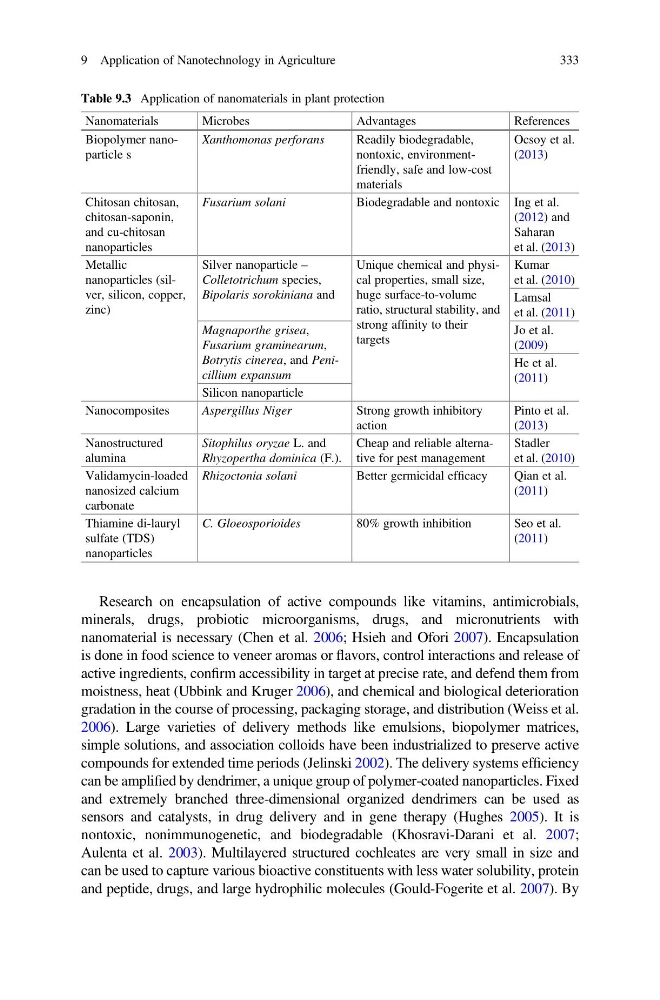
Table 9.3 Application of nanomaterials in plant protection
Nanomaterials
Microbes
Advantages
References
Biopolymer nanoparticle s
Xanthomonas perforans
Readily biodegradable,
nontoxic, environmentfriendly, safe and low-cost
materials
Ocsoy et al.
(2013)
Chitosan chitosan,
chitosan-saponin,
and cu-chitosan
nanoparticles
Fusarium solani
Biodegradable and nontoxic Ing et al.
(2012) and
Saharan
et al. (2013)
Metallic
nanoparticles (silver, silicon, copper,
zinc)
Silver nanoparticle –
Colletotrichum species,
Bipolaris sorokiniana and
Unique chemical and physical properties, small size,
huge surface-to-volume
ratio, structural stability, and
strong affinity to their
targets
Kumar
et al. (2010)
Lamsal
et al. (2011)
Magnaporthe grisea,
Fusarium graminearum,
Botrytis cinerea, and Penicillium expansum
Jo et al.
(2009)
He et al.
(2011)
Silicon nanoparticle
Nanocomposites
Aspergillus Niger
Strong growth inhibitory
action
Pinto et al.
(2013)
Nanostructured
alumina
Sitophilus oryzae L. and
Rhyzopertha dominica (F.).
Cheap and reliable alternative for pest management
Stadler
et al. (2010)
Validamycin-loaded
nanosized calcium
carbonate
Rhizoctonia solani
Better germicidal efficacy
Qian et al.
(2011)
Thiamine di-lauryl
sulfate (TDS)
nanoparticles
C. Gloeosporioides
80% growth inhibition
Seo et al.
(2011)
9 Application of Nanotechnology in Agriculture
333
minerals, drugs, probiotic microorganisms, drugs, and micronutrients with
nanomaterial is necessary (Chen et al. 2006; Hsieh and Ofori 2007). Encapsulation
is done in food science to veneer aromas or flavors, control interactions and release of
active ingredients, confirm accessibility in target at precise rate, and defend them from
moistness, heat (Ubbink and Kruger 2006), and chemical and biological deterioration
gradation in the course of processing, packaging storage, and distribution (Weiss et al.
2006). Large varieties of delivery methods like emulsions, biopolymer matrices,
simple solutions, and association colloids have been industrialized to preserve active
compounds for extended time periods (Jelinski 2002). The delivery systems efficiency
can be amplified by dendrimer, a unique group of polymer-coated nanoparticles. Fixed
and extremely branched three-dimensional organized dendrimers can be used as
sensors and catalysts, in drug delivery and in gene therapy (Hughes 2005). It is
nontoxic, nonimmunogenetic, and biodegradable (Khosravi-Darani et al. 2007;
Aulenta et al. 2003). Multilayered structured cochleates are very small in size and
can be used to capture various bioactive constituents with less water solubility, protein
and peptide, drugs, and large hydrophilic molecules (Gould-Fogerite et al. 2007). By
Table 9.3 Application of nanomaterials in plant protection
Nanomaterials
Microbes
Advantages
References
Biopolymer nanoparticle s
Xanthomonas perforans
Readily biodegradable,
nontoxic, environmentfriendly, safe and low-cost
materials
Ocsoy et al.
(2013)
Chitosan chitosan,
chitosan-saponin,
and cu-chitosan
nanoparticles
Fusarium solani
Biodegradable and nontoxic Ing et al.
(2012) and
Saharan
et al. (2013)
Metallic
nanoparticles (silver, silicon, copper,
zinc)
Silver nanoparticle –
Colletotrichum species,
Bipolaris sorokiniana and
Unique chemical and physical properties, small size,
huge surface-to-volume
ratio, structural stability, and
strong affinity to their
targets
Kumar
et al. (2010)
Lamsal
et al. (2011)
Magnaporthe grisea,
Fusarium graminearum,
Botrytis cinerea, and Penicillium expansum
Jo et al.
(2009)
He et al.
(2011)
Silicon nanoparticle
Nanocomposites
Aspergillus Niger
Strong growth inhibitory
action
Pinto et al.
(2013)
Nanostructured
alumina
Sitophilus oryzae L. and
Rhyzopertha dominica (F.).
Cheap and reliable alternative for pest management
Stadler
et al. (2010)
Validamycin-loaded
nanosized calcium
carbonate
Rhizoctonia solani
Better germicidal efficacy
Qian et al.
(2011)
Thiamine di-lauryl
sulfate (TDS)
nanoparticles
C. Gloeosporioides
80% growth inhibition
Seo et al.
(2011)
9 Application of Nanotechnology in Agriculture
333