

2011). The degradation efficiency is around 98% at acidic medium (pH 2.0), showing a very high degradation efficiency after 30 min and complete mineralization after
60 min. The fabricated ZnO–TiO 2 hollow spheres presented superior photocatalytic
activity for the degradation of rhodamine 6G compared with ZnO and TiO 2 hollow
spheres (Liu et al. 2010b).
In addition, a porous TiO 2 film modified with RuO 2 by dropping or impregnation
methods has been synthesized by Liu and coworkers and has been used as a
heterocatalyst (Liu and Li 2011). Modification with an appropriate amount of
RuO 2 improved the photocatalytic performance in the degradation of Eosin
Y. These materials delayed the recombination (e
À /h
+
) and gave much higher
efficieny than non-doped systems. It is clear that doping of titania structures is
always useful in improving the photocatalytic properties of the materials.
Furthermore, some recent studies have reported that the immobilization of AuNPs
on TiO 2 is able to induce visible light-driven photocatalysis for dyes, (Zhang et al.
2011) various volatile organic compounds, (Cojocaru et al. 2011; Wu et al. 2009)
and toxic persistent organic pollutants (Alvaro et al. 2010) degradation. In this case,
the visible light generated the photoexcited electrons of the AuNPs due to the surface
plasmon resonance, and the excited electrons were injected to CB of TiO 2 .
Ag@TiO 2 core–shell nanoparticles prepared using hydrazine as reducting agent
and a sol–gel method demonstrated significantly higher photocatalytic activities in
the degradation of rhodamine B compared to TiO 2 nanoparticles (Chuang and Chen
2009). The enhanced photocatalytic activity was attributed to the formation of
Schottky barrier at the core–shell interface as well as to the excitation of the
photogenerated electrons from the surface of Ag cores to the conduction band of
TiO 2 shells. Photocatalytic activity of TiO 2 modified by Ag has been tested by the
degradation of different organic compounds such as methylene blue (MB) (Logar
et al. 2010; Chin et al. 2011; Kim et al. 2011). In addition, Kim et al. reported a very
high photocatalytic activity in the presence of Ag/TiO 2 /carbon nanofibers (Ag–
TiO 2 /CNF) composites for the degradation of MB under visible light (Kim et al.
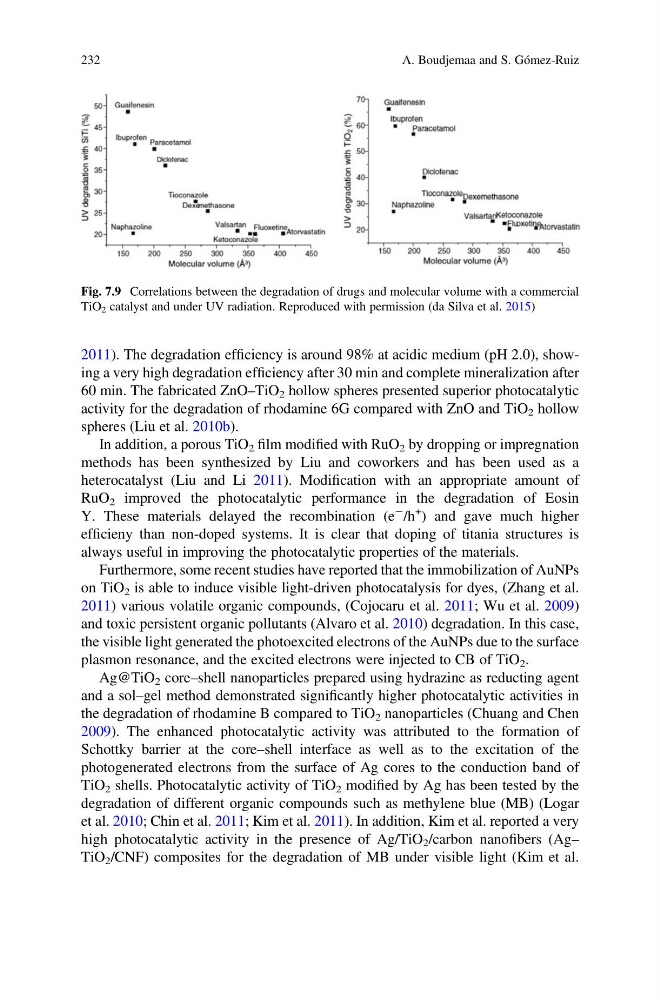
Fig. 7.9 Correlations between the degradation of drugs and molecular volume with a commercial
TiO 2 catalyst and under UV radiation. Reproduced with permission (da Silva et al. 2015)
232
A. Boudjemaa and S. Gómez-Ruiz
60 min. The fabricated ZnO–TiO 2 hollow spheres presented superior photocatalytic
activity for the degradation of rhodamine 6G compared with ZnO and TiO 2 hollow
spheres (Liu et al. 2010b).
In addition, a porous TiO 2 film modified with RuO 2 by dropping or impregnation
methods has been synthesized by Liu and coworkers and has been used as a
heterocatalyst (Liu and Li 2011). Modification with an appropriate amount of
RuO 2 improved the photocatalytic performance in the degradation of Eosin
Y. These materials delayed the recombination (e
À /h
+
) and gave much higher
efficieny than non-doped systems. It is clear that doping of titania structures is
always useful in improving the photocatalytic properties of the materials.
Furthermore, some recent studies have reported that the immobilization of AuNPs
on TiO 2 is able to induce visible light-driven photocatalysis for dyes, (Zhang et al.
2011) various volatile organic compounds, (Cojocaru et al. 2011; Wu et al. 2009)
and toxic persistent organic pollutants (Alvaro et al. 2010) degradation. In this case,
the visible light generated the photoexcited electrons of the AuNPs due to the surface
plasmon resonance, and the excited electrons were injected to CB of TiO 2 .
Ag@TiO 2 core–shell nanoparticles prepared using hydrazine as reducting agent
and a sol–gel method demonstrated significantly higher photocatalytic activities in
the degradation of rhodamine B compared to TiO 2 nanoparticles (Chuang and Chen
2009). The enhanced photocatalytic activity was attributed to the formation of
Schottky barrier at the core–shell interface as well as to the excitation of the
photogenerated electrons from the surface of Ag cores to the conduction band of
TiO 2 shells. Photocatalytic activity of TiO 2 modified by Ag has been tested by the
degradation of different organic compounds such as methylene blue (MB) (Logar
et al. 2010; Chin et al. 2011; Kim et al. 2011). In addition, Kim et al. reported a very
high photocatalytic activity in the presence of Ag/TiO 2 /carbon nanofibers (Ag–
TiO 2 /CNF) composites for the degradation of MB under visible light (Kim et al.
Fig. 7.9 Correlations between the degradation of drugs and molecular volume with a commercial
TiO 2 catalyst and under UV radiation. Reproduced with permission (da Silva et al. 2015)
232
A. Boudjemaa and S. Gómez-Ruiz