

3.5 Nanobiosensors
Nanotechnology is a new branch of science that deals with the generation and
alteration of materials to nanosize (10
À9 m) (Sagadevan and Periasamy 2014).
Nanobiosensor is basically the sensors which are made up of nanomaterials, and
interestingly these are not the specialized sensors which can detect the nanoscale
events and happenings (Malik et al. 2013). A specific recognition group can be used
to coat the surface of the nanowire/nanotube, making the device specifically sensitive only to a particular target. This recognition group could be a single-stranded
DNA (capable of recognizing its complementary strand), an antibody (that recognizes a particular antigen), an aptamer that shows an affinity for a unique target, or a
protein that specifically interacts with another biological molecule. The presence of
this recognition group on the nanowire surface gives to the device high specificity
and exclusivity toward its target (Thompsons Research Groups) (Fig. 3.2).
Nanomaterials are intended to be used in making biosensors which are going to
drive a significant difference in the nanobiosensors technology. The physical properties of nan-materials used during the preparation of sensor will make them a very
special due to their constituent atoms located at or near their surface increases the
surface area for the interaction of biomolecule with the target material. These
nanomaterials having all the vital physicochemical properties (Gatoo et al. 2014)
such as size, surface area, surface chemistry, surface roughness, the dispersion
medium, and ability to agglomerate will play a vital role in nanobiosensor. Metallic
and inorganic nanomaterial having nanoscale in size may demonstrate new research
avenue for scientists and researchers working the field of biosensors. Nanomaterials
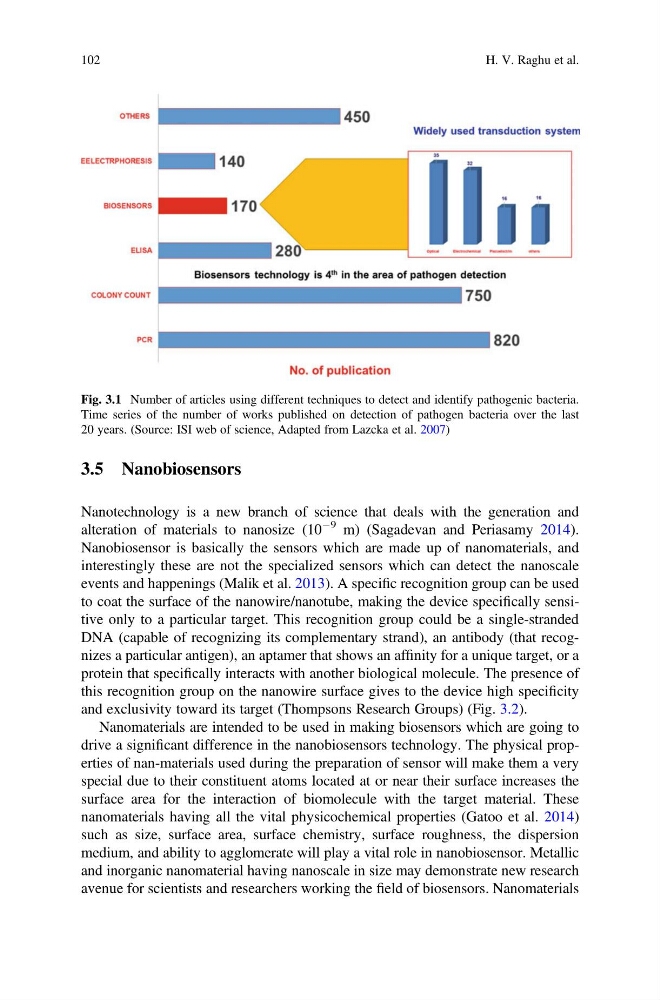
Fig. 3.1 Number of articles using different techniques to detect and identify pathogenic bacteria.
Time series of the number of works published on detection of pathogen bacteria over the last
20 years. (Source: ISI web of science, Adapted from Lazcka et al. 2007)
102
H. V. Raghu et al.
Nanotechnology is a new branch of science that deals with the generation and
alteration of materials to nanosize (10
À9 m) (Sagadevan and Periasamy 2014).
Nanobiosensor is basically the sensors which are made up of nanomaterials, and
interestingly these are not the specialized sensors which can detect the nanoscale
events and happenings (Malik et al. 2013). A specific recognition group can be used
to coat the surface of the nanowire/nanotube, making the device specifically sensitive only to a particular target. This recognition group could be a single-stranded
DNA (capable of recognizing its complementary strand), an antibody (that recognizes a particular antigen), an aptamer that shows an affinity for a unique target, or a
protein that specifically interacts with another biological molecule. The presence of
this recognition group on the nanowire surface gives to the device high specificity
and exclusivity toward its target (Thompsons Research Groups) (Fig. 3.2).
Nanomaterials are intended to be used in making biosensors which are going to
drive a significant difference in the nanobiosensors technology. The physical properties of nan-materials used during the preparation of sensor will make them a very
special due to their constituent atoms located at or near their surface increases the
surface area for the interaction of biomolecule with the target material. These
nanomaterials having all the vital physicochemical properties (Gatoo et al. 2014)
such as size, surface area, surface chemistry, surface roughness, the dispersion
medium, and ability to agglomerate will play a vital role in nanobiosensor. Metallic
and inorganic nanomaterial having nanoscale in size may demonstrate new research
avenue for scientists and researchers working the field of biosensors. Nanomaterials
Fig. 3.1 Number of articles using different techniques to detect and identify pathogenic bacteria.
Time series of the number of works published on detection of pathogen bacteria over the last
20 years. (Source: ISI web of science, Adapted from Lazcka et al. 2007)
102
H. V. Raghu et al.