

southwest and interpreted to be continuous. In
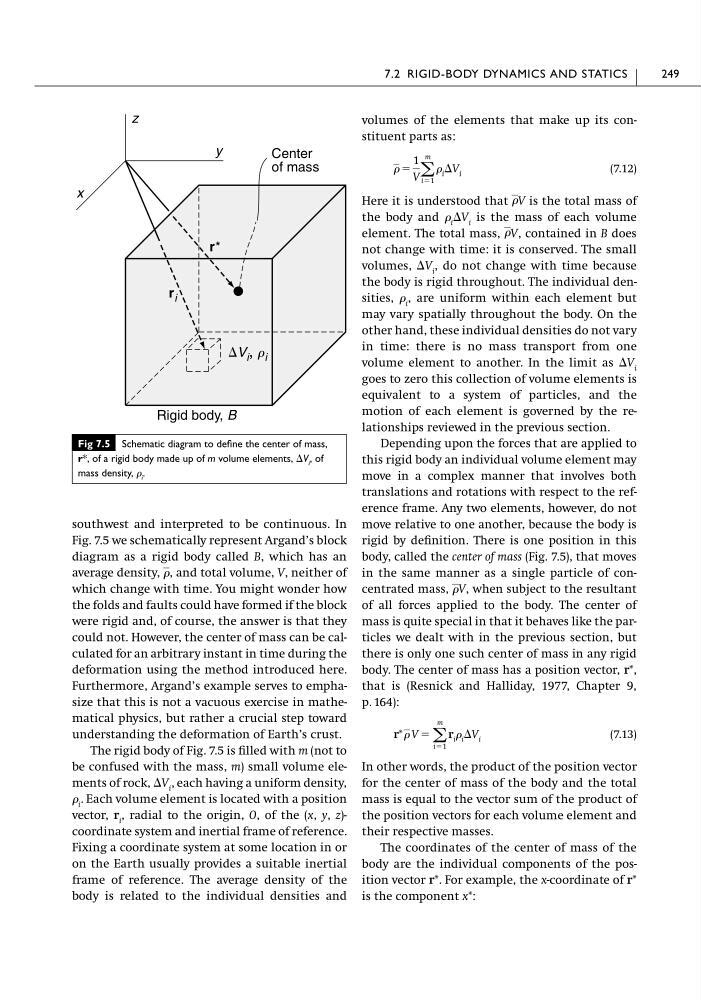
Fig. 7.5 we schematically represent Argand’s block
diagram as a rigid body called B, which has an
average density, , and total volume, V, neither of
which change with time. You might wonder how
the folds and faults could have formed if the block
were rigid and, of course, the answer is that they
could not. However, the center of mass can be calculated for an arbitrary instant in time during the
deformation using the method introduced here.
Furthermore, Argand’s example serves to emphasize that this is not a vacuous exercise in mathematical physics, but rather a crucial step toward
understanding the deformation of Earth’s crust.
The rigid body of Fig. 7.5 is filled with m (not to
be confused with the mass, m) small volume elements of rock, ⌬V i , each having a uniform density,
i . Each volume element is located with a position
vector, r i , radial to the origin, O, of the (x, y, z)coordinate system and inertial frame of reference.
Fixing a coordinate system at some location in or
on the Earth usually provides a suitable inertial
frame of reference. The average density of the
body is related to the individual densities and
volumes of the elements that make up its constituent parts as:
(7.12)
Here it is understood that V is the total mass of
the body and i ⌬V i is the mass of each volume
element. The total mass, V, contained in B does
not change with time: it is conserved. The small
volumes, ⌬V i , do not change with time because
the body is rigid throughout. The individual densities, i , are uniform within each element but
may vary spatially throughout the body. On the
other hand, these individual densities do not vary
in time: there is no mass transport from one
volume element to another. In the limit as ⌬V i
goes to zero this collection of volume elements is
equivalent to a system of particles, and the
motion of each element is governed by the relationships reviewed in the previous section.
Depending upon the forces that are applied to
this rigid body an individual volume element may
move in a complex manner that involves both
translations and rotations with respect to the reference frame. Any two elements, however, do not
move relative to one another, because the body is
rigid by definition. There is one position in this
body, called the center of mass (Fig. 7.5), that moves
in the same manner as a single particle of concentrated mass, V, when subject to the resultant
of all forces applied to the body. The center of
mass is quite special in that it behaves like the particles we dealt with in the previous section, but
there is only one such center of mass in any rigid
body. The center of mass has a position vector, r*,
that is (Resnick and Halliday, 1977, Chapter 9,
p. 164):
(7.13)
In other words, the product of the position vector
for the center of mass of the body and the total
mass is equal to the vector sum of the product of
the position vectors for each volume element and
their respective masses.
The coordinates of the center of mass of the
body are the individual components of the position vector r*. For example, the x-coordinate of r*
is the component x*:
r* V ϭ ͚
m
iϭ1
r i i ⌬V i
ϭ
1
V ͚
m
iϭ1
i ⌬V i
7.2 RIGID-BODY DYNAMICS AND STATICS
249
Fig 7.5 Schematic diagram to define the center of mass,
r*, of a rigid body made up of m volume elements, ⌬V i , of
mass density, i .
x
y
z
Rigid body, B
Center
of mass
⌬V i , r i
r*
r i
Fig. 7.5 we schematically represent Argand’s block
diagram as a rigid body called B, which has an
average density, , and total volume, V, neither of
which change with time. You might wonder how
the folds and faults could have formed if the block
were rigid and, of course, the answer is that they
could not. However, the center of mass can be calculated for an arbitrary instant in time during the
deformation using the method introduced here.
Furthermore, Argand’s example serves to emphasize that this is not a vacuous exercise in mathematical physics, but rather a crucial step toward
understanding the deformation of Earth’s crust.
The rigid body of Fig. 7.5 is filled with m (not to
be confused with the mass, m) small volume elements of rock, ⌬V i , each having a uniform density,
i . Each volume element is located with a position
vector, r i , radial to the origin, O, of the (x, y, z)coordinate system and inertial frame of reference.
Fixing a coordinate system at some location in or
on the Earth usually provides a suitable inertial
frame of reference. The average density of the
body is related to the individual densities and
volumes of the elements that make up its constituent parts as:
(7.12)
Here it is understood that V is the total mass of
the body and i ⌬V i is the mass of each volume
element. The total mass, V, contained in B does
not change with time: it is conserved. The small
volumes, ⌬V i , do not change with time because
the body is rigid throughout. The individual densities, i , are uniform within each element but
may vary spatially throughout the body. On the
other hand, these individual densities do not vary
in time: there is no mass transport from one
volume element to another. In the limit as ⌬V i
goes to zero this collection of volume elements is
equivalent to a system of particles, and the
motion of each element is governed by the relationships reviewed in the previous section.
Depending upon the forces that are applied to
this rigid body an individual volume element may
move in a complex manner that involves both
translations and rotations with respect to the reference frame. Any two elements, however, do not
move relative to one another, because the body is
rigid by definition. There is one position in this
body, called the center of mass (Fig. 7.5), that moves
in the same manner as a single particle of concentrated mass, V, when subject to the resultant
of all forces applied to the body. The center of
mass is quite special in that it behaves like the particles we dealt with in the previous section, but
there is only one such center of mass in any rigid
body. The center of mass has a position vector, r*,
that is (Resnick and Halliday, 1977, Chapter 9,
p. 164):
(7.13)
In other words, the product of the position vector
for the center of mass of the body and the total
mass is equal to the vector sum of the product of
the position vectors for each volume element and
their respective masses.
The coordinates of the center of mass of the
body are the individual components of the position vector r*. For example, the x-coordinate of r*
is the component x*:
r* V ϭ ͚
m
iϭ1
r i i ⌬V i
ϭ
1
V ͚
m
iϭ1
i ⌬V i
7.2 RIGID-BODY DYNAMICS AND STATICS
249
Fig 7.5 Schematic diagram to define the center of mass,
r*, of a rigid body made up of m volume elements, ⌬V i , of
mass density, i .
x
y
z
Rigid body, B
Center
of mass
⌬V i , r i
r*
r i