

emplacement of the dikes, yet each dike will
perturb the local stress field and could thereby
influence the propagation path of the next dike
(Meriaux and Lister, 2002). Also, this analysis
neglects the influence of pre-existing fractures,
which may guide the propogating dike (Ziv and
Rubin, 2000), and the effects of topography (Fialko
and Rubin, 1999).
Anderson’s concept has been applied to the
injection of dikes under active volcanoes in the
Aleutian Arc (Nakamura, 1977; Nakamura et al.,
1977). A direct relationship between chains of
cinder cones on large volcanoes and the orientation of sub-surface dikes was inferred by suggesting that dikes provided the conduits for flow of
magma to the surface of the volcano. With this
relationship one can map the chains of cinder
cones just like the exposures of dikes at the
Spanish Peaks and use these data to estimate the
horizontal principal stress orientations along volcanic arcs like the Aleutians (Fig. 6.38). Note that
the estimated motion vectors for the Pacific plate
relative to the North American plate are sub-parallel to the maximum horizontal compression
inferred from the cinder cones. Apparently the
convergence direction of the two plates is
reflected in the compression direction within the
volcanoes near the Earth’s surface. This information is crucial to an understanding of the structural and volcanic history of such regions.
6.4 Concluding remarks
In the Newtonian context of rigid-body dynamics
it is understood that forces are associated with
accelerations. On the other hand, in the context of
a deformable solid the stress is associated with
6.4 CONCLUDING REMARKS
241
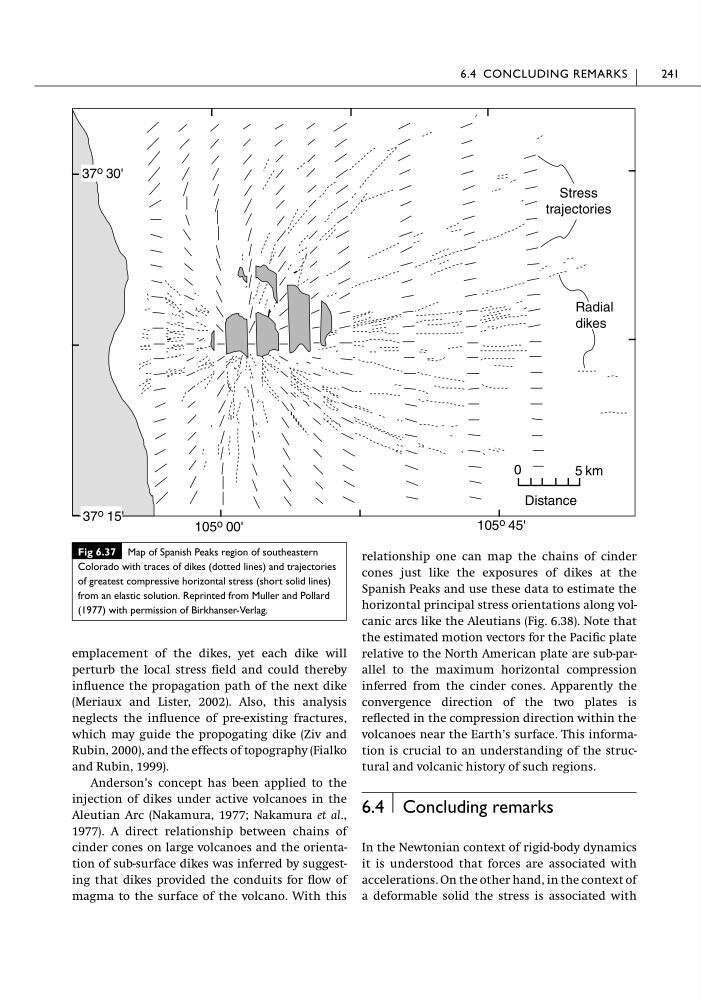
Fig 6.37 Map of Spanish Peaks region of southeastern
Colorado with traces of dikes (dotted lines) and trajectories
of greatest compressive horizontal stress (short solid lines)
from an elastic solution. Reprinted from Muller and Pollard
(1977) with permission of Birkhanser-Verlag.
Distance
0
5 km
Stress
trajectories
Radial
dikes
37 o 30'
37 o 15'
105 o 00'
105 o 45'
perturb the local stress field and could thereby
influence the propagation path of the next dike
(Meriaux and Lister, 2002). Also, this analysis
neglects the influence of pre-existing fractures,
which may guide the propogating dike (Ziv and
Rubin, 2000), and the effects of topography (Fialko
and Rubin, 1999).
Anderson’s concept has been applied to the
injection of dikes under active volcanoes in the
Aleutian Arc (Nakamura, 1977; Nakamura et al.,
1977). A direct relationship between chains of
cinder cones on large volcanoes and the orientation of sub-surface dikes was inferred by suggesting that dikes provided the conduits for flow of
magma to the surface of the volcano. With this
relationship one can map the chains of cinder
cones just like the exposures of dikes at the
Spanish Peaks and use these data to estimate the
horizontal principal stress orientations along volcanic arcs like the Aleutians (Fig. 6.38). Note that
the estimated motion vectors for the Pacific plate
relative to the North American plate are sub-parallel to the maximum horizontal compression
inferred from the cinder cones. Apparently the
convergence direction of the two plates is
reflected in the compression direction within the
volcanoes near the Earth’s surface. This information is crucial to an understanding of the structural and volcanic history of such regions.
6.4 Concluding remarks
In the Newtonian context of rigid-body dynamics
it is understood that forces are associated with
accelerations. On the other hand, in the context of
a deformable solid the stress is associated with
6.4 CONCLUDING REMARKS
241
Fig 6.37 Map of Spanish Peaks region of southeastern
Colorado with traces of dikes (dotted lines) and trajectories
of greatest compressive horizontal stress (short solid lines)
from an elastic solution. Reprinted from Muller and Pollard
(1977) with permission of Birkhanser-Verlag.
Distance
0
5 km
Stress
trajectories
Radial
dikes
37 o 30'
37 o 15'
105 o 00'
105 o 45'