

representation of a surface, or of a patch of a
surface, may be found such that:
(3.58)
Note that the components, s x and s y , of s are
equated to the parameters u and v, and only s z is a
s(u, v) ϭ ue x ϩ ve y ϩ g(u, v)e z
function of the two parameters, g(u, v). A parametric representation of a surface in which two of the
components of s are the parameters and the third
component is a function of the parameters is
referred to as a Monge patch, named after the
French mathematician Gaspard Monge who lived
from 1746 to 1818 and is regarded as one of the
founders of differential geometry.
Practical applications of the Monge patch to
structural mapping become obvious if one thinks
of the parameter plane as superimposed on the
(x, y)-plane in three-dimensional space (Fig. 3.17a),
so the parameters u and v are equivalent to the
coordinates x and y. Then the vector function for
3.2 THE CONCEPT AND DESCRIPTION OF CURVED SURFACES
95
Fig 3.16 Elliptic paraboloid with circular sections parallel
to the (x, y)-plane. (a) The u-parameter curve, c(u, v o ), is a
parabola. (b) The v-parameter curve, c(u o , v), also is a
parabola.
(a)
y
z
x
y
z
x
(b)
s(u, v)
c(u, v o )
y = x – 2v o
s(u, v)
c(u o ,v)
y = –x + 2u o
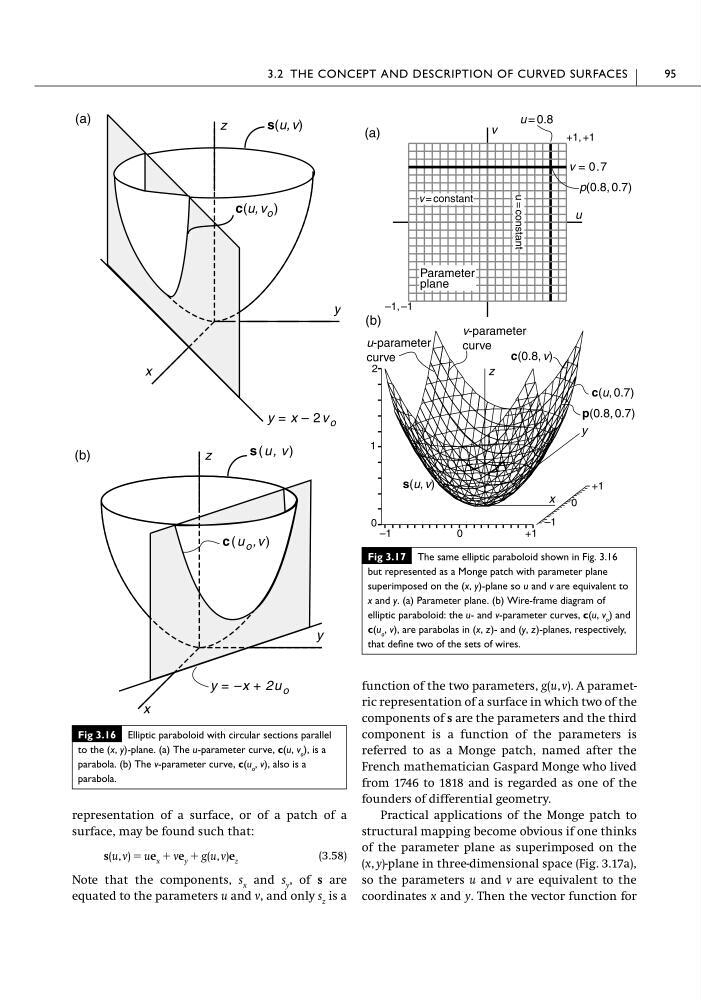
Fig 3.17 The same elliptic paraboloid shown in Fig. 3.16
but represented as a Monge patch with parameter plane
superimposed on the (x, y)-plane so u and v are equivalent to
x and y. (a) Parameter plane. (b) Wire-frame diagram of
elliptic paraboloid: the u- and v-parameter curves, c(u, v o ) and
c(u o , v), are parabolas in (x, z)- and (y, z)-planes, respectively,
that define two of the sets of wires.
–1
0
+1
0
1
2
p(0.8, 0.7)
z
y
x
(b)
u
v
p(0.8, 0.7)
Parameter
plane
u = 0.8
v = 0.7
–1, –1
+1, +1
–1
0
+1
(a)
u-parameter
curve
v-parameter
curve
v = constant
u = constant
c(0.8, v)
c(u, 0.7)
s(u, v)
surface, may be found such that:
(3.58)
Note that the components, s x and s y , of s are
equated to the parameters u and v, and only s z is a
s(u, v) ϭ ue x ϩ ve y ϩ g(u, v)e z
function of the two parameters, g(u, v). A parametric representation of a surface in which two of the
components of s are the parameters and the third
component is a function of the parameters is
referred to as a Monge patch, named after the
French mathematician Gaspard Monge who lived
from 1746 to 1818 and is regarded as one of the
founders of differential geometry.
Practical applications of the Monge patch to
structural mapping become obvious if one thinks
of the parameter plane as superimposed on the
(x, y)-plane in three-dimensional space (Fig. 3.17a),
so the parameters u and v are equivalent to the
coordinates x and y. Then the vector function for
3.2 THE CONCEPT AND DESCRIPTION OF CURVED SURFACES
95
Fig 3.16 Elliptic paraboloid with circular sections parallel
to the (x, y)-plane. (a) The u-parameter curve, c(u, v o ), is a
parabola. (b) The v-parameter curve, c(u o , v), also is a
parabola.
(a)
y
z
x
y
z
x
(b)
s(u, v)
c(u, v o )
y = x – 2v o
s(u, v)
c(u o ,v)
y = –x + 2u o
Fig 3.17 The same elliptic paraboloid shown in Fig. 3.16
but represented as a Monge patch with parameter plane
superimposed on the (x, y)-plane so u and v are equivalent to
x and y. (a) Parameter plane. (b) Wire-frame diagram of
elliptic paraboloid: the u- and v-parameter curves, c(u, v o ) and
c(u o , v), are parabolas in (x, z)- and (y, z)-planes, respectively,
that define two of the sets of wires.
–1
0
+1
0
1
2
p(0.8, 0.7)
z
y
x
(b)
u
v
p(0.8, 0.7)
Parameter
plane
u = 0.8
v = 0.7
–1, –1
+1, +1
–1
0
+1
(a)
u-parameter
curve
v-parameter
curve
v = constant
u = constant
c(0.8, v)
c(u, 0.7)
s(u, v)