

96
result in greater water loss throughout the site, via evaporation. As such this reduces
the amount of water recoverable through tailing dewatering (Castillo et al. 2001).
Furthermore, there is greater demand for water in dust suppression as soils in these
regions have lower moisture contents (Gambatese and James 2001).
Mining processes associated with other minerals including copper, iron, and
bauxite exceed the referenced consumption shown in Table 7.1; however, it is clear
that this comparison is broad and requires a more thorough study to be valid.
7.4.2 Water Impact Categories in Life Cycle Assessment
Despite the intensive water usage present in both mining technologies, this study
has not considered the full water footprint. Its analysis is based on a LCA. However,
it is only considered to be a full LCA if all of the following metrics are analyzed
(Pfister and Ridoutt 2013; Boulay et al. 2014; ISO 2014; Boulay et al. 2015): water
availability indicator, quality indicators of water degradation (eutrophication,
ecotoxicity, acidification, among others), and endpoint modeling (human health,
ecosystems, and resources) (ISO 2014). Despite this, only quality indicators of
water degradation and specific water sources will be assessed due to the following
reasons:
• According to Padowski et al. (2016), Colombia presents low values when assessing global water security, underwater availability, and accessibility to water services. Other studies approach freshwater withdrawals (Lawrence et al. 2002;
UNDP 2016).
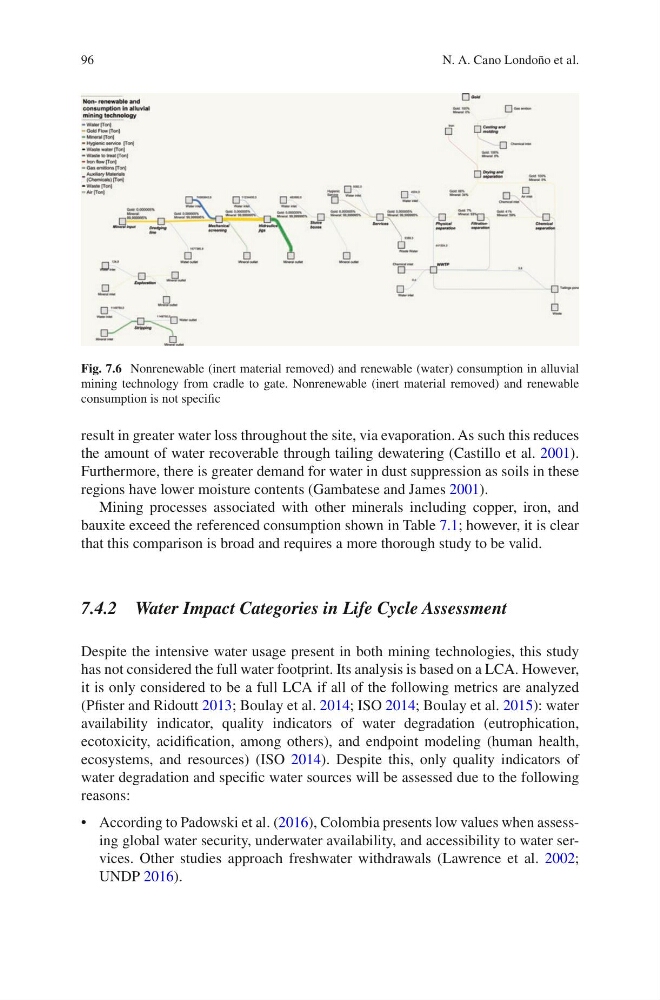
Fig. 7.6 Nonrenewable (inert material removed) and renewable (water) consumption in alluvial
mining technology from cradle to gate. Nonrenewable (inert material removed) and renewable
consumption is not specific
N. A. Cano Londoño et al.
result in greater water loss throughout the site, via evaporation. As such this reduces
the amount of water recoverable through tailing dewatering (Castillo et al. 2001).
Furthermore, there is greater demand for water in dust suppression as soils in these
regions have lower moisture contents (Gambatese and James 2001).
Mining processes associated with other minerals including copper, iron, and
bauxite exceed the referenced consumption shown in Table 7.1; however, it is clear
that this comparison is broad and requires a more thorough study to be valid.
7.4.2 Water Impact Categories in Life Cycle Assessment
Despite the intensive water usage present in both mining technologies, this study
has not considered the full water footprint. Its analysis is based on a LCA. However,
it is only considered to be a full LCA if all of the following metrics are analyzed
(Pfister and Ridoutt 2013; Boulay et al. 2014; ISO 2014; Boulay et al. 2015): water
availability indicator, quality indicators of water degradation (eutrophication,
ecotoxicity, acidification, among others), and endpoint modeling (human health,
ecosystems, and resources) (ISO 2014). Despite this, only quality indicators of
water degradation and specific water sources will be assessed due to the following
reasons:
• According to Padowski et al. (2016), Colombia presents low values when assessing global water security, underwater availability, and accessibility to water services. Other studies approach freshwater withdrawals (Lawrence et al. 2002;
UNDP 2016).
Fig. 7.6 Nonrenewable (inert material removed) and renewable (water) consumption in alluvial
mining technology from cradle to gate. Nonrenewable (inert material removed) and renewable
consumption is not specific
N. A. Cano Londoño et al.