

3 Causes and Effects of Water Pollution in Romania
87
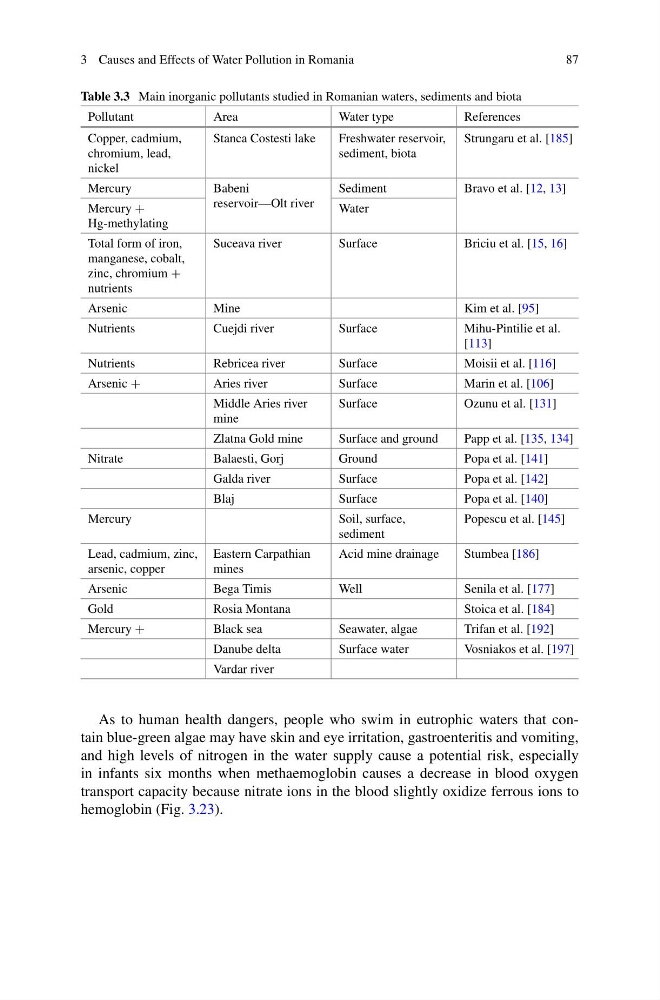
Table 3.3 Main inorganic pollutants studied in Romanian waters, sediments and biota
Pollutant
Area
Water type
References
Copper, cadmium,
chromium, lead,
nickel
Stanca Costesti lake
Freshwater reservoir,
sediment, biota
Strungaru et al. [185]
Mercury
Babeni
reservoir—Olt river
Sediment
Bravo et al. [12, 13]
Mercury +
Hg-methylating
Water
Total form of iron,
manganese, cobalt,
zinc, chromium +
nutrients
Suceava river
Surface
Briciu et al. [15, 16]
Arsenic
Mine
Kim et al. [95]
Nutrients
Cuejdi river
Surface
Mihu-Pintilie et al.
[113]
Nutrients
Rebricea river
Surface
Moisii et al. [116]
Arsenic +
Aries river
Surface
Marin et al. [106]
Middle Aries river
mine
Surface
Ozunu et al. [131]
Zlatna Gold mine
Surface and ground
Papp et al. [135, 134]
Nitrate
Balaesti, Gorj
Ground
Popa et al. [141]
Galda river
Surface
Popa et al. [142]
Blaj
Surface
Popa et al. [140]
Mercury
Soil, surface,
sediment
Popescu et al. [145]
Lead, cadmium, zinc,
arsenic, copper
Eastern Carpathian
mines
Acid mine drainage
Stumbea [186]
Arsenic
Bega Timis
Well
Senila et al. [177]
Gold
Rosia Montana
Stoica et al. [184]
Mercury +
Black sea
Seawater, algae
Trifan et al. [192]
Danube delta
Surface water
Vosniakos et al. [197]
Vardar river
As to human health dangers, people who swim in eutrophic waters that contain blue-green algae may have skin and eye irritation, gastroenteritis and vomiting,
and high levels of nitrogen in the water supply cause a potential risk, especially
in infants six months when methaemoglobin causes a decrease in blood oxygen
transport capacity because nitrate ions in the blood slightly oxidize ferrous ions to
hemoglobin (Fig. 3.23).
87
Table 3.3 Main inorganic pollutants studied in Romanian waters, sediments and biota
Pollutant
Area
Water type
References
Copper, cadmium,
chromium, lead,
nickel
Stanca Costesti lake
Freshwater reservoir,
sediment, biota
Strungaru et al. [185]
Mercury
Babeni
reservoir—Olt river
Sediment
Bravo et al. [12, 13]
Mercury +
Hg-methylating
Water
Total form of iron,
manganese, cobalt,
zinc, chromium +
nutrients
Suceava river
Surface
Briciu et al. [15, 16]
Arsenic
Mine
Kim et al. [95]
Nutrients
Cuejdi river
Surface
Mihu-Pintilie et al.
[113]
Nutrients
Rebricea river
Surface
Moisii et al. [116]
Arsenic +
Aries river
Surface
Marin et al. [106]
Middle Aries river
mine
Surface
Ozunu et al. [131]
Zlatna Gold mine
Surface and ground
Papp et al. [135, 134]
Nitrate
Balaesti, Gorj
Ground
Popa et al. [141]
Galda river
Surface
Popa et al. [142]
Blaj
Surface
Popa et al. [140]
Mercury
Soil, surface,
sediment
Popescu et al. [145]
Lead, cadmium, zinc,
arsenic, copper
Eastern Carpathian
mines
Acid mine drainage
Stumbea [186]
Arsenic
Bega Timis
Well
Senila et al. [177]
Gold
Rosia Montana
Stoica et al. [184]
Mercury +
Black sea
Seawater, algae
Trifan et al. [192]
Danube delta
Surface water
Vosniakos et al. [197]
Vardar river
As to human health dangers, people who swim in eutrophic waters that contain blue-green algae may have skin and eye irritation, gastroenteritis and vomiting,
and high levels of nitrogen in the water supply cause a potential risk, especially
in infants six months when methaemoglobin causes a decrease in blood oxygen
transport capacity because nitrate ions in the blood slightly oxidize ferrous ions to
hemoglobin (Fig. 3.23).