

62
I. G. Breaban and A. I. Breaban
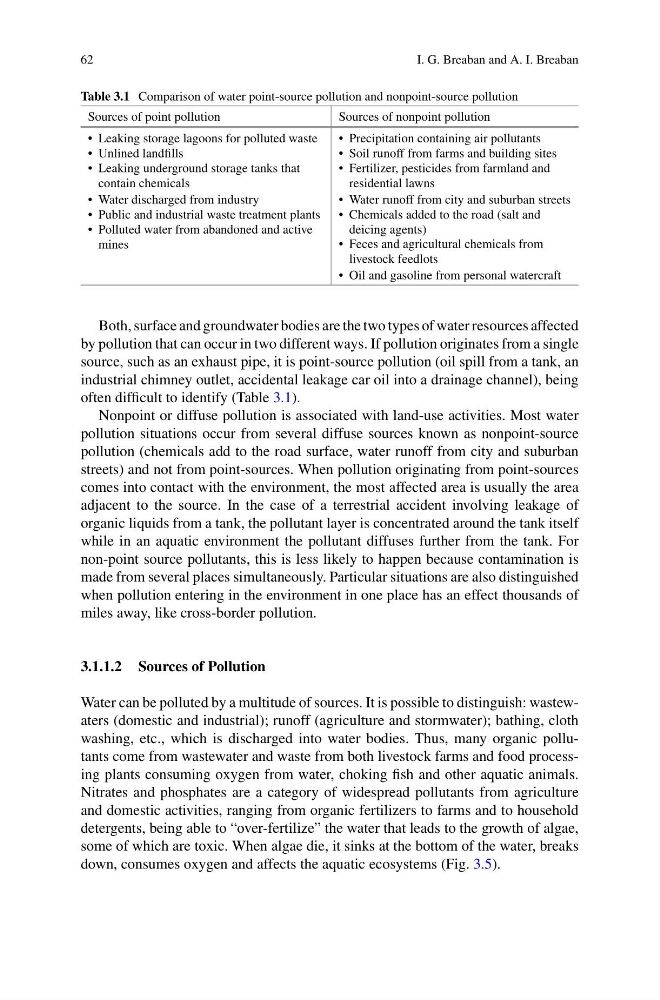
Table 3.1 Comparison of water point-source pollution and nonpoint-source pollution
Sources of point pollution
Sources of nonpoint pollution
• Leaking storage lagoons for polluted waste
• Unlined landfills
• Leaking underground storage tanks that
contain chemicals
• Water discharged from industry
• Public and industrial waste treatment plants
• Polluted water from abandoned and active
mines
• Precipitation containing air pollutants
• Soil runoff from farms and building sites
• Fertilizer, pesticides from farmland and
residential lawns
• Water runoff from city and suburban streets
• Chemicals added to the road (salt and
deicing agents)
• Feces and agricultural chemicals from
livestock feedlots
• Oil and gasoline from personal watercraft
Both, surface and groundwater bodies are the two types of water resources affected
by pollution that can occur in two different ways. If pollution originates from a single
source, such as an exhaust pipe, it is point-source pollution (oil spill from a tank, an
industrial chimney outlet, accidental leakage car oil into a drainage channel), being
often difficult to identify (Table 3.1).
Nonpoint or diffuse pollution is associated with land-use activities. Most water
pollution situations occur from several diffuse sources known as nonpoint-source
pollution (chemicals add to the road surface, water runoff from city and suburban
streets) and not from point-sources. When pollution originating from point-sources
comes into contact with the environment, the most affected area is usually the area
adjacent to the source. In the case of a terrestrial accident involving leakage of
organic liquids from a tank, the pollutant layer is concentrated around the tank itself
while in an aquatic environment the pollutant diffuses further from the tank. For
non-point source pollutants, this is less likely to happen because contamination is
made from several places simultaneously. Particular situations are also distinguished
when pollution entering in the environment in one place has an effect thousands of
miles away, like cross-border pollution.
3.1.1.2 Sources of Pollution
Water can be polluted by a multitude of sources. It is possible to distinguish: wastewaters (domestic and industrial); runoff (agriculture and stormwater); bathing, cloth
washing, etc., which is discharged into water bodies. Thus, many organic pollutants come from wastewater and waste from both livestock farms and food processing plants consuming oxygen from water, choking fish and other aquatic animals.
Nitrates and phosphates are a category of widespread pollutants from agriculture
and domestic activities, ranging from organic fertilizers to farms and to household
detergents, being able to “over-fertilize” the water that leads to the growth of algae,
some of which are toxic. When algae die, it sinks at the bottom of the water, breaks
down, consumes oxygen and affects the aquatic ecosystems (Fig. 3.5).
I. G. Breaban and A. I. Breaban
Table 3.1 Comparison of water point-source pollution and nonpoint-source pollution
Sources of point pollution
Sources of nonpoint pollution
• Leaking storage lagoons for polluted waste
• Unlined landfills
• Leaking underground storage tanks that
contain chemicals
• Water discharged from industry
• Public and industrial waste treatment plants
• Polluted water from abandoned and active
mines
• Precipitation containing air pollutants
• Soil runoff from farms and building sites
• Fertilizer, pesticides from farmland and
residential lawns
• Water runoff from city and suburban streets
• Chemicals added to the road (salt and
deicing agents)
• Feces and agricultural chemicals from
livestock feedlots
• Oil and gasoline from personal watercraft
Both, surface and groundwater bodies are the two types of water resources affected
by pollution that can occur in two different ways. If pollution originates from a single
source, such as an exhaust pipe, it is point-source pollution (oil spill from a tank, an
industrial chimney outlet, accidental leakage car oil into a drainage channel), being
often difficult to identify (Table 3.1).
Nonpoint or diffuse pollution is associated with land-use activities. Most water
pollution situations occur from several diffuse sources known as nonpoint-source
pollution (chemicals add to the road surface, water runoff from city and suburban
streets) and not from point-sources. When pollution originating from point-sources
comes into contact with the environment, the most affected area is usually the area
adjacent to the source. In the case of a terrestrial accident involving leakage of
organic liquids from a tank, the pollutant layer is concentrated around the tank itself
while in an aquatic environment the pollutant diffuses further from the tank. For
non-point source pollutants, this is less likely to happen because contamination is
made from several places simultaneously. Particular situations are also distinguished
when pollution entering in the environment in one place has an effect thousands of
miles away, like cross-border pollution.
3.1.1.2 Sources of Pollution
Water can be polluted by a multitude of sources. It is possible to distinguish: wastewaters (domestic and industrial); runoff (agriculture and stormwater); bathing, cloth
washing, etc., which is discharged into water bodies. Thus, many organic pollutants come from wastewater and waste from both livestock farms and food processing plants consuming oxygen from water, choking fish and other aquatic animals.
Nitrates and phosphates are a category of widespread pollutants from agriculture
and domestic activities, ranging from organic fertilizers to farms and to household
detergents, being able to “over-fertilize” the water that leads to the growth of algae,
some of which are toxic. When algae die, it sinks at the bottom of the water, breaks
down, consumes oxygen and affects the aquatic ecosystems (Fig. 3.5).