

550
R. B˘ atina¸ s et al.
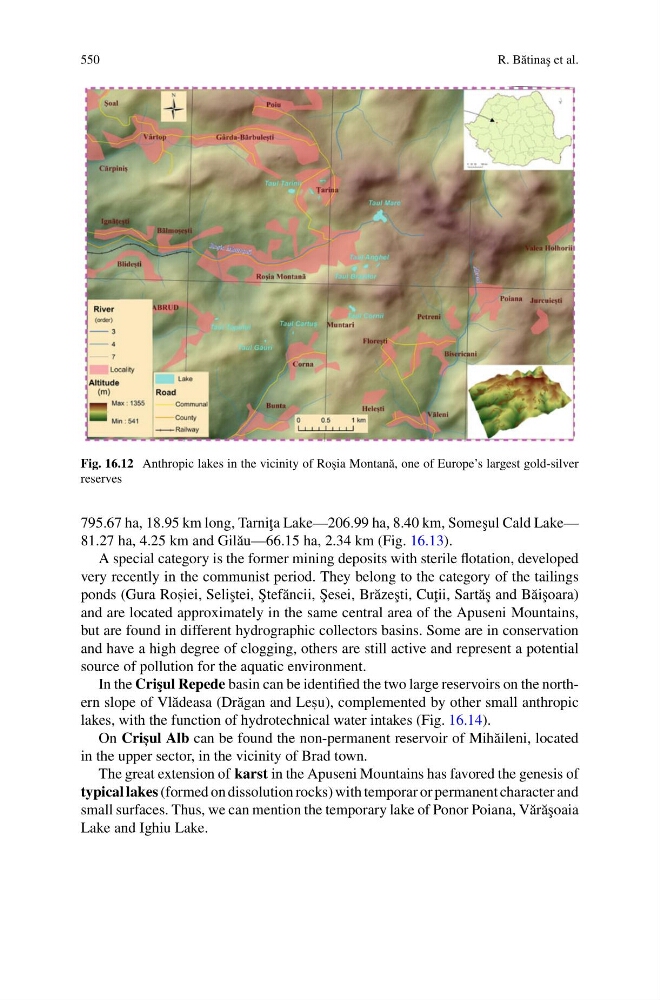
Fig. 16.12 Anthropic lakes in the vicinity of Ro¸ sia Montan˘ a, one of Europe’s largest gold-silver
reserves
795.67 ha, 18.95 km long, Tarni¸ ta Lake—206.99 ha, 8.40 km, Some¸ sul Cald Lake—
81.27 ha, 4.25 km and Gil˘ au—66.15 ha, 2.34 km (Fig. 16.13).
A special category is the former mining deposits with sterile flotation, developed
very recently in the communist period. They belong to the category of the tailings
ponds (Gura Ros , iei, Seli¸ stei, ¸
Stef˘ ancii, ¸
Sesei, Br˘ aze¸ sti, Cu¸ tii, Sart˘ a¸ s and B˘ ai¸ soara)
and are located approximately in the same central area of the Apuseni Mountains,
but are found in different hydrographic collectors basins. Some are in conservation
and have a high degree of clogging, others are still active and represent a potential
source of pollution for the aquatic environment.
In the Cri¸ sul Repede basin can be identified the two large reservoirs on the northern slope of Vl˘ adeasa (Dr˘ agan and Les , u), complemented by other small anthropic
lakes, with the function of hydrotechnical water intakes (Fig. 16.14).
On Cris , ul Alb can be found the non-permanent reservoir of Mih˘ aileni, located
in the upper sector, in the vicinity of Brad town.
The great extension of karst in the Apuseni Mountains has favored the genesis of
typical lakes (formed on dissolution rocks) with temporar or permanent character and
small surfaces. Thus, we can mention the temporary lake of Ponor Poiana, V˘ ar˘ a¸ soaia
Lake and Ighiu Lake.
R. B˘ atina¸ s et al.
Fig. 16.12 Anthropic lakes in the vicinity of Ro¸ sia Montan˘ a, one of Europe’s largest gold-silver
reserves
795.67 ha, 18.95 km long, Tarni¸ ta Lake—206.99 ha, 8.40 km, Some¸ sul Cald Lake—
81.27 ha, 4.25 km and Gil˘ au—66.15 ha, 2.34 km (Fig. 16.13).
A special category is the former mining deposits with sterile flotation, developed
very recently in the communist period. They belong to the category of the tailings
ponds (Gura Ros , iei, Seli¸ stei, ¸
Stef˘ ancii, ¸
Sesei, Br˘ aze¸ sti, Cu¸ tii, Sart˘ a¸ s and B˘ ai¸ soara)
and are located approximately in the same central area of the Apuseni Mountains,
but are found in different hydrographic collectors basins. Some are in conservation
and have a high degree of clogging, others are still active and represent a potential
source of pollution for the aquatic environment.
In the Cri¸ sul Repede basin can be identified the two large reservoirs on the northern slope of Vl˘ adeasa (Dr˘ agan and Les , u), complemented by other small anthropic
lakes, with the function of hydrotechnical water intakes (Fig. 16.14).
On Cris , ul Alb can be found the non-permanent reservoir of Mih˘ aileni, located
in the upper sector, in the vicinity of Brad town.
The great extension of karst in the Apuseni Mountains has favored the genesis of
typical lakes (formed on dissolution rocks) with temporar or permanent character and
small surfaces. Thus, we can mention the temporary lake of Ponor Poiana, V˘ ar˘ a¸ soaia
Lake and Ighiu Lake.