

476
A.-E. Briciu et al.
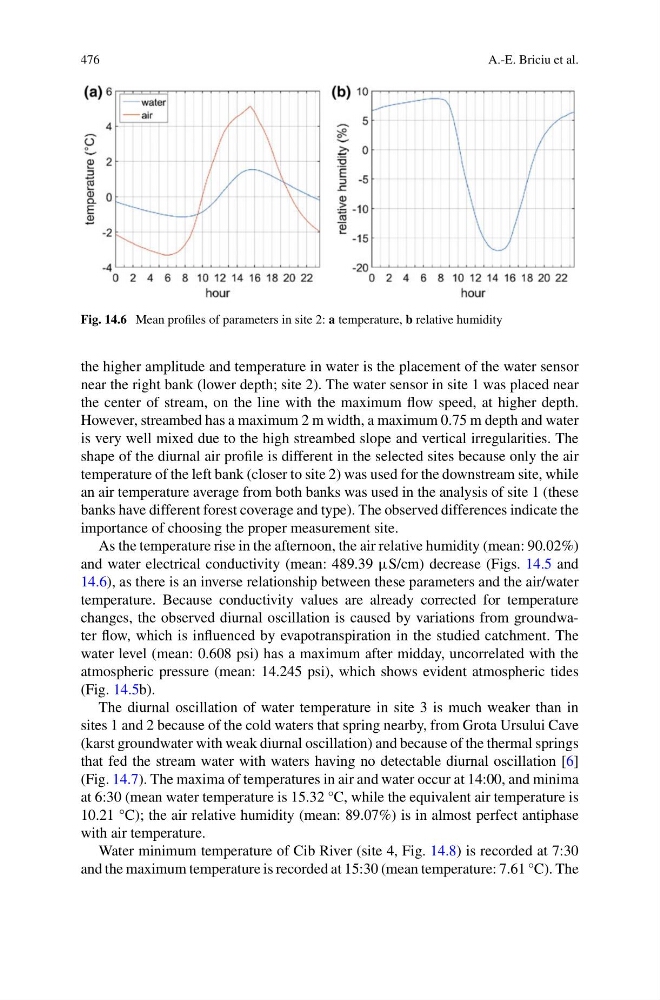
Fig. 14.6 Mean profiles of parameters in site 2: a temperature, b relative humidity
the higher amplitude and temperature in water is the placement of the water sensor
near the right bank (lower depth; site 2). The water sensor in site 1 was placed near
the center of stream, on the line with the maximum flow speed, at higher depth.
However, streambed has a maximum 2 m width, a maximum 0.75 m depth and water
is very well mixed due to the high streambed slope and vertical irregularities. The
shape of the diurnal air profile is different in the selected sites because only the air
temperature of the left bank (closer to site 2) was used for the downstream site, while
an air temperature average from both banks was used in the analysis of site 1 (these
banks have different forest coverage and type). The observed differences indicate the
importance of choosing the proper measurement site.
As the temperature rise in the afternoon, the air relative humidity (mean: 90.02%)
and water electrical conductivity (mean: 489.39 µS/cm) decrease (Figs. 14.5 and
14.6), as there is an inverse relationship between these parameters and the air/water
temperature. Because conductivity values are already corrected for temperature
changes, the observed diurnal oscillation is caused by variations from groundwater flow, which is influenced by evapotranspiration in the studied catchment. The
water level (mean: 0.608 psi) has a maximum after midday, uncorrelated with the
atmospheric pressure (mean: 14.245 psi), which shows evident atmospheric tides
(Fig. 14.5b).
The diurnal oscillation of water temperature in site 3 is much weaker than in
sites 1 and 2 because of the cold waters that spring nearby, from Grota Ursului Cave
(karst groundwater with weak diurnal oscillation) and because of the thermal springs
that fed the stream water with waters having no detectable diurnal oscillation [6]
(Fig. 14.7). The maxima of temperatures in air and water occur at 14:00, and minima
at 6:30 (mean water temperature is 15.32 °C, while the equivalent air temperature is
10.21 °C); the air relative humidity (mean: 89.07%) is in almost perfect antiphase
with air temperature.
Water minimum temperature of Cib River (site 4, Fig. 14.8) is recorded at 7:30
and the maximum temperature is recorded at 15:30 (mean temperature: 7.61 °C). The
A.-E. Briciu et al.
Fig. 14.6 Mean profiles of parameters in site 2: a temperature, b relative humidity
the higher amplitude and temperature in water is the placement of the water sensor
near the right bank (lower depth; site 2). The water sensor in site 1 was placed near
the center of stream, on the line with the maximum flow speed, at higher depth.
However, streambed has a maximum 2 m width, a maximum 0.75 m depth and water
is very well mixed due to the high streambed slope and vertical irregularities. The
shape of the diurnal air profile is different in the selected sites because only the air
temperature of the left bank (closer to site 2) was used for the downstream site, while
an air temperature average from both banks was used in the analysis of site 1 (these
banks have different forest coverage and type). The observed differences indicate the
importance of choosing the proper measurement site.
As the temperature rise in the afternoon, the air relative humidity (mean: 90.02%)
and water electrical conductivity (mean: 489.39 µS/cm) decrease (Figs. 14.5 and
14.6), as there is an inverse relationship between these parameters and the air/water
temperature. Because conductivity values are already corrected for temperature
changes, the observed diurnal oscillation is caused by variations from groundwater flow, which is influenced by evapotranspiration in the studied catchment. The
water level (mean: 0.608 psi) has a maximum after midday, uncorrelated with the
atmospheric pressure (mean: 14.245 psi), which shows evident atmospheric tides
(Fig. 14.5b).
The diurnal oscillation of water temperature in site 3 is much weaker than in
sites 1 and 2 because of the cold waters that spring nearby, from Grota Ursului Cave
(karst groundwater with weak diurnal oscillation) and because of the thermal springs
that fed the stream water with waters having no detectable diurnal oscillation [6]
(Fig. 14.7). The maxima of temperatures in air and water occur at 14:00, and minima
at 6:30 (mean water temperature is 15.32 °C, while the equivalent air temperature is
10.21 °C); the air relative humidity (mean: 89.07%) is in almost perfect antiphase
with air temperature.
Water minimum temperature of Cib River (site 4, Fig. 14.8) is recorded at 7:30
and the maximum temperature is recorded at 15:30 (mean temperature: 7.61 °C). The