

454
D. C. Diaconu
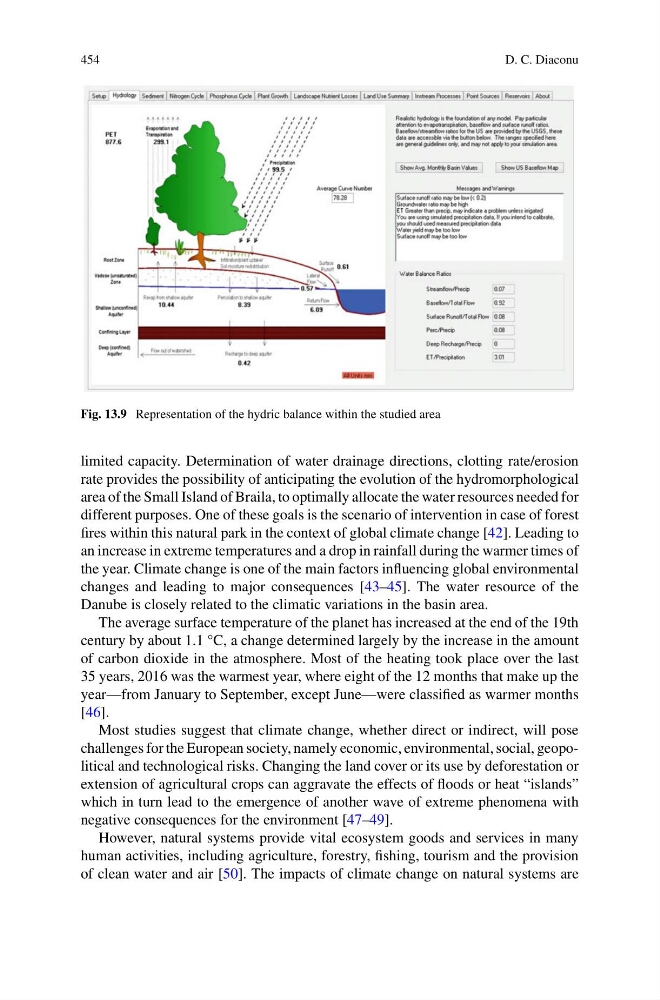
Fig. 13.9 Representation of the hydric balance within the studied area
limited capacity. Determination of water drainage directions, clotting rate/erosion
rate provides the possibility of anticipating the evolution of the hydromorphological
area of the Small Island of Braila, to optimally allocate the water resources needed for
different purposes. One of these goals is the scenario of intervention in case of forest
fires within this natural park in the context of global climate change [42]. Leading to
an increase in extreme temperatures and a drop in rainfall during the warmer times of
the year. Climate change is one of the main factors influencing global environmental
changes and leading to major consequences [43–45]. The water resource of the
Danube is closely related to the climatic variations in the basin area.
The average surface temperature of the planet has increased at the end of the 19th
century by about 1.1 °C, a change determined largely by the increase in the amount
of carbon dioxide in the atmosphere. Most of the heating took place over the last
35 years, 2016 was the warmest year, where eight of the 12 months that make up the
year—from January to September, except June—were classified as warmer months
[46].
Most studies suggest that climate change, whether direct or indirect, will pose
challenges for the European society, namely economic, environmental, social, geopolitical and technological risks. Changing the land cover or its use by deforestation or
extension of agricultural crops can aggravate the effects of floods or heat “islands”
which in turn lead to the emergence of another wave of extreme phenomena with
negative consequences for the environment [47–49].
However, natural systems provide vital ecosystem goods and services in many
human activities, including agriculture, forestry, fishing, tourism and the provision
of clean water and air [50]. The impacts of climate change on natural systems are
D. C. Diaconu
Fig. 13.9 Representation of the hydric balance within the studied area
limited capacity. Determination of water drainage directions, clotting rate/erosion
rate provides the possibility of anticipating the evolution of the hydromorphological
area of the Small Island of Braila, to optimally allocate the water resources needed for
different purposes. One of these goals is the scenario of intervention in case of forest
fires within this natural park in the context of global climate change [42]. Leading to
an increase in extreme temperatures and a drop in rainfall during the warmer times of
the year. Climate change is one of the main factors influencing global environmental
changes and leading to major consequences [43–45]. The water resource of the
Danube is closely related to the climatic variations in the basin area.
The average surface temperature of the planet has increased at the end of the 19th
century by about 1.1 °C, a change determined largely by the increase in the amount
of carbon dioxide in the atmosphere. Most of the heating took place over the last
35 years, 2016 was the warmest year, where eight of the 12 months that make up the
year—from January to September, except June—were classified as warmer months
[46].
Most studies suggest that climate change, whether direct or indirect, will pose
challenges for the European society, namely economic, environmental, social, geopolitical and technological risks. Changing the land cover or its use by deforestation or
extension of agricultural crops can aggravate the effects of floods or heat “islands”
which in turn lead to the emergence of another wave of extreme phenomena with
negative consequences for the environment [47–49].
However, natural systems provide vital ecosystem goods and services in many
human activities, including agriculture, forestry, fishing, tourism and the provision
of clean water and air [50]. The impacts of climate change on natural systems are