

6 Drinking Water Supply Systems—Evolution Towards Efficiency
217
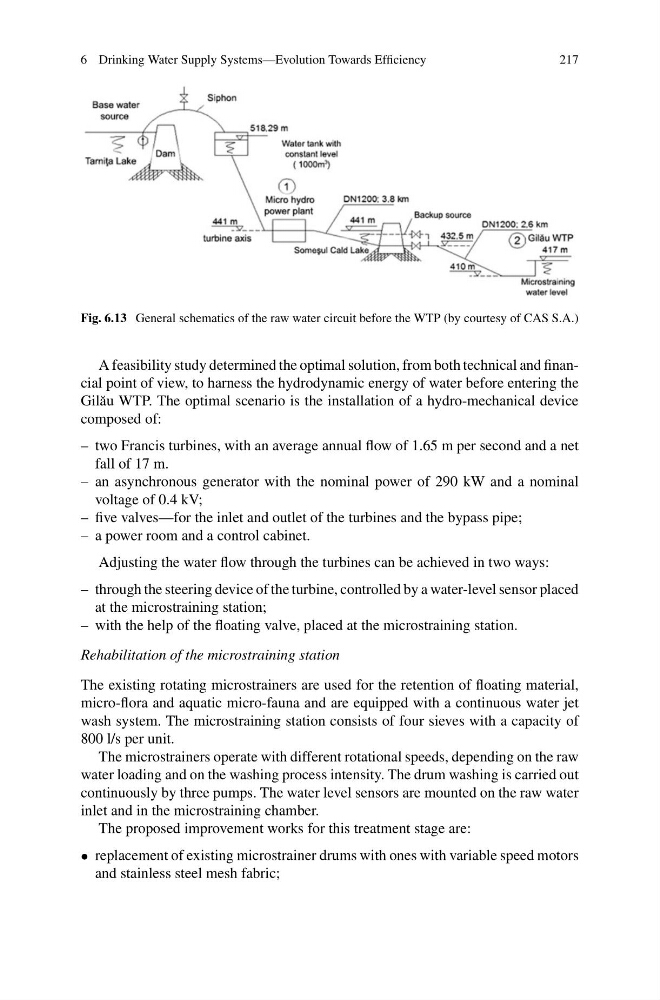
Fig. 6.13 General schematics of the raw water circuit before the WTP (by courtesy of CAS S.A.)
A feasibility study determined the optimal solution, from both technical and financial point of view, to harness the hydrodynamic energy of water before entering the
Gil˘ au WTP. The optimal scenario is the installation of a hydro-mechanical device
composed of:
– two Francis turbines, with an average annual flow of 1.65 m per second and a net
fall of 17 m.
– an asynchronous generator with the nominal power of 290 kW and a nominal
voltage of 0.4 kV;
– five valves—for the inlet and outlet of the turbines and the bypass pipe;
– a power room and a control cabinet.
Adjusting the water flow through the turbines can be achieved in two ways:
– through the steering device of the turbine, controlled by a water-level sensor placed
at the microstraining station;
– with the help of the floating valve, placed at the microstraining station.
Rehabilitation of the microstraining station
The existing rotating microstrainers are used for the retention of floating material,
micro-flora and aquatic micro-fauna and are equipped with a continuous water jet
wash system. The microstraining station consists of four sieves with a capacity of
800 l/s per unit.
The microstrainers operate with different rotational speeds, depending on the raw
water loading and on the washing process intensity. The drum washing is carried out
continuously by three pumps. The water level sensors are mounted on the raw water
inlet and in the microstraining chamber.
The proposed improvement works for this treatment stage are:
• replacement of existing microstrainer drums with ones with variable speed motors
and stainless steel mesh fabric;
217
Fig. 6.13 General schematics of the raw water circuit before the WTP (by courtesy of CAS S.A.)
A feasibility study determined the optimal solution, from both technical and financial point of view, to harness the hydrodynamic energy of water before entering the
Gil˘ au WTP. The optimal scenario is the installation of a hydro-mechanical device
composed of:
– two Francis turbines, with an average annual flow of 1.65 m per second and a net
fall of 17 m.
– an asynchronous generator with the nominal power of 290 kW and a nominal
voltage of 0.4 kV;
– five valves—for the inlet and outlet of the turbines and the bypass pipe;
– a power room and a control cabinet.
Adjusting the water flow through the turbines can be achieved in two ways:
– through the steering device of the turbine, controlled by a water-level sensor placed
at the microstraining station;
– with the help of the floating valve, placed at the microstraining station.
Rehabilitation of the microstraining station
The existing rotating microstrainers are used for the retention of floating material,
micro-flora and aquatic micro-fauna and are equipped with a continuous water jet
wash system. The microstraining station consists of four sieves with a capacity of
800 l/s per unit.
The microstrainers operate with different rotational speeds, depending on the raw
water loading and on the washing process intensity. The drum washing is carried out
continuously by three pumps. The water level sensors are mounted on the raw water
inlet and in the microstraining chamber.
The proposed improvement works for this treatment stage are:
• replacement of existing microstrainer drums with ones with variable speed motors
and stainless steel mesh fabric;