

6 Drinking Water Supply Systems—Evolution Towards Efficiency
211
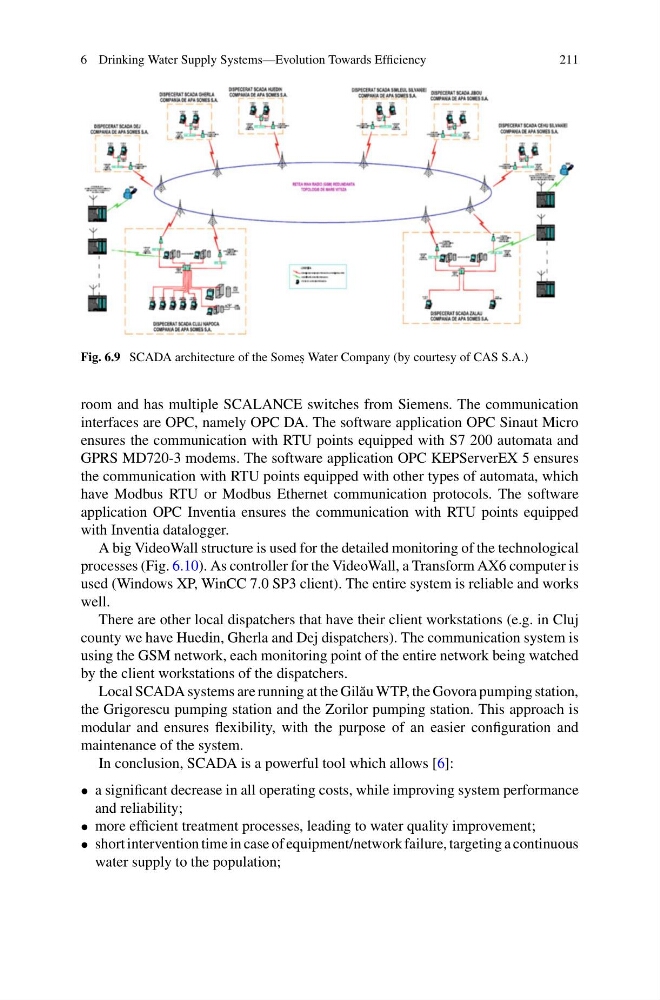
Fig. 6.9 SCADA architecture of the Somes , Water Company (by courtesy of CAS S.A.)
room and has multiple SCALANCE switches from Siemens. The communication
interfaces are OPC, namely OPC DA. The software application OPC Sinaut Micro
ensures the communication with RTU points equipped with S7 200 automata and
GPRS MD720-3 modems. The software application OPC KEPServerEX 5 ensures
the communication with RTU points equipped with other types of automata, which
have Modbus RTU or Modbus Ethernet communication protocols. The software
application OPC Inventia ensures the communication with RTU points equipped
with Inventia datalogger.
A big VideoWall structure is used for the detailed monitoring of the technological
processes (Fig. 6.10). As controller for the VideoWall, a Transform AX6 computer is
used (Windows XP, WinCC 7.0 SP3 client). The entire system is reliable and works
well.
There are other local dispatchers that have their client workstations (e.g. in Cluj
county we have Huedin, Gherla and Dej dispatchers). The communication system is
using the GSM network, each monitoring point of the entire network being watched
by the client workstations of the dispatchers.
Local SCADA systems are running at the Gil˘ au WTP, the Govora pumping station,
the Grigorescu pumping station and the Zorilor pumping station. This approach is
modular and ensures flexibility, with the purpose of an easier configuration and
maintenance of the system.
In conclusion, SCADA is a powerful tool which allows [6]:
• a significant decrease in all operating costs, while improving system performance
and reliability;
• more efficient treatment processes, leading to water quality improvement;
• short intervention time in case of equipment/network failure, targeting a continuous
water supply to the population;
211
Fig. 6.9 SCADA architecture of the Somes , Water Company (by courtesy of CAS S.A.)
room and has multiple SCALANCE switches from Siemens. The communication
interfaces are OPC, namely OPC DA. The software application OPC Sinaut Micro
ensures the communication with RTU points equipped with S7 200 automata and
GPRS MD720-3 modems. The software application OPC KEPServerEX 5 ensures
the communication with RTU points equipped with other types of automata, which
have Modbus RTU or Modbus Ethernet communication protocols. The software
application OPC Inventia ensures the communication with RTU points equipped
with Inventia datalogger.
A big VideoWall structure is used for the detailed monitoring of the technological
processes (Fig. 6.10). As controller for the VideoWall, a Transform AX6 computer is
used (Windows XP, WinCC 7.0 SP3 client). The entire system is reliable and works
well.
There are other local dispatchers that have their client workstations (e.g. in Cluj
county we have Huedin, Gherla and Dej dispatchers). The communication system is
using the GSM network, each monitoring point of the entire network being watched
by the client workstations of the dispatchers.
Local SCADA systems are running at the Gil˘ au WTP, the Govora pumping station,
the Grigorescu pumping station and the Zorilor pumping station. This approach is
modular and ensures flexibility, with the purpose of an easier configuration and
maintenance of the system.
In conclusion, SCADA is a powerful tool which allows [6]:
• a significant decrease in all operating costs, while improving system performance
and reliability;
• more efficient treatment processes, leading to water quality improvement;
• short intervention time in case of equipment/network failure, targeting a continuous
water supply to the population;