

142
F. Morar et al.
Table 4.2 Classification of pollutants according to their effects [29]
Compound groups
Effects
Bio-degradable substances
Deoxygenation, unpleasant odors, dead fish
Toxic substances
Animal poisoning, dead fish, and plankton,
bioaccumulation
Acids and alkali
Destruction of natural buffering capacity and
disturbance of ecological balance
Disinfectants (Cl 2 , H 2 O 2 , formalin etc.) Selective destruction of microorganisms, unpleasant
tastes, and smells in treated waters
Salts
Change of water characteristics (salinity, hardness
etc.)
Oxidizing and reducing agents
Consumption of dissolved oxygen, eutrophication,
selective development of bacteria, unpleasant smells
Esthetically disagreeable substances
Floating and sedimentary substances,
eutrophication, anaerobic benthic deposits, odors,
fish mortality
Pathogen agents
Hydric infections and diseases in humans and
animals, plant diseases
4.2.4 Water Pollutants
Water pollutants can be grouped according to the following criteria:
• By their nature: organic, inorganic, biological, thermal, radioactive pollutants;
• By the state of aggregation: suspensions (insoluble in water); soluble in water;
colloidal dispersions;
• By the degree of natural degradation in water: readily biodegradable; hardly
biodegradable (degradation takes place in less than 30 days); non-biodegradable
(degradation occurs in 30–60 days); refractory (degradation begins after at least
2 years) [27, 28].
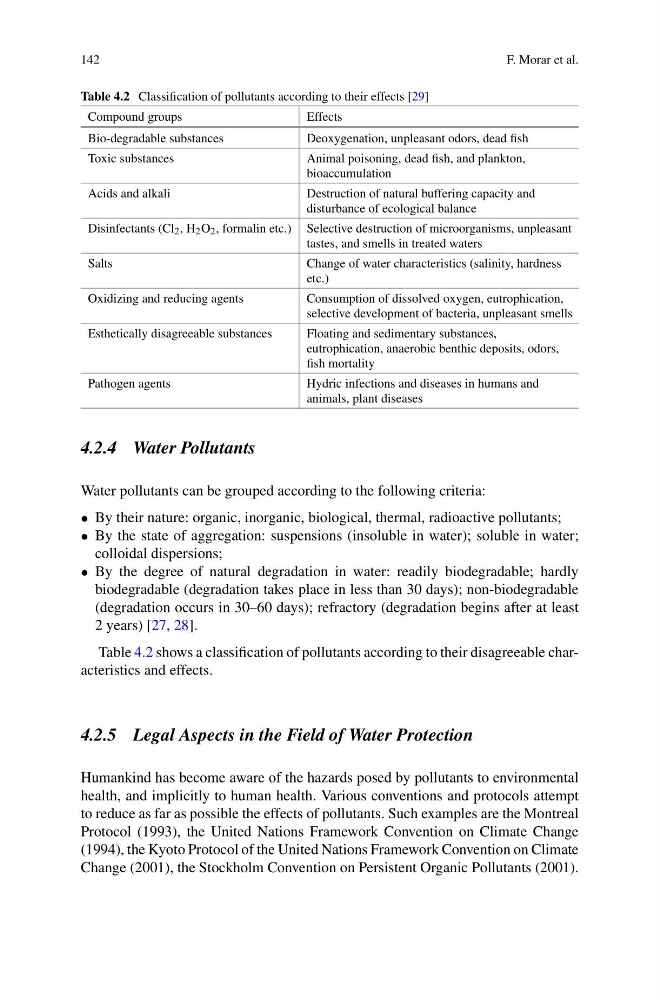
Table 4.2 shows a classification of pollutants according to their disagreeable characteristics and effects.
4.2.5 Legal Aspects in the Field of Water Protection
Humankind has become aware of the hazards posed by pollutants to environmental
health, and implicitly to human health. Various conventions and protocols attempt
to reduce as far as possible the effects of pollutants. Such examples are the Montreal
Protocol (1993), the United Nations Framework Convention on Climate Change
(1994), the Kyoto Protocol of the United Nations Framework Convention on Climate
Change (2001), the Stockholm Convention on Persistent Organic Pollutants (2001).
F. Morar et al.
Table 4.2 Classification of pollutants according to their effects [29]
Compound groups
Effects
Bio-degradable substances
Deoxygenation, unpleasant odors, dead fish
Toxic substances
Animal poisoning, dead fish, and plankton,
bioaccumulation
Acids and alkali
Destruction of natural buffering capacity and
disturbance of ecological balance
Disinfectants (Cl 2 , H 2 O 2 , formalin etc.) Selective destruction of microorganisms, unpleasant
tastes, and smells in treated waters
Salts
Change of water characteristics (salinity, hardness
etc.)
Oxidizing and reducing agents
Consumption of dissolved oxygen, eutrophication,
selective development of bacteria, unpleasant smells
Esthetically disagreeable substances
Floating and sedimentary substances,
eutrophication, anaerobic benthic deposits, odors,
fish mortality
Pathogen agents
Hydric infections and diseases in humans and
animals, plant diseases
4.2.4 Water Pollutants
Water pollutants can be grouped according to the following criteria:
• By their nature: organic, inorganic, biological, thermal, radioactive pollutants;
• By the state of aggregation: suspensions (insoluble in water); soluble in water;
colloidal dispersions;
• By the degree of natural degradation in water: readily biodegradable; hardly
biodegradable (degradation takes place in less than 30 days); non-biodegradable
(degradation occurs in 30–60 days); refractory (degradation begins after at least
2 years) [27, 28].
Table 4.2 shows a classification of pollutants according to their disagreeable characteristics and effects.
4.2.5 Legal Aspects in the Field of Water Protection
Humankind has become aware of the hazards posed by pollutants to environmental
health, and implicitly to human health. Various conventions and protocols attempt
to reduce as far as possible the effects of pollutants. Such examples are the Montreal
Protocol (1993), the United Nations Framework Convention on Climate Change
(1994), the Kyoto Protocol of the United Nations Framework Convention on Climate
Change (2001), the Stockholm Convention on Persistent Organic Pollutants (2001).