

59
Sustainability of Groundwater
The intensive increase of the CLCU to supply the food demand of the human populations, for example, the change of desert scrubland to agricultural drylands and the
increasing urbanization and industrialization in the landscape, has led to an excessive extraction of groundwater that exceeds the total recharge to the underlying
aquifers, subjecting water stress to SES, their population, and consequently to the
economy and sustainability. These dynamics of exploitation of aquifers are related
to anthropogenic process, which consist of changing the use of the soil, which is
different from what is known to have been its original use. For example, pristine soil
supports pastures, forests, or forests that humans have transformed for their benefit
into urban, agricultural, and tourist areas, to name a few. During the last two decades,
all these processes have led to plans of sustainable development of aquifers (Reyes
Gómez et al. 2017).
The concept of groundwater sustainability is of utmost interest for those in
charge of coordinating and deciding how to use water in drylands. Most of the
groups that decide and manage groundwater in dryland SES consider that in order
to achieve water sustainability, good practices in water use must be adopted and
promoted, and that they must be followed following strict guidelines to the very
long-term (Wang and Wu 2006). Water sustainability at a global and local scale is
achieved through the maintenance and protection of groundwater resources in balance with the economic, environmental, and human (social) benefits (Hiscock et al.
2002). The interpretation of groundwater sustainability considers methodologies
that contemplate management practices that ensure the preservation of water,
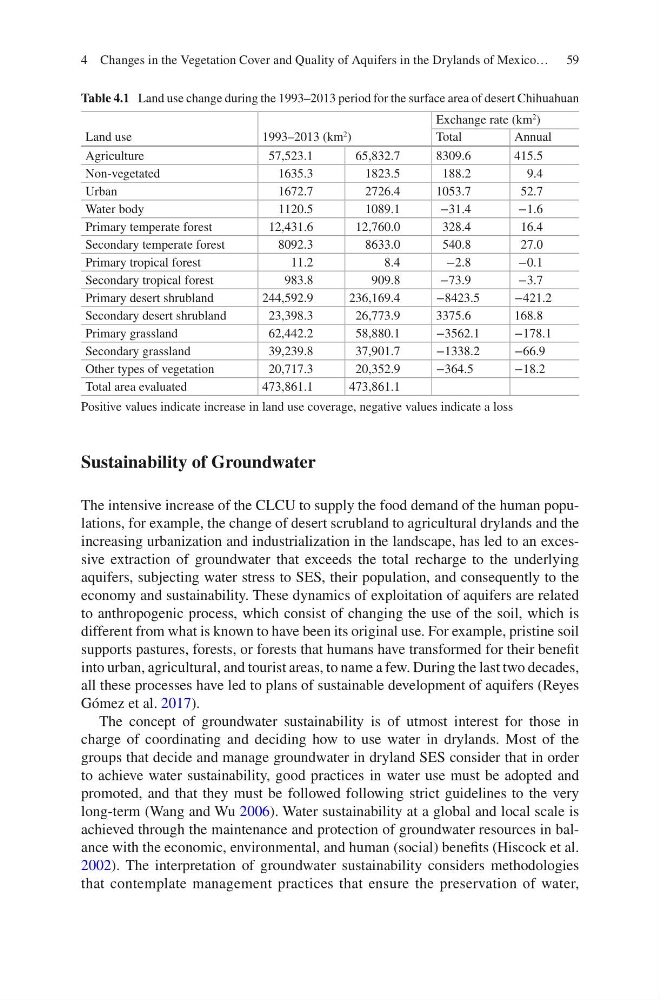
Table 4.1 Land use change during the 1993–2013 period for the surface area of desert Chihuahuan
Land use
1993–2013 (km
2 )
Exchange rate (km
2 )
Total
Annual
Agriculture
57,523.1
65,832.7
8309.6
415.5
Non-vegetated
1635.3
1823.5
188.2
9.4
Urban
1672.7
2726.4
1053.7
52.7
Water body
1120.5
1089.1
−31.4
−1.6
Primary temperate forest
12,431.6
12,760.0
328.4
16.4
Secondary temperate forest
8092.3
8633.0
540.8
27.0
Primary tropical forest
11.2
8.4
−2.8
−0.1
Secondary tropical forest
983.8
909.8
−73.9
−3.7
Primary desert shrubland
244,592.9
236,169.4
−8423.5
−421.2
Secondary desert shrubland
23,398.3
26,773.9
3375.6
168.8
Primary grassland
62,442.2
58,880.1
−3562.1
−178.1
Secondary grassland
39,239.8
37,901.7
−1338.2
−66.9
Other types of vegetation
20,717.3
20,352.9
−364.5
−18.2
Total area evaluated
473,861.1
473,861.1
Positive values indicate increase in land use coverage, negative values indicate a loss
4 Changes in the Vegetation Cover and Quality of Aquifers in the Drylands of Mexico…
Sustainability of Groundwater
The intensive increase of the CLCU to supply the food demand of the human populations, for example, the change of desert scrubland to agricultural drylands and the
increasing urbanization and industrialization in the landscape, has led to an excessive extraction of groundwater that exceeds the total recharge to the underlying
aquifers, subjecting water stress to SES, their population, and consequently to the
economy and sustainability. These dynamics of exploitation of aquifers are related
to anthropogenic process, which consist of changing the use of the soil, which is
different from what is known to have been its original use. For example, pristine soil
supports pastures, forests, or forests that humans have transformed for their benefit
into urban, agricultural, and tourist areas, to name a few. During the last two decades,
all these processes have led to plans of sustainable development of aquifers (Reyes
Gómez et al. 2017).
The concept of groundwater sustainability is of utmost interest for those in
charge of coordinating and deciding how to use water in drylands. Most of the
groups that decide and manage groundwater in dryland SES consider that in order
to achieve water sustainability, good practices in water use must be adopted and
promoted, and that they must be followed following strict guidelines to the very
long-term (Wang and Wu 2006). Water sustainability at a global and local scale is
achieved through the maintenance and protection of groundwater resources in balance with the economic, environmental, and human (social) benefits (Hiscock et al.
2002). The interpretation of groundwater sustainability considers methodologies
that contemplate management practices that ensure the preservation of water,
Table 4.1 Land use change during the 1993–2013 period for the surface area of desert Chihuahuan
Land use
1993–2013 (km
2 )
Exchange rate (km
2 )
Total
Annual
Agriculture
57,523.1
65,832.7
8309.6
415.5
Non-vegetated
1635.3
1823.5
188.2
9.4
Urban
1672.7
2726.4
1053.7
52.7
Water body
1120.5
1089.1
−31.4
−1.6
Primary temperate forest
12,431.6
12,760.0
328.4
16.4
Secondary temperate forest
8092.3
8633.0
540.8
27.0
Primary tropical forest
11.2
8.4
−2.8
−0.1
Secondary tropical forest
983.8
909.8
−73.9
−3.7
Primary desert shrubland
244,592.9
236,169.4
−8423.5
−421.2
Secondary desert shrubland
23,398.3
26,773.9
3375.6
168.8
Primary grassland
62,442.2
58,880.1
−3562.1
−178.1
Secondary grassland
39,239.8
37,901.7
−1338.2
−66.9
Other types of vegetation
20,717.3
20,352.9
−364.5
−18.2
Total area evaluated
473,861.1
473,861.1
Positive values indicate increase in land use coverage, negative values indicate a loss
4 Changes in the Vegetation Cover and Quality of Aquifers in the Drylands of Mexico…