

50
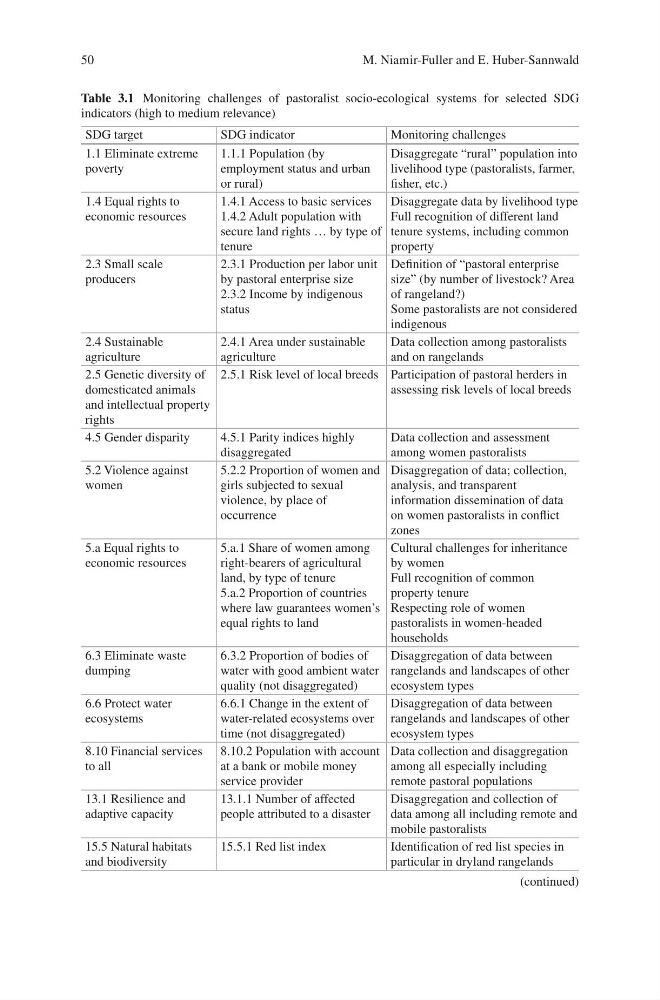
Table 3.1 Monitoring challenges of pastoralist socio-ecological systems for selected SDG
indicators (high to medium relevance)
SDG target
SDG indicator
Monitoring challenges
1.1 Eliminate extreme
poverty
1.1.1 Population (by
employment status and urban
or rural)
Disaggregate “rural” population into
livelihood type (pastoralists, farmer,
fisher, etc.)
1.4 Equal rights to
economic resources
1.4.1 Access to basic services
1.4.2 Adult population with
secure land rights … by type of
tenure
Disaggregate data by livelihood type
Full recognition of different land
tenure systems, including common
property
2.3 Small scale
producers
2.3.1 Production per labor unit
by pastoral enterprise size
2.3.2 Income by indigenous
status
Definition of “pastoral enterprise
size” (by number of livestock? Area
of rangeland?)
Some pastoralists are not considered
indigenous
2.4 Sustainable
agriculture
2.4.1 Area under sustainable
agriculture
Data collection among pastoralists
and on rangelands
2.5 Genetic diversity of
domesticated animals
and intellectual property
rights
2.5.1 Risk level of local breeds Participation of pastoral herders in
assessing risk levels of local breeds
4.5 Gender disparity
4.5.1 Parity indices highly
disaggregated
Data collection and assessment
among women pastoralists
5.2 Violence against
women
5.2.2 Proportion of women and
girls subjected to sexual
violence, by place of
occurrence
Disaggregation of data; collection,
analysis, and transparent
information dissemination of data
on women pastoralists in conflict
zones
5.a Equal rights to
economic resources
5.a.1 Share of women among
right-bearers of agricultural
land, by type of tenure
5.a.2 Proportion of countries
where law guarantees women’s
equal rights to land
Cultural challenges for inheritance
by women
Full recognition of common
property tenure
Respecting role of women
pastoralists in women-headed
households
6.3 Eliminate waste
dumping
6.3.2 Proportion of bodies of
water with good ambient water
quality (not disaggregated)
Disaggregation of data between
rangelands and landscapes of other
ecosystem types
6.6 Protect water
ecosystems
6.6.1 Change in the extent of
water-related ecosystems over
time (not disaggregated)
Disaggregation of data between
rangelands and landscapes of other
ecosystem types
8.10 Financial services
to all
8.10.2 Population with account
at a bank or mobile money
service provider
Data collection and disaggregation
among all especially including
remote pastoral populations
13.1 Resilience and
adaptive capacity
13.1.1 Number of affected
people attributed to a disaster
Disaggregation and collection of
data among all including remote and
mobile pastoralists
15.5 Natural habitats
and biodiversity
15.5.1 Red list index
Identification of red list species in
particular in dryland rangelands
(continued)
M. Niamir-Fuller and E. Huber-Sannwald
Table 3.1 Monitoring challenges of pastoralist socio-ecological systems for selected SDG
indicators (high to medium relevance)
SDG target
SDG indicator
Monitoring challenges
1.1 Eliminate extreme
poverty
1.1.1 Population (by
employment status and urban
or rural)
Disaggregate “rural” population into
livelihood type (pastoralists, farmer,
fisher, etc.)
1.4 Equal rights to
economic resources
1.4.1 Access to basic services
1.4.2 Adult population with
secure land rights … by type of
tenure
Disaggregate data by livelihood type
Full recognition of different land
tenure systems, including common
property
2.3 Small scale
producers
2.3.1 Production per labor unit
by pastoral enterprise size
2.3.2 Income by indigenous
status
Definition of “pastoral enterprise
size” (by number of livestock? Area
of rangeland?)
Some pastoralists are not considered
indigenous
2.4 Sustainable
agriculture
2.4.1 Area under sustainable
agriculture
Data collection among pastoralists
and on rangelands
2.5 Genetic diversity of
domesticated animals
and intellectual property
rights
2.5.1 Risk level of local breeds Participation of pastoral herders in
assessing risk levels of local breeds
4.5 Gender disparity
4.5.1 Parity indices highly
disaggregated
Data collection and assessment
among women pastoralists
5.2 Violence against
women
5.2.2 Proportion of women and
girls subjected to sexual
violence, by place of
occurrence
Disaggregation of data; collection,
analysis, and transparent
information dissemination of data
on women pastoralists in conflict
zones
5.a Equal rights to
economic resources
5.a.1 Share of women among
right-bearers of agricultural
land, by type of tenure
5.a.2 Proportion of countries
where law guarantees women’s
equal rights to land
Cultural challenges for inheritance
by women
Full recognition of common
property tenure
Respecting role of women
pastoralists in women-headed
households
6.3 Eliminate waste
dumping
6.3.2 Proportion of bodies of
water with good ambient water
quality (not disaggregated)
Disaggregation of data between
rangelands and landscapes of other
ecosystem types
6.6 Protect water
ecosystems
6.6.1 Change in the extent of
water-related ecosystems over
time (not disaggregated)
Disaggregation of data between
rangelands and landscapes of other
ecosystem types
8.10 Financial services
to all
8.10.2 Population with account
at a bank or mobile money
service provider
Data collection and disaggregation
among all especially including
remote pastoral populations
13.1 Resilience and
adaptive capacity
13.1.1 Number of affected
people attributed to a disaster
Disaggregation and collection of
data among all including remote and
mobile pastoralists
15.5 Natural habitats
and biodiversity
15.5.1 Red list index
Identification of red list species in
particular in dryland rangelands
(continued)
M. Niamir-Fuller and E. Huber-Sannwald