

316
or regional scale, sensitivity and capacity adaptation in general will need to be
attended at a more local scale. This implies adjusting the indicators to the new scale,
along with facing the corresponding data availability issues. As for future data, nesting of general circulation models to obtain more accurate data is needed, together
with the use of other models to define the likelihood of these predictions.
Obtaining a value for the future adaptation capacity subindex is difficult to
achieve in a model for any of the horizons considered in the climate models.
Although it is desirable that all coastal municipalities have at least the four abovementioned preventive policies (indicators), the future existence of all these instruments is not predictable. Moreover, other indicators of governance should be
included for constructing a more complex and complete subindex, especially those
describing the communities’ capacity of adaptation, for example, active NGOs
programs, environmental education levels, participation, and social interactions,
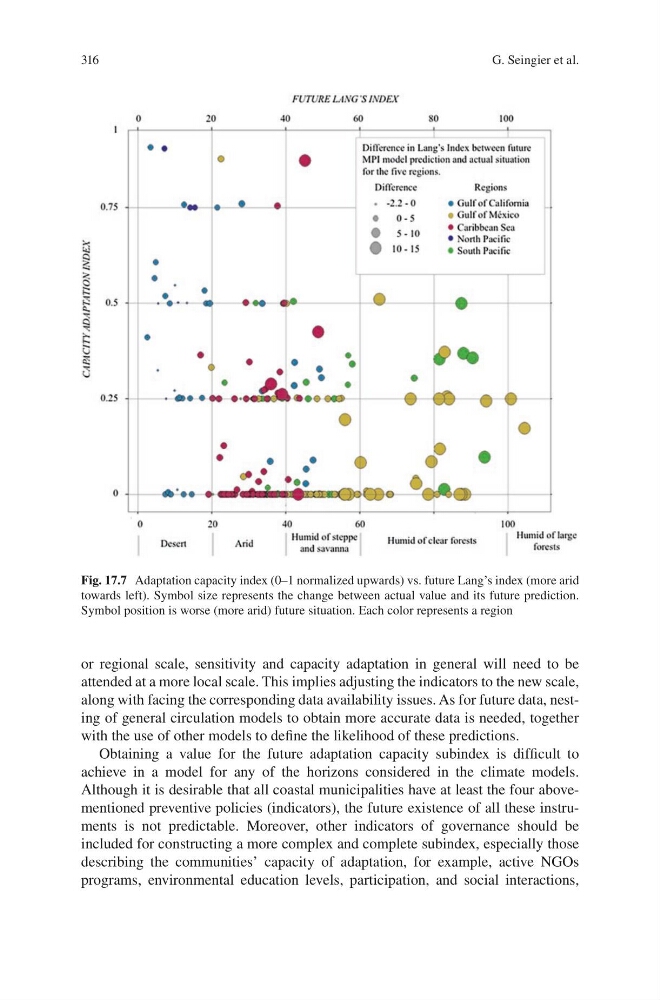
Fig. 17.7 Adaptation capacity index (0–1 normalized upwards) vs. future Lang’s index (more arid
towards left). Symbol size represents the change between actual value and its future prediction.
Symbol position is worse (more arid) future situation. Each color represents a region
G. Seingier et al.
or regional scale, sensitivity and capacity adaptation in general will need to be
attended at a more local scale. This implies adjusting the indicators to the new scale,
along with facing the corresponding data availability issues. As for future data, nesting of general circulation models to obtain more accurate data is needed, together
with the use of other models to define the likelihood of these predictions.
Obtaining a value for the future adaptation capacity subindex is difficult to
achieve in a model for any of the horizons considered in the climate models.
Although it is desirable that all coastal municipalities have at least the four abovementioned preventive policies (indicators), the future existence of all these instruments is not predictable. Moreover, other indicators of governance should be
included for constructing a more complex and complete subindex, especially those
describing the communities’ capacity of adaptation, for example, active NGOs
programs, environmental education levels, participation, and social interactions,
Fig. 17.7 Adaptation capacity index (0–1 normalized upwards) vs. future Lang’s index (more arid
towards left). Symbol size represents the change between actual value and its future prediction.
Symbol position is worse (more arid) future situation. Each color represents a region
G. Seingier et al.