

293
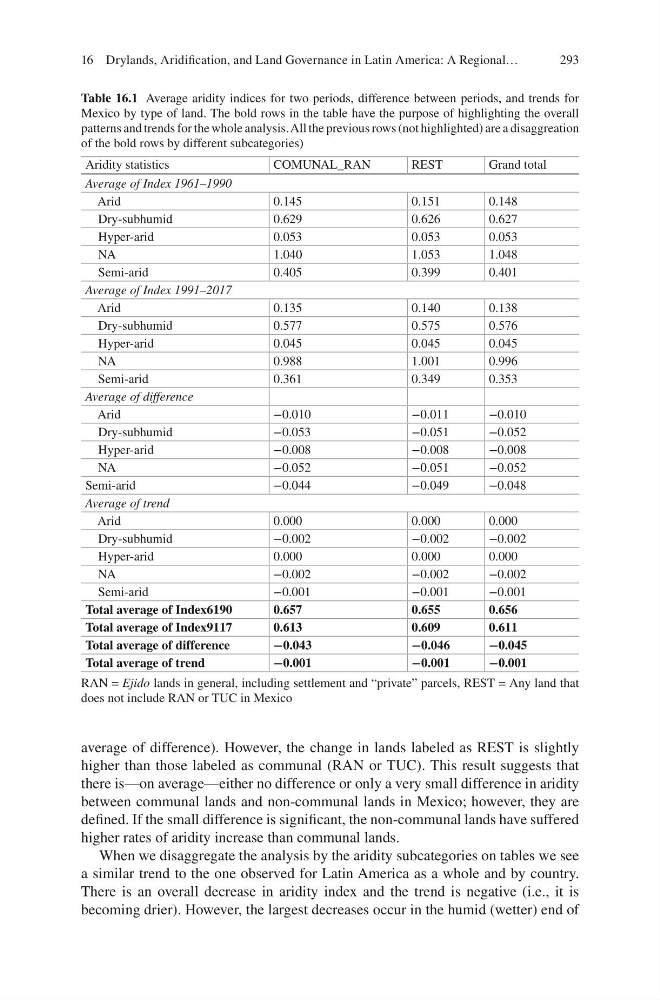
Table 16.1 Average aridity indices for two periods, difference between periods, and trends for
Mexico by type of land. The bold rows in the table have the purpose of highlighting the overall
patterns and trends for the whole analysis. All the previous rows (not highlighted) are a disaggreation
of the bold rows by different subcategories)
Aridity statistics
COMUNAL_RAN
REST
Grand total
Average of Index 1961–1990
Arid
0.145
0.151
0.148
Dry-subhumid
0.629
0.626
0.627
Hyper-arid
0.053
0.053
0.053
NA
1.040
1.053
1.048
Semi-arid
0.405
0.399
0.401
Average of Index 1991–2017
Arid
0.135
0.140
0.138
Dry-subhumid
0.577
0.575
0.576
Hyper-arid
0.045
0.045
0.045
NA
0.988
1.001
0.996
Semi-arid
0.361
0.349
0.353
Average of difference
Arid
−0.010
−0.011
−0.010
Dry-subhumid
−0.053
−0.051
−0.052
Hyper-arid
−0.008
−0.008
−0.008
NA
−0.052
−0.051
−0.052
Semi-arid
−0.044
−0.049
−0.048
Average of trend
Arid
0.000
0.000
0.000
Dry-subhumid
−0.002
−0.002
−0.002
Hyper-arid
0.000
0.000
0.000
NA
−0.002
−0.002
−0.002
Semi-arid
−0.001
−0.001
−0.001
Total average of Index6190
0.657
0.655
0.656
Total average of Index9117
0.613
0.609
0.611
Total average of difference
−0.043
−0.046
−0.045
Total average of trend
−0.001
−0.001
−0.001
RAN = Ejido lands in general, including settlement and “private” parcels, REST = Any land that
does not include RAN or TUC in Mexico
average of difference). However, the change in lands labeled as REST is slightly
higher than those labeled as communal (RAN or TUC). This result suggests that
there is—on average—either no difference or only a very small difference in aridity
between communal lands and non-communal lands in Mexico; however, they are
defined. If the small difference is significant, the non-communal lands have suffered
higher rates of aridity increase than communal lands.
When we disaggregate the analysis by the aridity subcategories on tables we see
a similar trend to the one observed for Latin America as a whole and by country.
There is an overall decrease in aridity index and the trend is negative (i.e., it is
becoming drier). However, the largest decreases occur in the humid (wetter) end of
16 Drylands, Aridification, and Land Governance in Latin America: A Regional…
Table 16.1 Average aridity indices for two periods, difference between periods, and trends for
Mexico by type of land. The bold rows in the table have the purpose of highlighting the overall
patterns and trends for the whole analysis. All the previous rows (not highlighted) are a disaggreation
of the bold rows by different subcategories)
Aridity statistics
COMUNAL_RAN
REST
Grand total
Average of Index 1961–1990
Arid
0.145
0.151
0.148
Dry-subhumid
0.629
0.626
0.627
Hyper-arid
0.053
0.053
0.053
NA
1.040
1.053
1.048
Semi-arid
0.405
0.399
0.401
Average of Index 1991–2017
Arid
0.135
0.140
0.138
Dry-subhumid
0.577
0.575
0.576
Hyper-arid
0.045
0.045
0.045
NA
0.988
1.001
0.996
Semi-arid
0.361
0.349
0.353
Average of difference
Arid
−0.010
−0.011
−0.010
Dry-subhumid
−0.053
−0.051
−0.052
Hyper-arid
−0.008
−0.008
−0.008
NA
−0.052
−0.051
−0.052
Semi-arid
−0.044
−0.049
−0.048
Average of trend
Arid
0.000
0.000
0.000
Dry-subhumid
−0.002
−0.002
−0.002
Hyper-arid
0.000
0.000
0.000
NA
−0.002
−0.002
−0.002
Semi-arid
−0.001
−0.001
−0.001
Total average of Index6190
0.657
0.655
0.656
Total average of Index9117
0.613
0.609
0.611
Total average of difference
−0.043
−0.046
−0.045
Total average of trend
−0.001
−0.001
−0.001
RAN = Ejido lands in general, including settlement and “private” parcels, REST = Any land that
does not include RAN or TUC in Mexico
average of difference). However, the change in lands labeled as REST is slightly
higher than those labeled as communal (RAN or TUC). This result suggests that
there is—on average—either no difference or only a very small difference in aridity
between communal lands and non-communal lands in Mexico; however, they are
defined. If the small difference is significant, the non-communal lands have suffered
higher rates of aridity increase than communal lands.
When we disaggregate the analysis by the aridity subcategories on tables we see
a similar trend to the one observed for Latin America as a whole and by country.
There is an overall decrease in aridity index and the trend is negative (i.e., it is
becoming drier). However, the largest decreases occur in the humid (wetter) end of
16 Drylands, Aridification, and Land Governance in Latin America: A Regional…