

235
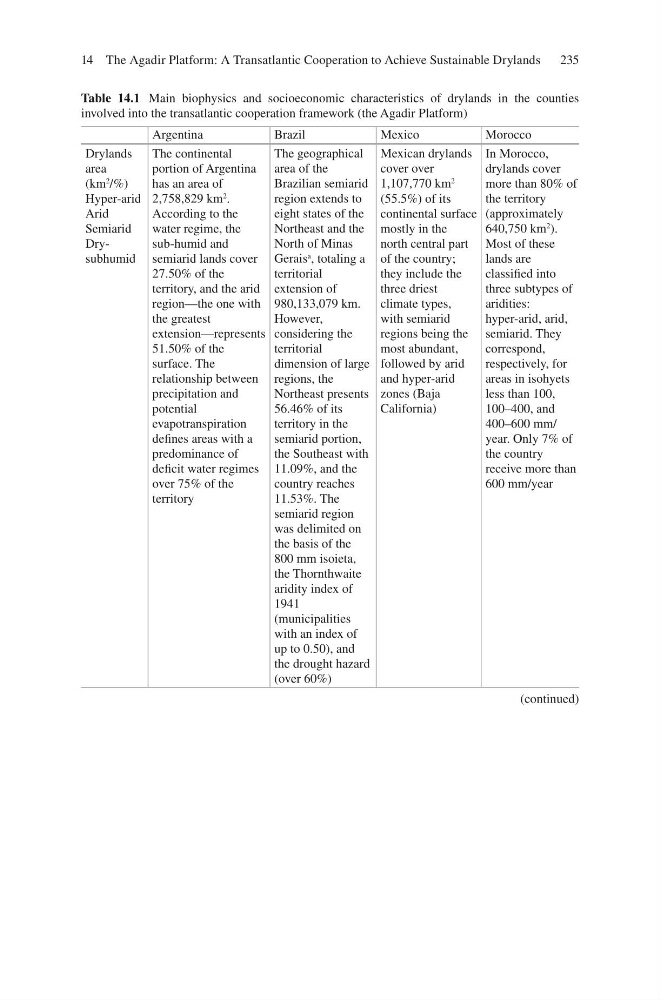
Table 14.1 Main biophysics and socioeconomic characteristics of drylands in the counties
involved into the transatlantic cooperation framework (the Agadir Platform)
Argentina
Brazil
Mexico
Morocco
Drylands
area
(km
2 /%)
Hyper-arid
Arid
Semiarid
Drysubhumid
The continental
portion of Argentina
has an area of
2,758,829 km
2
.
According to the
water regime, the
sub-humid and
semiarid lands cover
27.50% of the
territory, and the arid
region—the one with
the greatest
extension—represents
51.50% of the
surface. The
relationship between
precipitation and
potential
evapotranspiration
defines areas with a
predominance of
deficit water regimes
over 75% of the
territory
The geographical
area of the
Brazilian semiarid
region extends to
eight states of the
Northeast and the
North of Minas
Gerais
a
, totaling a
territorial
extension of
980,133,079 km.
However,
considering the
territorial
dimension of large
regions, the
Northeast presents
56.46% of its
territory in the
semiarid portion,
the Southeast with
11.09%, and the
country reaches
11.53%. The
semiarid region
was delimited on
the basis of the
800 mm isoieta,
the Thornthwaite
aridity index of
1941
(municipalities
with an index of
up to 0.50), and
the drought hazard
(over 60%)
Mexican drylands
cover over
1,107,770 km
2
(55.5%) of its
continental surface
mostly in the
north central part
of the country;
they include the
three driest
climate types,
with semiarid
regions being the
most abundant,
followed by arid
and hyper-arid
zones (Baja
California)
In Morocco,
drylands cover
more than 80% of
the territory
(approximately
640,750 km
2 ).
Most of these
lands are
classified into
three subtypes of
aridities:
hyper-arid, arid,
semiarid. They
correspond,
respectively, for
areas in isohyets
less than 100,
100–400, and
400–600 mm/
year. Only 7% of
the country
receive more than
600 mm/year
(continued)
14 The Agadir Platform: A Transatlantic Cooperation to Achieve Sustainable Drylands
Table 14.1 Main biophysics and socioeconomic characteristics of drylands in the counties
involved into the transatlantic cooperation framework (the Agadir Platform)
Argentina
Brazil
Mexico
Morocco
Drylands
area
(km
2 /%)
Hyper-arid
Arid
Semiarid
Drysubhumid
The continental
portion of Argentina
has an area of
2,758,829 km
2
.
According to the
water regime, the
sub-humid and
semiarid lands cover
27.50% of the
territory, and the arid
region—the one with
the greatest
extension—represents
51.50% of the
surface. The
relationship between
precipitation and
potential
evapotranspiration
defines areas with a
predominance of
deficit water regimes
over 75% of the
territory
The geographical
area of the
Brazilian semiarid
region extends to
eight states of the
Northeast and the
North of Minas
Gerais
a
, totaling a
territorial
extension of
980,133,079 km.
However,
considering the
territorial
dimension of large
regions, the
Northeast presents
56.46% of its
territory in the
semiarid portion,
the Southeast with
11.09%, and the
country reaches
11.53%. The
semiarid region
was delimited on
the basis of the
800 mm isoieta,
the Thornthwaite
aridity index of
1941
(municipalities
with an index of
up to 0.50), and
the drought hazard
(over 60%)
Mexican drylands
cover over
1,107,770 km
2
(55.5%) of its
continental surface
mostly in the
north central part
of the country;
they include the
three driest
climate types,
with semiarid
regions being the
most abundant,
followed by arid
and hyper-arid
zones (Baja
California)
In Morocco,
drylands cover
more than 80% of
the territory
(approximately
640,750 km
2 ).
Most of these
lands are
classified into
three subtypes of
aridities:
hyper-arid, arid,
semiarid. They
correspond,
respectively, for
areas in isohyets
less than 100,
100–400, and
400–600 mm/
year. Only 7% of
the country
receive more than
600 mm/year
(continued)
14 The Agadir Platform: A Transatlantic Cooperation to Achieve Sustainable Drylands