

105
Final Considerations
Starting from the fact that the lack of a systemic vision in the past has led to serious
and unforeseen environmental and social effects, we consider the following:
Energy production projects and high-productivity horticulture are introduced
into a landscape whose socio-ecological system has faced intense socio-economic
pressures in recent decades, leading to multiple processes of degradation of the
socio-ecological system of the “altiplano,” pointed out here through the different
landscape disruptions. Then, it generates a marginalized periphery of small producers, affects the biotic and abiotic resources of the place, and denies the possibility of
maintaining alternative forms of production where, under the dominant economic
discourse, resources are wasted.
It is important to act in response to the indicators that the region shows: scarcity
and contamination of water sources and soils, saline intrusion, and reduction of
grazing conditions. This complex scenario integrates new factors such as the implementation of devices to produce renewable energies, which requires a careful balance since, from a sustainable development perspective, it should not undermine the
environmental or biocultural heritage conditions that the communities harbor or the
future enjoyment thereof.
Systemic complexity of this landscape requires studies that allow us to approach
the possible impacts, which will not necessarily be linear and cumulative, where the
transformations, beyond being the sum of several individual development projects,
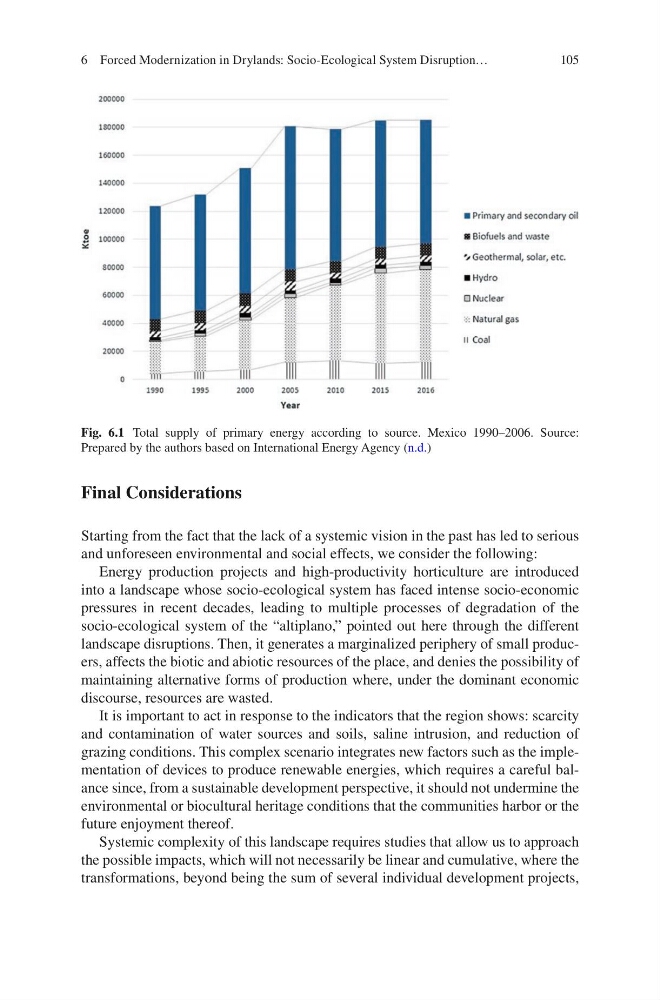
Fig. 6.1 Total supply of primary energy according to source. Mexico 1990–2006. Source:
Prepared by the authors based on International Energy Agency (n.d.)
6 Forced Modernization in Drylands: Socio-Ecological System Disruption…
Final Considerations
Starting from the fact that the lack of a systemic vision in the past has led to serious
and unforeseen environmental and social effects, we consider the following:
Energy production projects and high-productivity horticulture are introduced
into a landscape whose socio-ecological system has faced intense socio-economic
pressures in recent decades, leading to multiple processes of degradation of the
socio-ecological system of the “altiplano,” pointed out here through the different
landscape disruptions. Then, it generates a marginalized periphery of small producers, affects the biotic and abiotic resources of the place, and denies the possibility of
maintaining alternative forms of production where, under the dominant economic
discourse, resources are wasted.
It is important to act in response to the indicators that the region shows: scarcity
and contamination of water sources and soils, saline intrusion, and reduction of
grazing conditions. This complex scenario integrates new factors such as the implementation of devices to produce renewable energies, which requires a careful balance since, from a sustainable development perspective, it should not undermine the
environmental or biocultural heritage conditions that the communities harbor or the
future enjoyment thereof.
Systemic complexity of this landscape requires studies that allow us to approach
the possible impacts, which will not necessarily be linear and cumulative, where the
transformations, beyond being the sum of several individual development projects,
Fig. 6.1 Total supply of primary energy according to source. Mexico 1990–2006. Source:
Prepared by the authors based on International Energy Agency (n.d.)
6 Forced Modernization in Drylands: Socio-Ecological System Disruption…