

93
Conclusions
In this chapter, we have established the basic conceptual framework of the drylands
socio-ecological systems through the elements of a coupled human–water system,
in order to reach an integrated groundwater management in an agricultural dryland
in Baja California based not only on sound science, but also on public perception
and participation of water users. In this regard, we consider that integrated groundwater management in drylands should engage the wider community and relevant
stakeholders in decision-making. We recognize that it is important to determine how
public participation occurs in decisions regarding groundwater management and
what perception water users have of the water issues and technical solutions implemented to reduce the impact of aquifer overexploitation and increase agricultural
irrigation through the use of reclaimed water and desalinization plants. In doing so,
we can identify the key aspects influencing public participation, agricultural practices and implemented solutions to groundwater scarcity and pollution.
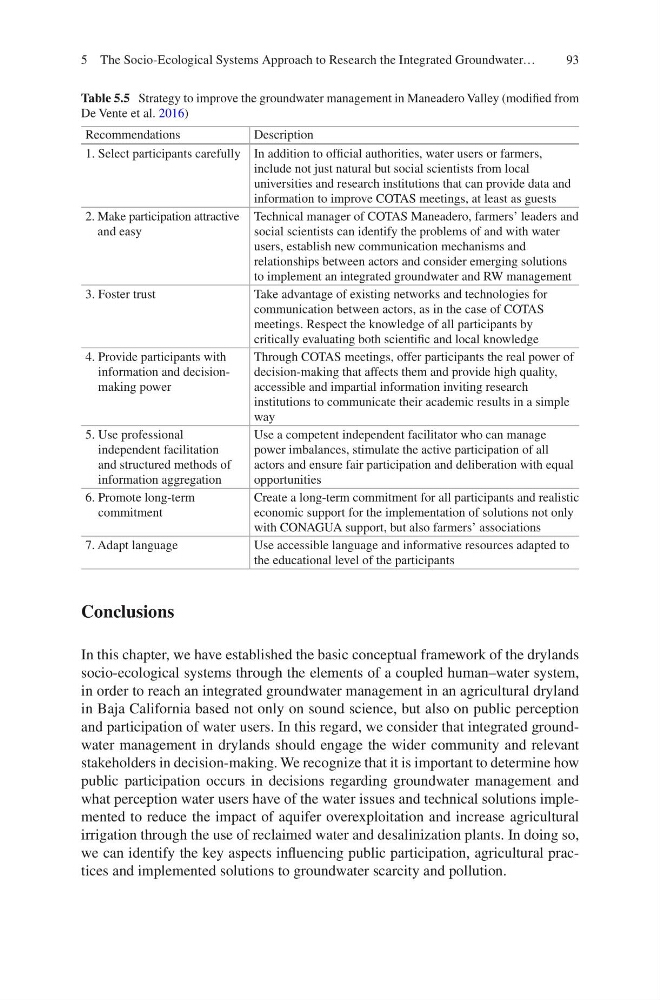
Table 5.5 Strategy to improve the groundwater management in Maneadero Valley (modified from
De Vente et al. 2016)
Recommendations
Description
1. Select participants carefully In addition to official authorities, water users or farmers,
include not just natural but social scientists from local
universities and research institutions that can provide data and
information to improve COTAS meetings, at least as guests
2. Make participation attractive
and easy
Technical manager of COTAS Maneadero, farmers’ leaders and
social scientists can identify the problems of and with water
users, establish new communication mechanisms and
relationships between actors and consider emerging solutions
to implement an integrated groundwater and RW management
3. Foster trust
Take advantage of existing networks and technologies for
communication between actors, as in the case of COTAS
meetings. Respect the knowledge of all participants by
critically evaluating both scientific and local knowledge
4. Provide participants with
information and decisionmaking power
Through COTAS meetings, offer participants the real power of
decision-making that affects them and provide high quality,
accessible and impartial information inviting research
institutions to communicate their academic results in a simple
way
5. Use professional
independent facilitation
and structured methods of
information aggregation
Use a competent independent facilitator who can manage
power imbalances, stimulate the active participation of all
actors and ensure fair participation and deliberation with equal
opportunities
6. Promote long-term
commitment
Create a long-term commitment for all participants and realistic
economic support for the implementation of solutions not only
with CONAGUA support, but also farmers’ associations
7. Adapt language
Use accessible language and informative resources adapted to
the educational level of the participants
5 The Socio-Ecological Systems Approach to Research the Integrated Groundwater…
Conclusions
In this chapter, we have established the basic conceptual framework of the drylands
socio-ecological systems through the elements of a coupled human–water system,
in order to reach an integrated groundwater management in an agricultural dryland
in Baja California based not only on sound science, but also on public perception
and participation of water users. In this regard, we consider that integrated groundwater management in drylands should engage the wider community and relevant
stakeholders in decision-making. We recognize that it is important to determine how
public participation occurs in decisions regarding groundwater management and
what perception water users have of the water issues and technical solutions implemented to reduce the impact of aquifer overexploitation and increase agricultural
irrigation through the use of reclaimed water and desalinization plants. In doing so,
we can identify the key aspects influencing public participation, agricultural practices and implemented solutions to groundwater scarcity and pollution.
Table 5.5 Strategy to improve the groundwater management in Maneadero Valley (modified from
De Vente et al. 2016)
Recommendations
Description
1. Select participants carefully In addition to official authorities, water users or farmers,
include not just natural but social scientists from local
universities and research institutions that can provide data and
information to improve COTAS meetings, at least as guests
2. Make participation attractive
and easy
Technical manager of COTAS Maneadero, farmers’ leaders and
social scientists can identify the problems of and with water
users, establish new communication mechanisms and
relationships between actors and consider emerging solutions
to implement an integrated groundwater and RW management
3. Foster trust
Take advantage of existing networks and technologies for
communication between actors, as in the case of COTAS
meetings. Respect the knowledge of all participants by
critically evaluating both scientific and local knowledge
4. Provide participants with
information and decisionmaking power
Through COTAS meetings, offer participants the real power of
decision-making that affects them and provide high quality,
accessible and impartial information inviting research
institutions to communicate their academic results in a simple
way
5. Use professional
independent facilitation
and structured methods of
information aggregation
Use a competent independent facilitator who can manage
power imbalances, stimulate the active participation of all
actors and ensure fair participation and deliberation with equal
opportunities
6. Promote long-term
commitment
Create a long-term commitment for all participants and realistic
economic support for the implementation of solutions not only
with CONAGUA support, but also farmers’ associations
7. Adapt language
Use accessible language and informative resources adapted to
the educational level of the participants
5 The Socio-Ecological Systems Approach to Research the Integrated Groundwater…