

Under the N-enriched conditions, the proportion of soil fungi in soil microbial
community would be reduced, and the microbial community would shift to be
bacteria-dominated. The impacts of N deposition on soil microbial community are
highly dependent on the rates of deposited N. For instance, the low level of N
addition had no impacts on the relative abundance of bacteria, but the high level of N
addition significantly increased the relative abundance of bacteria in a temperate
steppe (Yang et al. 2017). It should be noted that the effects of N enrichment on soil
bacterial communities would be mediated by the changes of precipitation. For
instance, soil bacterial OTU richness would be increased by N addition under
ambient precipitation conditions but would be enhanced at low N addition level
under the increased precipitation conditions (Zhang et al. 2017a). The impacts of N
deposition on bacterial communities could be ascribed to N-induced soil acidification and also to changes of N content and N forms (Chen et al. 2015). Moreover, the
responses of soil bacterial richness to N deposition would be closely correlated with
the variation of aboveground community. In a temperate steppe, Li et al. (2016)
examined the diversity linkages between aboveground and belowground biodiversity. They found strong correlations of both alpha- and beta-diversity between plant
and bacterial communities in response to N addition. Similarly, Zeng et al. (2016)
also reported the role of plant community in mediating the impacts of N addition on
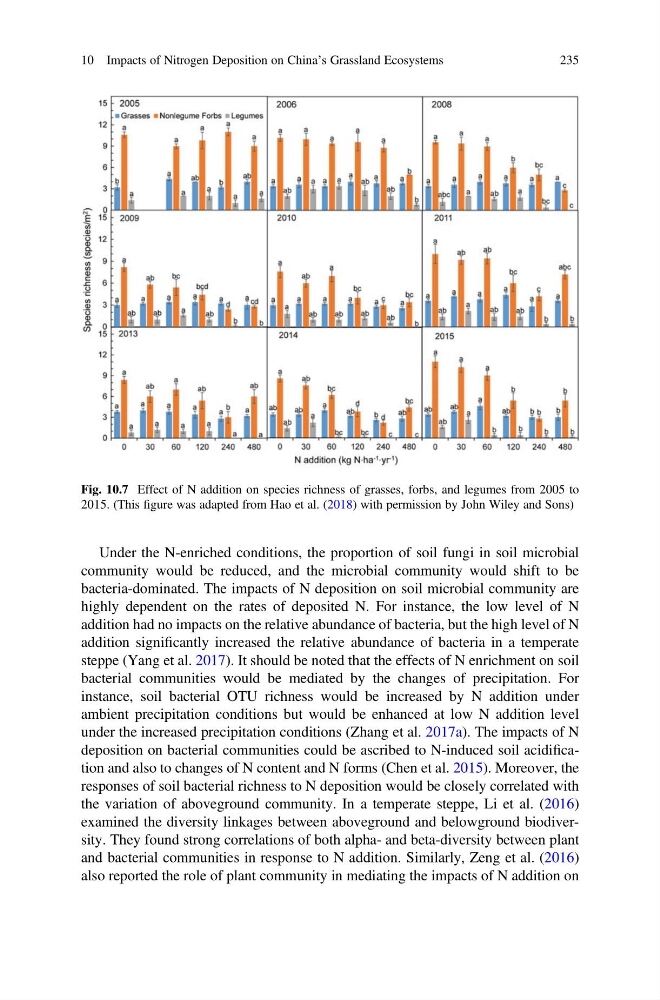
Fig. 10.7 Effect of N addition on species richness of grasses, forbs, and legumes from 2005 to
2015. (This figure was adapted from Hao et al. (2018) with permission by John Wiley and Sons)
10 Impacts of Nitrogen Deposition on China’s Grassland Ecosystems
235
community would be reduced, and the microbial community would shift to be
bacteria-dominated. The impacts of N deposition on soil microbial community are
highly dependent on the rates of deposited N. For instance, the low level of N
addition had no impacts on the relative abundance of bacteria, but the high level of N
addition significantly increased the relative abundance of bacteria in a temperate
steppe (Yang et al. 2017). It should be noted that the effects of N enrichment on soil
bacterial communities would be mediated by the changes of precipitation. For
instance, soil bacterial OTU richness would be increased by N addition under
ambient precipitation conditions but would be enhanced at low N addition level
under the increased precipitation conditions (Zhang et al. 2017a). The impacts of N
deposition on bacterial communities could be ascribed to N-induced soil acidification and also to changes of N content and N forms (Chen et al. 2015). Moreover, the
responses of soil bacterial richness to N deposition would be closely correlated with
the variation of aboveground community. In a temperate steppe, Li et al. (2016)
examined the diversity linkages between aboveground and belowground biodiversity. They found strong correlations of both alpha- and beta-diversity between plant
and bacterial communities in response to N addition. Similarly, Zeng et al. (2016)
also reported the role of plant community in mediating the impacts of N addition on
Fig. 10.7 Effect of N addition on species richness of grasses, forbs, and legumes from 2005 to
2015. (This figure was adapted from Hao et al. (2018) with permission by John Wiley and Sons)
10 Impacts of Nitrogen Deposition on China’s Grassland Ecosystems
235