

functionalization of polypseudorotaxane (PRX). Thus, their study heralded rapid
progress in the fabrication and application of CE-PRXs (Fig. 19) [50].
Supramolecular polymers constructed by metal-directed self-assembly via
host–guest association and metal–ligand interactions attract more and more attention
owing to their numerous interesting properties and potential applications. The strong
binding between terpyridines and metal ions (Zn
2+ , Fe
2+ , etc.) can enable the easy
construction of supramolecular polymers through the intermolecular coordination
of ditopic hosts bearing two terpyridine terminals with metal ions, and the resultant
supramolecular polymers can be reversibly disassembled through the addition of
competitive ligands or metal ions We have fabricated a supramolecular gel with
a three-dimensional network structure following the pathway of the primary assembly of bis(terpyridyl)dibenzo-24-crown-8 by metal coordination polymerization,
grafting of anthryl-dibenzylammonium guests, and photo-induced secondary assembly. This supramolecular gel can reversibly convert to the soluble 1/Zn/2 assembly
under heating and recovered under light irradiation. The stimuli-responsive sol–gel
transformation property, along with the ease of preparation, will make this supramolecular gel well suitable for a variety of important biomedical and industrial
applications (Fig. 20) [51].
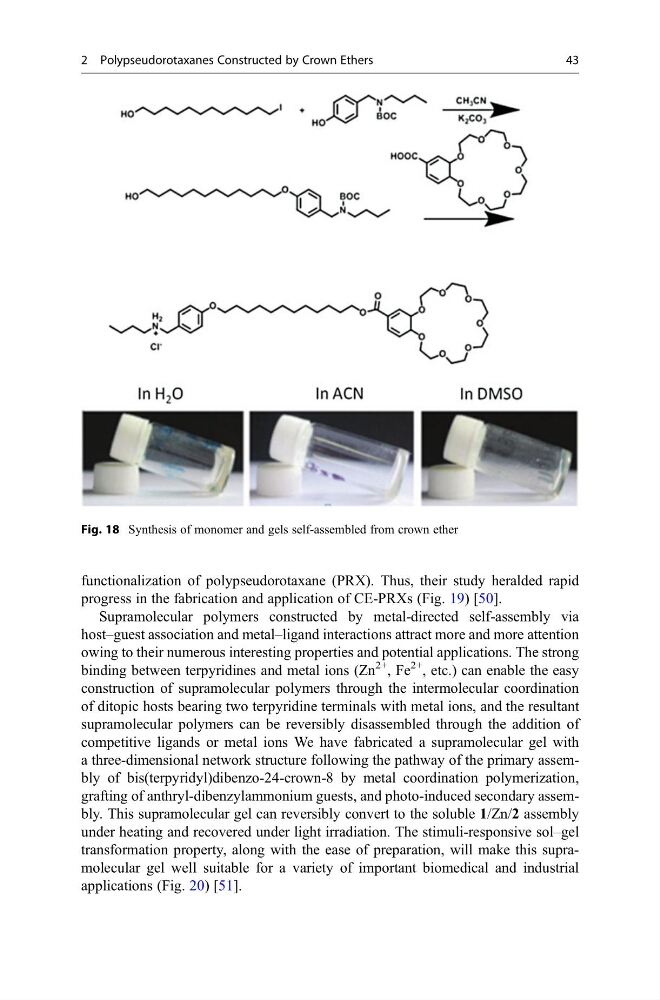
Fig. 18 Synthesis of monomer and gels self-assembled from crown ether
2 Polypseudorotaxanes Constructed by Crown Ethers
43
progress in the fabrication and application of CE-PRXs (Fig. 19) [50].
Supramolecular polymers constructed by metal-directed self-assembly via
host–guest association and metal–ligand interactions attract more and more attention
owing to their numerous interesting properties and potential applications. The strong
binding between terpyridines and metal ions (Zn
2+ , Fe
2+ , etc.) can enable the easy
construction of supramolecular polymers through the intermolecular coordination
of ditopic hosts bearing two terpyridine terminals with metal ions, and the resultant
supramolecular polymers can be reversibly disassembled through the addition of
competitive ligands or metal ions We have fabricated a supramolecular gel with
a three-dimensional network structure following the pathway of the primary assembly of bis(terpyridyl)dibenzo-24-crown-8 by metal coordination polymerization,
grafting of anthryl-dibenzylammonium guests, and photo-induced secondary assembly. This supramolecular gel can reversibly convert to the soluble 1/Zn/2 assembly
under heating and recovered under light irradiation. The stimuli-responsive sol–gel
transformation property, along with the ease of preparation, will make this supramolecular gel well suitable for a variety of important biomedical and industrial
applications (Fig. 20) [51].
Fig. 18 Synthesis of monomer and gels self-assembled from crown ether
2 Polypseudorotaxanes Constructed by Crown Ethers
43