

networks bearing novel crown ether-based building blocks. Secondary ammonium
salt/benzo-21-crown-7 (B21C7) recognition motif is an appealing choice exhibiting
easier availability and the enhanced binding property [44]. Wang et al. involved the
interchain interactions between the complementary homoditopic benzo-21-crown-7
cross-linking agent and the secondary ammonium salt-functionalized graft polymer.
Such strategy could avoid the stepwise incorporation to significantly simplify
the synthetic procedures onto the scaffold. By increasing the concentration of
the monomer to a high level in acetonitrile, the resulting cross-linked networks
could immobilize the solvent and lead to the formation of supramolecular gel,
which exhibits chemo-, pH-, and thermo-responsive gel–sol transition behaviors.
Moreover, the gel would be an excellent candidate for the development of smart
materials with desired functionalities embedding multistimuli-responsive features
(Fig. 15) [45].
The [c2]daisy chain involved in the structures suffers from low reaction yield and
tedious preparation. High structural symmetry of the [c2]daisy chain further restricts
the formation of functional supramolecular architectures. To solve this problem, an
alternative way is to use [2]rotaxane as the basic building monomer. Interestingly,
kinds of functional groups could be introduced asymmetrically into the axle and
wheel sites of the [2]rotaxane scaffold, facilitating the subsequent polymerization
steps [46]. Wang et al. have successfully constructed supramolecular poly[2]
rotaxanes via the hierarchical self-assembly strategy. The integration of two orthogonal noncovalent interactions into the [2]rotaxane monomer further facilitates the
chain extension. The new types of mechanically linked supramolecular polyrotaxanes are regulated in a controlled and facile manner which motivate them to
explore their potential applications in the future (Fig. 16) [47].
Hyperbranched supramolecular polymers (HSPs) possess not only the advantages
of traditional hyperbranched polymers but also novel properties, such as self-healing
and stimuli responsiveness. Hydrogen bonding, one of the most useful interactions
to hold supramolecular networks together, is ubiquitous in many systems such as the
double helix DNA structure. By employing host–guest interaction and triple hydrogen bonding, Qu et al. have constructed a hyperbranched supramolecular polymer.
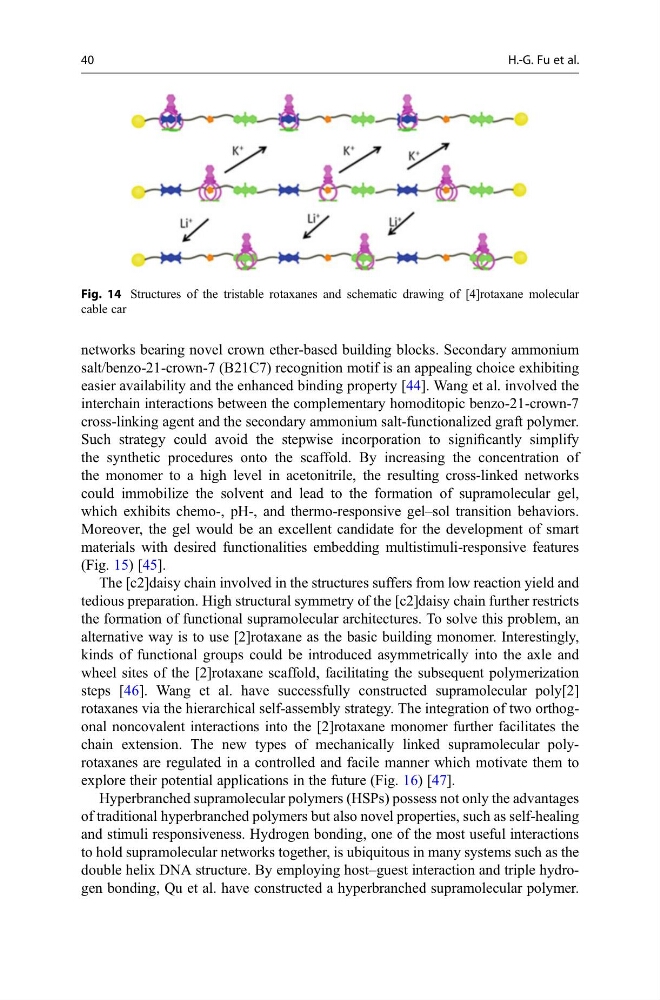
Fig. 14 Structures of the tristable rotaxanes and schematic drawing of [4]rotaxane molecular
cable car
40
H.-G. Fu et al.
salt/benzo-21-crown-7 (B21C7) recognition motif is an appealing choice exhibiting
easier availability and the enhanced binding property [44]. Wang et al. involved the
interchain interactions between the complementary homoditopic benzo-21-crown-7
cross-linking agent and the secondary ammonium salt-functionalized graft polymer.
Such strategy could avoid the stepwise incorporation to significantly simplify
the synthetic procedures onto the scaffold. By increasing the concentration of
the monomer to a high level in acetonitrile, the resulting cross-linked networks
could immobilize the solvent and lead to the formation of supramolecular gel,
which exhibits chemo-, pH-, and thermo-responsive gel–sol transition behaviors.
Moreover, the gel would be an excellent candidate for the development of smart
materials with desired functionalities embedding multistimuli-responsive features
(Fig. 15) [45].
The [c2]daisy chain involved in the structures suffers from low reaction yield and
tedious preparation. High structural symmetry of the [c2]daisy chain further restricts
the formation of functional supramolecular architectures. To solve this problem, an
alternative way is to use [2]rotaxane as the basic building monomer. Interestingly,
kinds of functional groups could be introduced asymmetrically into the axle and
wheel sites of the [2]rotaxane scaffold, facilitating the subsequent polymerization
steps [46]. Wang et al. have successfully constructed supramolecular poly[2]
rotaxanes via the hierarchical self-assembly strategy. The integration of two orthogonal noncovalent interactions into the [2]rotaxane monomer further facilitates the
chain extension. The new types of mechanically linked supramolecular polyrotaxanes are regulated in a controlled and facile manner which motivate them to
explore their potential applications in the future (Fig. 16) [47].
Hyperbranched supramolecular polymers (HSPs) possess not only the advantages
of traditional hyperbranched polymers but also novel properties, such as self-healing
and stimuli responsiveness. Hydrogen bonding, one of the most useful interactions
to hold supramolecular networks together, is ubiquitous in many systems such as the
double helix DNA structure. By employing host–guest interaction and triple hydrogen bonding, Qu et al. have constructed a hyperbranched supramolecular polymer.
Fig. 14 Structures of the tristable rotaxanes and schematic drawing of [4]rotaxane molecular
cable car
40
H.-G. Fu et al.