

biodegradable poly(e-caprolactone) (PCL) scaffold (Fig. 8) [32]. Two-arm
PCL–DBAS and four-arm star PCL–DB24C8 incorporate complementary molecular
recognition moieties. Pseudorotaxane formation between dibenzylammonium moieties and crown ether will form supramolecular networks and an increase of size of
polymer chains. The growth of supramolecular networks with increasing polymer
could be confirmed by the dramatic increase of reduced viscosity. At even higher
polymer concentrations, the formation of supramolecular gels and reversible pH- and
thermo-induced gel–sol transitions can be visualized macroscopically. The DSC
thermogram of the mixture revealed a broad endothermic peak in the temperature
range 55–80
C compared with those of the two separate components, which can be
attributed to disruption of the interactions between DBAS and DB24C8 moieties.
This result kept consistent with that obtained by
1 H NMR spectroscopic studies.
Although much progress has been made in the preparation of cross-linked
supramolecular gels based on host–guest interactions [33], the study of their properties was mainly focused on their self-healing, and stimuli-responsive supramolecular gels have been rarely reported [34]. Huang et al. prepared two noncovalently
cross-linked polymer gels by mixing pendent dibenzo[24]crown-8 (DB24C8) with a
poly(methyl methacrylate) (PMMA) polymer groups and two bisammonium crosslinkers with different end-group sizes under different conditions (Fig. 9)
[35]. Because of the larger size of the cyclohexyl unit, it took longer time to achieve
equilibrium. Viscometry gave direct evidence of the existence of polymer networks
in these two gels. Both the specific viscosities and reduced viscosities of the two gels
are larger than those of polymer. To further investigate the formation of supramolecular gels and supramolecular networks, we considered the extent of cross-linking
and calculated that the mean numbers of elastically active cross-linkers per chain
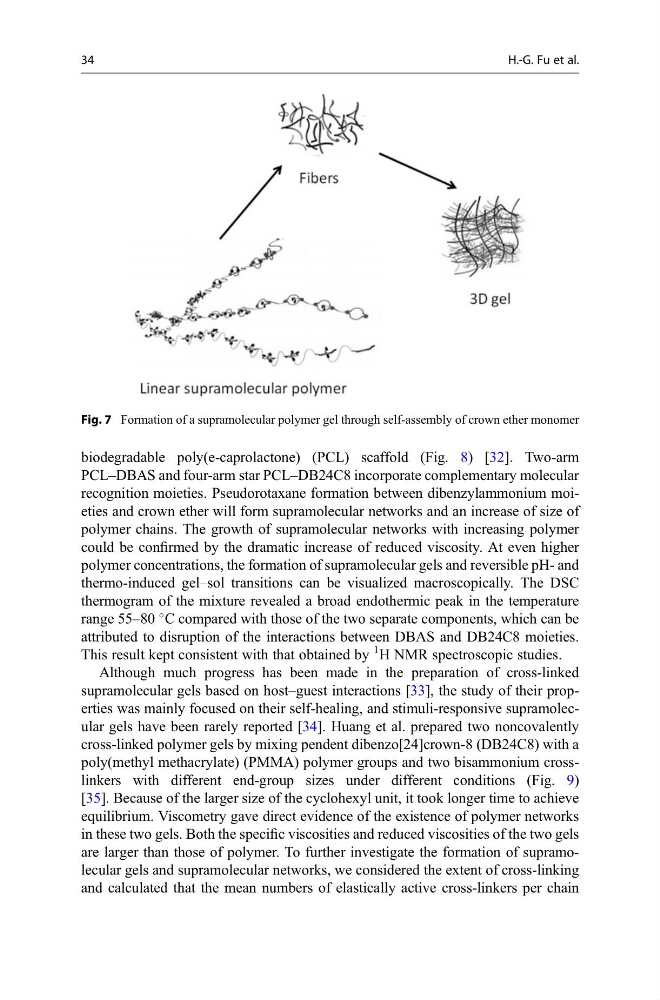
Fig. 7 Formation of a supramolecular polymer gel through self-assembly of crown ether monomer
34
H.-G. Fu et al.
PCL–DBAS and four-arm star PCL–DB24C8 incorporate complementary molecular
recognition moieties. Pseudorotaxane formation between dibenzylammonium moieties and crown ether will form supramolecular networks and an increase of size of
polymer chains. The growth of supramolecular networks with increasing polymer
could be confirmed by the dramatic increase of reduced viscosity. At even higher
polymer concentrations, the formation of supramolecular gels and reversible pH- and
thermo-induced gel–sol transitions can be visualized macroscopically. The DSC
thermogram of the mixture revealed a broad endothermic peak in the temperature
range 55–80
C compared with those of the two separate components, which can be
attributed to disruption of the interactions between DBAS and DB24C8 moieties.
This result kept consistent with that obtained by
1 H NMR spectroscopic studies.
Although much progress has been made in the preparation of cross-linked
supramolecular gels based on host–guest interactions [33], the study of their properties was mainly focused on their self-healing, and stimuli-responsive supramolecular gels have been rarely reported [34]. Huang et al. prepared two noncovalently
cross-linked polymer gels by mixing pendent dibenzo[24]crown-8 (DB24C8) with a
poly(methyl methacrylate) (PMMA) polymer groups and two bisammonium crosslinkers with different end-group sizes under different conditions (Fig. 9)
[35]. Because of the larger size of the cyclohexyl unit, it took longer time to achieve
equilibrium. Viscometry gave direct evidence of the existence of polymer networks
in these two gels. Both the specific viscosities and reduced viscosities of the two gels
are larger than those of polymer. To further investigate the formation of supramolecular gels and supramolecular networks, we considered the extent of cross-linking
and calculated that the mean numbers of elastically active cross-linkers per chain
Fig. 7 Formation of a supramolecular polymer gel through self-assembly of crown ether monomer
34
H.-G. Fu et al.