

gels formed from small molecules by crown ether-based molecular recognition have
been few reported. Shinkai and coworkers have developed gelators comprised of
crown ethers [24–26], where the driving forces for the gelation were largely attributed to the appended groups. It is still a big challenge to design and synthesize novel
stimuli-responsive gels completely based on the host–guest interactions between
crown ethers and its complementary guest moieties.
In 2011, benefiting from crown ether-based molecular recognition, a dualresponsive supramolecular polymer gel was built (Fig. 7) [27]. The system has
thermo- and pH- responsive abilities. Long flexible alkyl chains play an important
role as physical junctions in supramolecular gels which were found to contribute to
the formation of linear supramolecular polymers. The supramolecular polymer gel
showed excellent reversible phase transitions by cooling and heating or by adding
acid and base.
Benefiting from the relatively low activation energy required for breaking weak
bonds, supramolecular gels can respond to external stimuli (pH, temperature, electric/magnetic fields, and solvent composition), and thus they can serve as
functional membranes, smart devices, and drug delivery carriers [28–31]. Owing
to the difficulties encountered in synthesizing well defined polymer precursors
embedding multiple crown ether hosts at predetermined positions. Liu and Huang
co-built supramolecular gels on the basis of reversible molecular recognition
between dibenzylammonium salt (DBAS) moieties and DB24C8, with
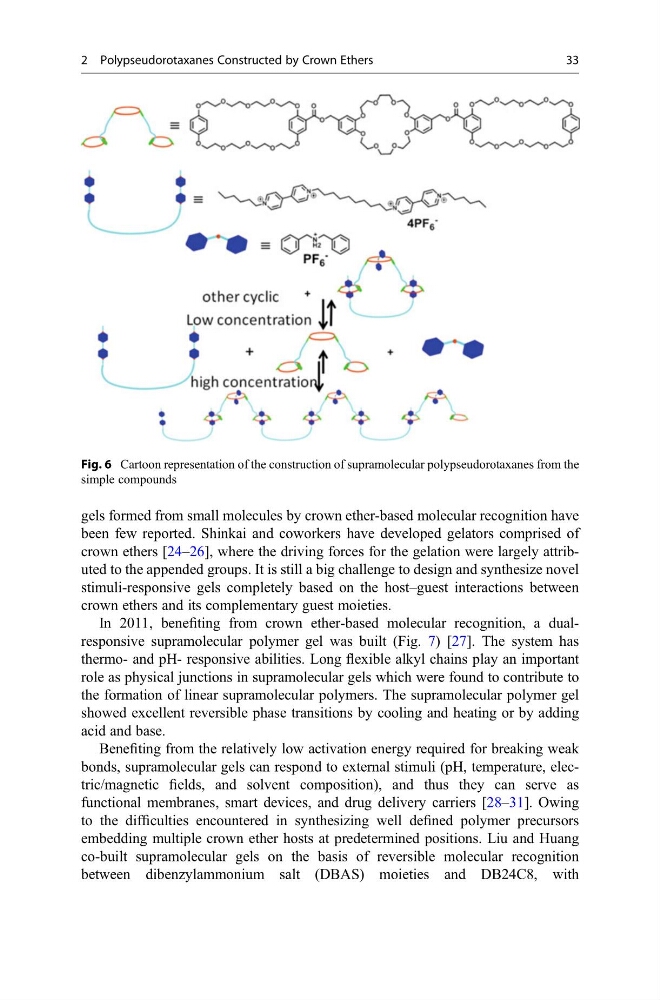
Fig. 6 Cartoon representation of the construction of supramolecular polypseudorotaxanes from the
simple compounds
2 Polypseudorotaxanes Constructed by Crown Ethers
33
been few reported. Shinkai and coworkers have developed gelators comprised of
crown ethers [24–26], where the driving forces for the gelation were largely attributed to the appended groups. It is still a big challenge to design and synthesize novel
stimuli-responsive gels completely based on the host–guest interactions between
crown ethers and its complementary guest moieties.
In 2011, benefiting from crown ether-based molecular recognition, a dualresponsive supramolecular polymer gel was built (Fig. 7) [27]. The system has
thermo- and pH- responsive abilities. Long flexible alkyl chains play an important
role as physical junctions in supramolecular gels which were found to contribute to
the formation of linear supramolecular polymers. The supramolecular polymer gel
showed excellent reversible phase transitions by cooling and heating or by adding
acid and base.
Benefiting from the relatively low activation energy required for breaking weak
bonds, supramolecular gels can respond to external stimuli (pH, temperature, electric/magnetic fields, and solvent composition), and thus they can serve as
functional membranes, smart devices, and drug delivery carriers [28–31]. Owing
to the difficulties encountered in synthesizing well defined polymer precursors
embedding multiple crown ether hosts at predetermined positions. Liu and Huang
co-built supramolecular gels on the basis of reversible molecular recognition
between dibenzylammonium salt (DBAS) moieties and DB24C8, with
Fig. 6 Cartoon representation of the construction of supramolecular polypseudorotaxanes from the
simple compounds
2 Polypseudorotaxanes Constructed by Crown Ethers
33