

monomers. Morphology control of suprapolymers is essential for their future
applications.
Supramolecular polymers using dynamic assembled chains with low molar mass
monomers by reversible highly directional noncovalent interactions have shown
traditional polymeric properties in solution and in the bulk. Further, they used the
self-sorting organization principle to prepare a supramolecular pseudopolyrotaxane
with monomer and two BPP34C10 macrocycles and a DB24C8 ring linked by
covalent bonds. By exclusively forming pseudorotaxanes between BPP34C10 host
moieties and paraquat guest units, the supramolecular polymer backbone would be
afforded (Fig. 6) [23]. The DB24C8 units were left free until the addition of
dibenzylammonium salt. After the cavities of DB24C8 units were filled by
dibenzylammonium salt, the DB24C8 units became more rigid, and the properties
of resulting polymer were obviously different from the unfilled ones, such as specific
viscosity, rheological properties, and critical polymerization concentration (CPC)
values.
Although supramolecular alternating copolymers prepared from self-sorting
organization of two heteroditopic monomers were reported, supramolecular polymer
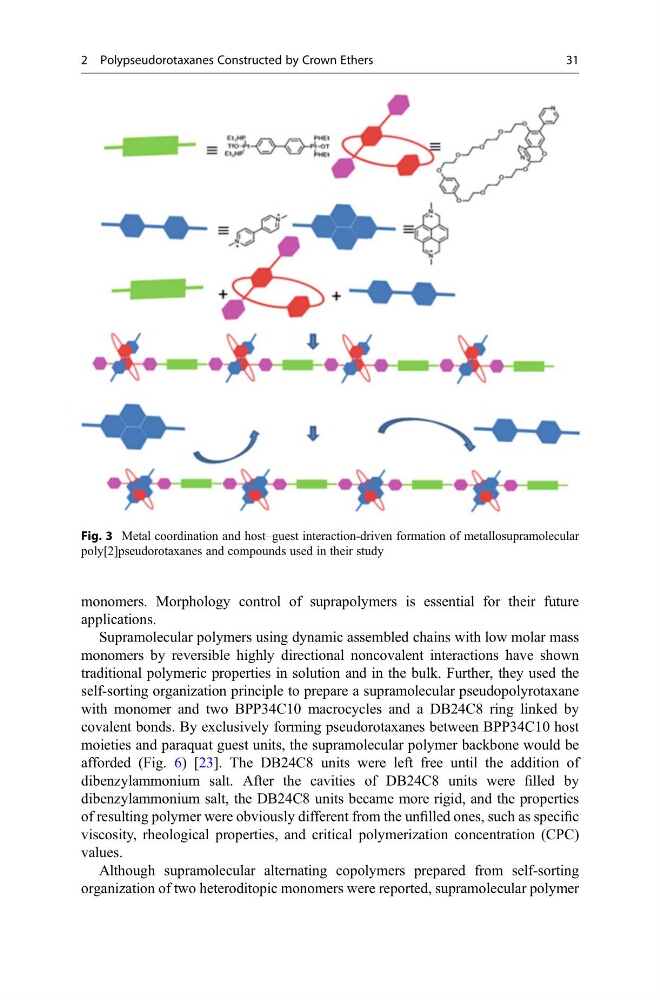
Fig. 3 Metal coordination and host–guest interaction-driven formation of metallosupramolecular
poly[2]pseudorotaxanes and compounds used in their study
2 Polypseudorotaxanes Constructed by Crown Ethers
31
applications.
Supramolecular polymers using dynamic assembled chains with low molar mass
monomers by reversible highly directional noncovalent interactions have shown
traditional polymeric properties in solution and in the bulk. Further, they used the
self-sorting organization principle to prepare a supramolecular pseudopolyrotaxane
with monomer and two BPP34C10 macrocycles and a DB24C8 ring linked by
covalent bonds. By exclusively forming pseudorotaxanes between BPP34C10 host
moieties and paraquat guest units, the supramolecular polymer backbone would be
afforded (Fig. 6) [23]. The DB24C8 units were left free until the addition of
dibenzylammonium salt. After the cavities of DB24C8 units were filled by
dibenzylammonium salt, the DB24C8 units became more rigid, and the properties
of resulting polymer were obviously different from the unfilled ones, such as specific
viscosity, rheological properties, and critical polymerization concentration (CPC)
values.
Although supramolecular alternating copolymers prepared from self-sorting
organization of two heteroditopic monomers were reported, supramolecular polymer
Fig. 3 Metal coordination and host–guest interaction-driven formation of metallosupramolecular
poly[2]pseudorotaxanes and compounds used in their study
2 Polypseudorotaxanes Constructed by Crown Ethers
31