

blocking groups onto the paraquat units of this system after complexation will
produce a mechanically interlocked comblike graft copolymeric rotaxane. A dramatic viscosity increase in solutions of two components, NMR chemical shift
changes in solution, the lack of phase separation by both optical microscopy and
small-angle laser light scattering (SALLS), and the observation of a single Tg by
DSC jointly proved the formation of graft copolymer.
Huang et al. endeavor to utilize a multicomponent self-assembly strategy to
achieve hierarchical and more complicated supramolecular polymers. Therefore,
by integration of the “self-sorting” concept, they prepared alternating supramolecular copolymers. Early studies demonstrated that secondary dialkylammonium salts bound DB24C8 strongly and resided within the macrocyclic
cavity [18]. Luckily, they found that DBA/DB24C8 complex and paraquat/
BPP34C10 complex are a pair of building blocks with “self-sorting” recognition
behavior in solution [19–21]. Based on this self-sorting organization, they
constructed an alternating supramolecular copolymer (Fig. 5) [22]. They demonstrated that self-sorting organization of two AB-type heteroditopic monomers
could result in the formation of supramolecular alternating copolymers in solution
which was confirmed by DLS, CV,
1 H NMR, SEM, and viscosity measurements.
The degree of polymerization was dependent on the initial concentrations of two
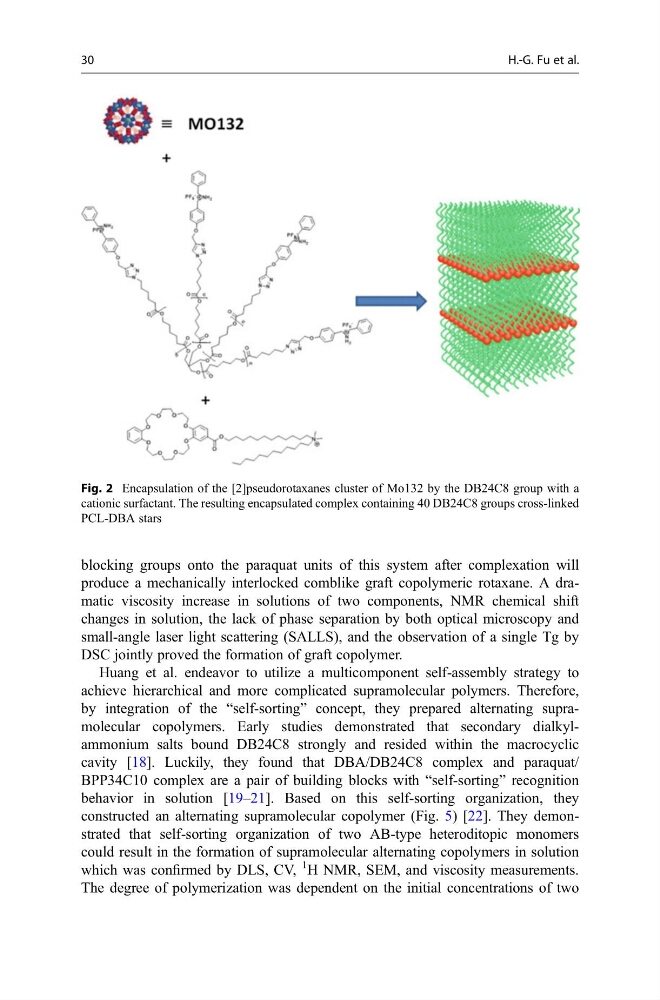
Fig. 2 Encapsulation of the [2]pseudorotaxanes cluster of Mo132 by the DB24C8 group with a
cationic surfactant. The resulting encapsulated complex containing 40 DB24C8 groups cross-linked
PCL-DBA stars
30
H.-G. Fu et al.
produce a mechanically interlocked comblike graft copolymeric rotaxane. A dramatic viscosity increase in solutions of two components, NMR chemical shift
changes in solution, the lack of phase separation by both optical microscopy and
small-angle laser light scattering (SALLS), and the observation of a single Tg by
DSC jointly proved the formation of graft copolymer.
Huang et al. endeavor to utilize a multicomponent self-assembly strategy to
achieve hierarchical and more complicated supramolecular polymers. Therefore,
by integration of the “self-sorting” concept, they prepared alternating supramolecular copolymers. Early studies demonstrated that secondary dialkylammonium salts bound DB24C8 strongly and resided within the macrocyclic
cavity [18]. Luckily, they found that DBA/DB24C8 complex and paraquat/
BPP34C10 complex are a pair of building blocks with “self-sorting” recognition
behavior in solution [19–21]. Based on this self-sorting organization, they
constructed an alternating supramolecular copolymer (Fig. 5) [22]. They demonstrated that self-sorting organization of two AB-type heteroditopic monomers
could result in the formation of supramolecular alternating copolymers in solution
which was confirmed by DLS, CV,
1 H NMR, SEM, and viscosity measurements.
The degree of polymerization was dependent on the initial concentrations of two
Fig. 2 Encapsulation of the [2]pseudorotaxanes cluster of Mo132 by the DB24C8 group with a
cationic surfactant. The resulting encapsulated complex containing 40 DB24C8 groups cross-linked
PCL-DBA stars
30
H.-G. Fu et al.