

matter of considerable for biomaterials design based on CD polymers used for gene
therapy.
On the other hand, polypseudorotaxanes generally also have some novel chemical and physical properties in medical biology. Therefore, the interaction between
cell or DNA and CD-based polypseudorotaxanes has been widely investigated.
Stoddart et al. reported the polypseudorotaxanes by the self-assembly of lactosidemodified α-CDs and polyviologen (Fig. 8a) and proved that there were strong
interactions between the polypseudorotaxanes and galectin-1 by T-cell agglutination
experiments, which provides new ideas for targeted therapy [71]. Since Schneider et
al. reported that the anthryl-modified β-CDs could be chemically interacted with
DNA [72], our group successfully prepared two new fluorescent polypseudorotaxanes by threading the anthryl-modified β-CDs onto the poly(propylene
glycol) bis(2-aminopropylether) (PPG-NH 2 ) chains (Fig. 8b) [73]. With the continuous addition of DNA, the anthryl group can be embedded in the hydrophobic DNA
grooves without energy transfer, resulting in a gradual increase in the fluorescence
intensity at 413 nm of the polypseudorotaxanes. At the same time, the binding
constant of the polypseudorotaxanes and DNA is about four times higher than that
of the anthryl-modified β-CDs monomers. This interesting work provides a new
strategy for the polypseudorotaxanes as a sensitive analytical tool in DNA chemistry
or for regulating gene expression or delivery.
Subsequently, our group firstly introduced cucurbit[6]uril (CB [6]) into the side
chain of the polypseudorotaxanes based on hexamethylene diamine hydrochloridemodified β-CDs and PPG-NH 2 , obtaining a new type of two-dimensional
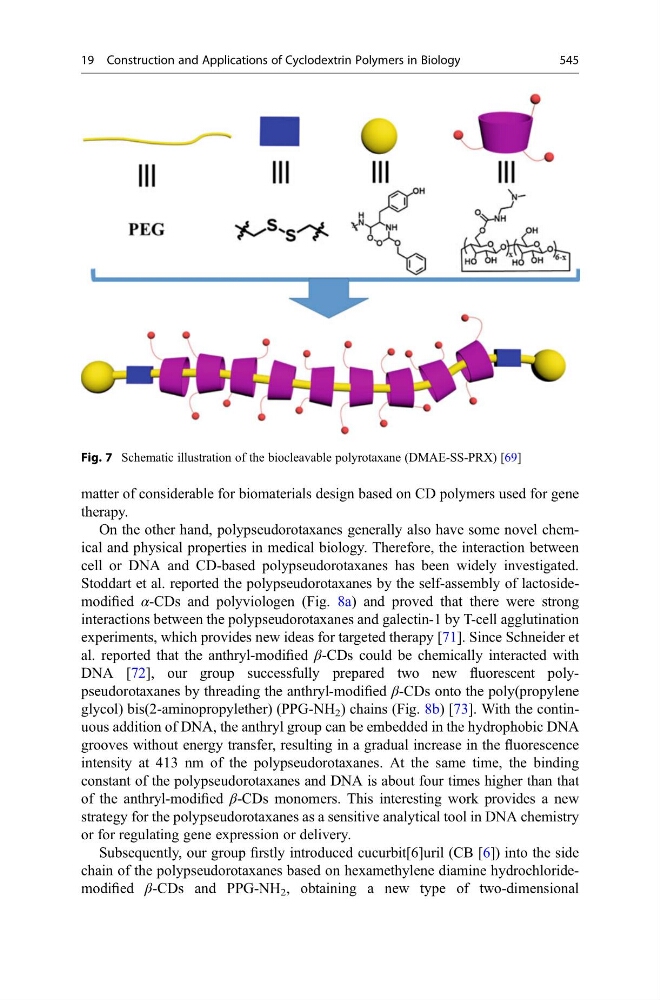
Fig. 7 Schematic illustration of the biocleavable polyrotaxane (DMAE-SS-PRX) [69]
19 Construction and Applications of Cyclodextrin Polymers in Biology
545