

branched covalent bonding sites for functionalized β-CD derivatives and different
CD derivatives. The authors prepared three kinds of CD derivatives (CD-X): a
CD–fluorescein isothiocyanate conjugate (CD-FITC), a CD–lysine conjugate
(CD conjugated with seven lysine ligands), and a CD–quaternary ammonium salt
(CD-QAS) conjugate (CD conjugated with seven QAS; the QAS structure is shown
in Fig. 21). The CD-X derivatives were effectively bound to PBA via double B–O
bonds between the second rim of the CD and the PBA in alkaline conditions, and
also the B–O bond is easy to break up by addition of fructose (cis-diol molecules)
and hydrion, leading to capture or release of the CD derivatives. The QAS residues
can attract bacteria by electrostatic and/or hydrophobic interactions, and the lysine
can bind some specific proteins such as Plg; thus, these systems can be used to
capture and release some bacteria and proteins, which can be applied in medical
diagnostics, protein purification, and antibacterials [91–94].
14.3.6 Delivery of the Extremely Hydrophobic Molecule C 60
Since its discovery, C 60 has attracted a lot of attention in many areas of science and
technology, including the area of biology. Some kinds of C 60 derivatives have been
found to display certain bioactivities, such as antibacterial, antiviral, and even
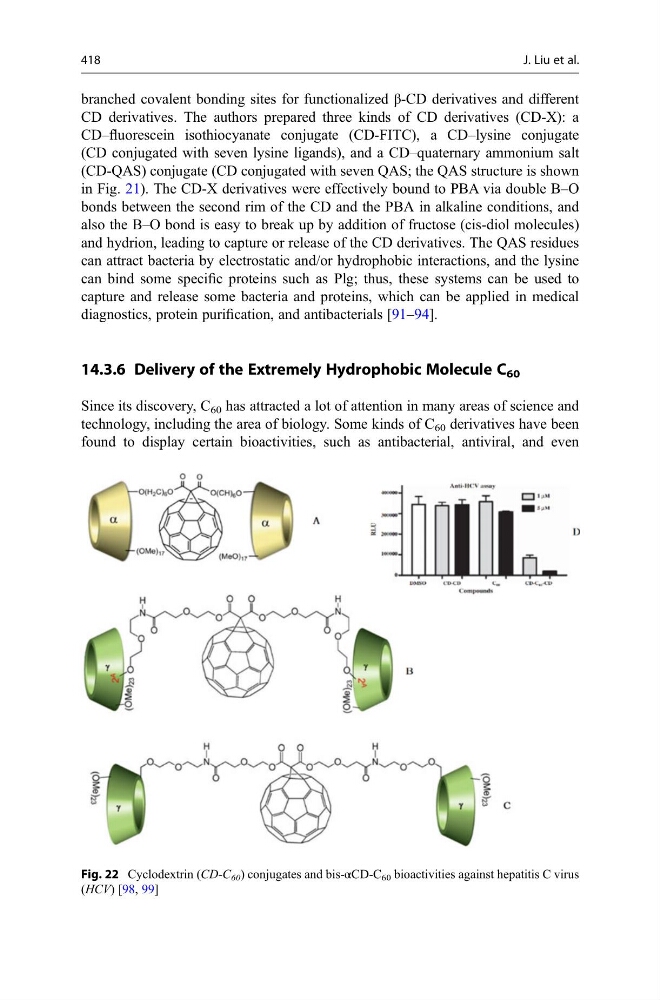
Fig. 22 Cyclodextrin (CD-C 60 ) conjugates and bis-αCD-C 60 bioactivities against hepatitis C virus
(HCV) [98, 99]
418
J. Liu et al.
CD derivatives. The authors prepared three kinds of CD derivatives (CD-X): a
CD–fluorescein isothiocyanate conjugate (CD-FITC), a CD–lysine conjugate
(CD conjugated with seven lysine ligands), and a CD–quaternary ammonium salt
(CD-QAS) conjugate (CD conjugated with seven QAS; the QAS structure is shown
in Fig. 21). The CD-X derivatives were effectively bound to PBA via double B–O
bonds between the second rim of the CD and the PBA in alkaline conditions, and
also the B–O bond is easy to break up by addition of fructose (cis-diol molecules)
and hydrion, leading to capture or release of the CD derivatives. The QAS residues
can attract bacteria by electrostatic and/or hydrophobic interactions, and the lysine
can bind some specific proteins such as Plg; thus, these systems can be used to
capture and release some bacteria and proteins, which can be applied in medical
diagnostics, protein purification, and antibacterials [91–94].
14.3.6 Delivery of the Extremely Hydrophobic Molecule C 60
Since its discovery, C 60 has attracted a lot of attention in many areas of science and
technology, including the area of biology. Some kinds of C 60 derivatives have been
found to display certain bioactivities, such as antibacterial, antiviral, and even
Fig. 22 Cyclodextrin (CD-C 60 ) conjugates and bis-αCD-C 60 bioactivities against hepatitis C virus
(HCV) [98, 99]
418
J. Liu et al.