

fluorophore/photochrome dyads, which can be imaged. Nitric oxide photodonors
and cyclodextrin nanoparticles can load both the dyads (Fig. 18, 1a) and the donors
(Fig. 18, 2). The nanoparticles can not only introduce the dyads and donors into the
cancer cytomembrane but also protect their photochemical and photophysical properties against water damage. The nanoparticles are probes and carriers at the same
time, and can release NO to activate fluorescence under optical control [83].
It is well know that the S–NO bond could be stimulated by heat, ultraviolet light,
certain metal ions, superoxide, and seleno compounds. Homolytic cleavage of the
S–NO bond would liberate the NO [84]. On the basis of this knowledge,
Yannakopoulou and coworkers reported multifunctional S-nitrosothiols on β-CDs
(SNO-βCDs) as potential prodrugs that were capable of storing NO from the S–NO
bond, simultaneously releasing NO under controlled thermal or photochemical
stimuli [85] (Scheme 18).
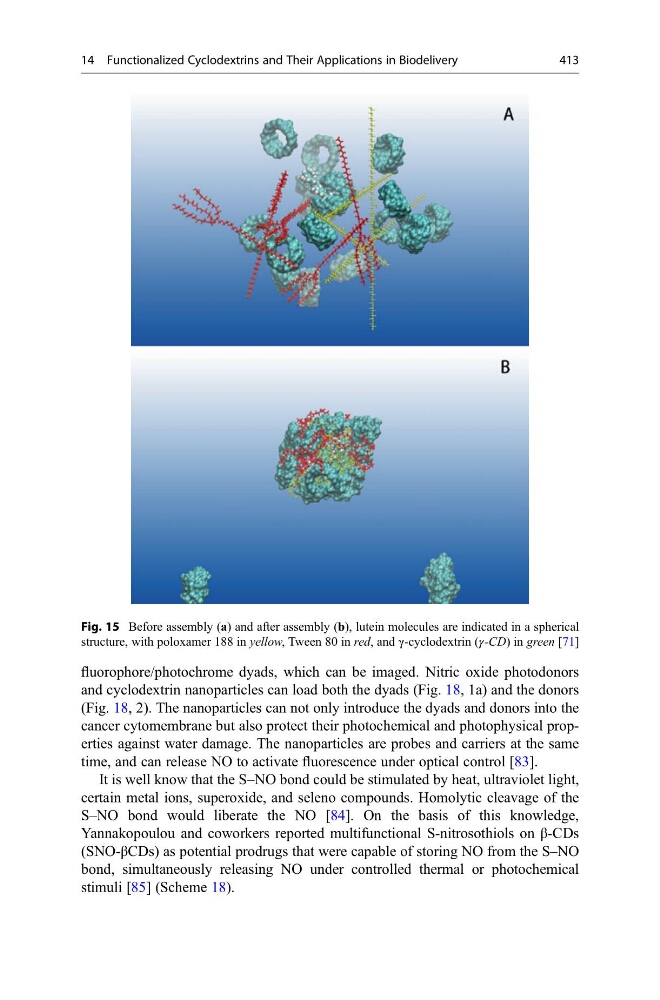
Fig. 15 Before assembly (a) and after assembly (b), lutein molecules are indicated in a spherical
structure, with poloxamer 188 in yellow, Tween 80 in red, and γ-cyclodextrin (γ-CD) in green [71]
14 Functionalized Cyclodextrins and Their Applications in Biodelivery
413
and cyclodextrin nanoparticles can load both the dyads (Fig. 18, 1a) and the donors
(Fig. 18, 2). The nanoparticles can not only introduce the dyads and donors into the
cancer cytomembrane but also protect their photochemical and photophysical properties against water damage. The nanoparticles are probes and carriers at the same
time, and can release NO to activate fluorescence under optical control [83].
It is well know that the S–NO bond could be stimulated by heat, ultraviolet light,
certain metal ions, superoxide, and seleno compounds. Homolytic cleavage of the
S–NO bond would liberate the NO [84]. On the basis of this knowledge,
Yannakopoulou and coworkers reported multifunctional S-nitrosothiols on β-CDs
(SNO-βCDs) as potential prodrugs that were capable of storing NO from the S–NO
bond, simultaneously releasing NO under controlled thermal or photochemical
stimuli [85] (Scheme 18).
Fig. 15 Before assembly (a) and after assembly (b), lutein molecules are indicated in a spherical
structure, with poloxamer 188 in yellow, Tween 80 in red, and γ-cyclodextrin (γ-CD) in green [71]
14 Functionalized Cyclodextrins and Their Applications in Biodelivery
413