

propane to give a bridged CD, 51; fourth, CD 51 was treated with DIBAL-H to
generate another clockwise deprotected CD derivative, 52, then after a few steps the
amino was protected by a benzyl group and the alcohol was substituted by an azide
group to afford another azide CD, 53; and fifth, azide 53 was treated with DIBAL-H
to give the final compound, 54 (Scheme 9).
On the basis of the above description, obviously these were a series of very
exciting discoveries, which also could prove that DIBAL-H-mediated deprotection
of benzyl groups from perbenzylated CDs was quite successful. Why is the benzyl
group deprotected method so useful? It is because this method supplies excellent
regioselectivity and a high yield. There are also other reasons; for example,
perbenzylated CDs are easily soluble in ordinary solvents, which can provide
researchers with at least two evident benefits: (1) they are easy to purify in organic
solvents; and (2) they react easily with many more reagents in solvents. This is why,
a few years later, some researchers could synthesize more complicated CD derivatives, such as by using hexadifferentation for α-CD and heptadifferentiation for
β-CD [manuscript in preparation], which promoted the development of CD chemistry and other related areas.
Functionalization of the secondary rim normally is more difficult than modification of the primary rim, because the hydroxyls under the secondary rim show
significant properties that differ from those of the hydroxyls on the primary rim.
The pKa value of the C-2 hydroxyl is 12, and it can be selectively activated by a
strong base, such as NaH, but one needs to use a certain amount of the base to avoid
activating the primary hydroxyls by mistake. The C-3 hydroxyl—the least reactive
one—always reacts after C-6 and C-2, which also can easily be selectively
functionalized [18].
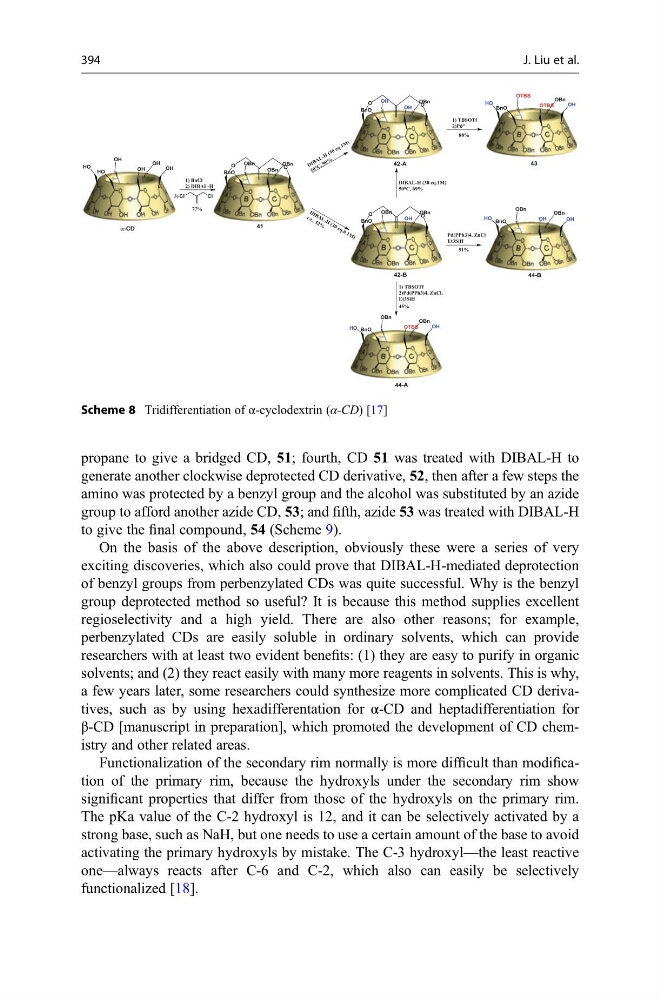
Scheme 8 Tridifferentiation of α-cyclodextrin (α-CD) [17]
394
J. Liu et al.
generate another clockwise deprotected CD derivative, 52, then after a few steps the
amino was protected by a benzyl group and the alcohol was substituted by an azide
group to afford another azide CD, 53; and fifth, azide 53 was treated with DIBAL-H
to give the final compound, 54 (Scheme 9).
On the basis of the above description, obviously these were a series of very
exciting discoveries, which also could prove that DIBAL-H-mediated deprotection
of benzyl groups from perbenzylated CDs was quite successful. Why is the benzyl
group deprotected method so useful? It is because this method supplies excellent
regioselectivity and a high yield. There are also other reasons; for example,
perbenzylated CDs are easily soluble in ordinary solvents, which can provide
researchers with at least two evident benefits: (1) they are easy to purify in organic
solvents; and (2) they react easily with many more reagents in solvents. This is why,
a few years later, some researchers could synthesize more complicated CD derivatives, such as by using hexadifferentation for α-CD and heptadifferentiation for
β-CD [manuscript in preparation], which promoted the development of CD chemistry and other related areas.
Functionalization of the secondary rim normally is more difficult than modification of the primary rim, because the hydroxyls under the secondary rim show
significant properties that differ from those of the hydroxyls on the primary rim.
The pKa value of the C-2 hydroxyl is 12, and it can be selectively activated by a
strong base, such as NaH, but one needs to use a certain amount of the base to avoid
activating the primary hydroxyls by mistake. The C-3 hydroxyl—the least reactive
one—always reacts after C-6 and C-2, which also can easily be selectively
functionalized [18].
Scheme 8 Tridifferentiation of α-cyclodextrin (α-CD) [17]
394
J. Liu et al.