

achieved in the cancer cell environment, resulting in the death of cancer cells.
Moreover, the MTZ-loaded vesicles with targeting biotin ligands could not only
improve the anticancer efficiency of MTZ but also effectively reduce the undesirable
cytotoxicity toward normal cells. This method to construct polymetric nano-carriers
based on host-guest complexation with covalent polymer showed great advantages
in comparison to traditional polymers; tedious synthesis is often required.
Huang and coworkers reported a dual-responsive nano-carrier based on
azobenzene-containing random copolymer (3) and tri(ethylene oxide) modified
pillar[7]arene (WP7) (Fig. 21) [38]. In this system, the azobenzene unit could be
included into the cavity of pillar[7]arene, leading to the formation of polypseudorotaxane. Due to the introduction of pillar[7]arene, the amphipathy of the
copolymer was changed, thus resulting in the formation of vesicles, which could
encapsulate the model drug (calcein). Because of the thermoresponsiveness of tri
(ethylene oxide) modified pillar[7]arene and photoresponsiveness of the azobenzene
unit, the reversible transformations between solid nanospheres based on the selfassembly of the polymer backbone and vesicles based on the self-assembly of the
supra-amphiphilic polypseudorotaxane are achieved by adjusting the solution temperature or UV-visible light irradiation. Therefore, the controlled release of the
encapsulated cargoes could be achieved by both light and temperature. The same
research group also conducted research on the pillararene-based amphiphilic supramolecular diblock polymer-based on the host-guest recognition between a watersoluble pillar[5]arene and a viologen salt. The efficient encapsulation and release of
anticancer drug (doxorubicin hydrochloride) could be realized for the efficient
cancer therapy.
Liu and coworkers synthesized a novel lateral-modified pillar[5]arene derivative
through bromination reaction at methylene bridge of the dimethoxypillar[5]arene,
which could form the covalent polymer with cystamine dihydrochloride, exhibiting
highly stable nanostructures, and possess very thin shells composed of lateral
covalent cross-linked pillar[5]arenes (Fig. 22) [39]. By taking advantages of the
structural features of the nanocapsule shell that composed of host macromolecules,
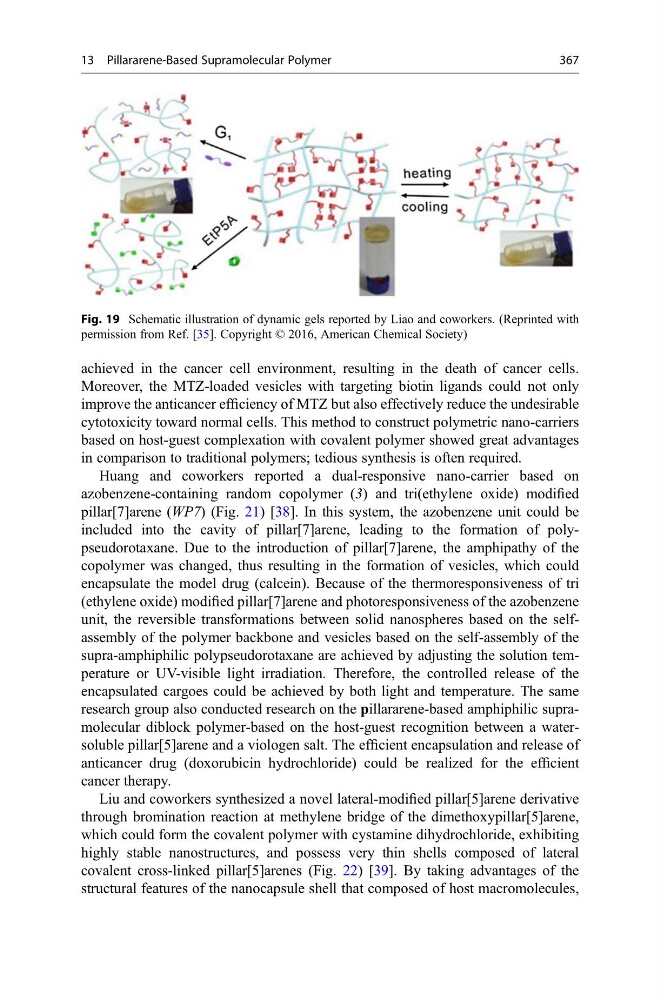
Fig. 19 Schematic illustration of dynamic gels reported by Liao and coworkers. (Reprinted with
permission from Ref. [35]. Copyright © 2016, American Chemical Society)
13 Pillararene-Based Supramolecular Polymer
367
Moreover, the MTZ-loaded vesicles with targeting biotin ligands could not only
improve the anticancer efficiency of MTZ but also effectively reduce the undesirable
cytotoxicity toward normal cells. This method to construct polymetric nano-carriers
based on host-guest complexation with covalent polymer showed great advantages
in comparison to traditional polymers; tedious synthesis is often required.
Huang and coworkers reported a dual-responsive nano-carrier based on
azobenzene-containing random copolymer (3) and tri(ethylene oxide) modified
pillar[7]arene (WP7) (Fig. 21) [38]. In this system, the azobenzene unit could be
included into the cavity of pillar[7]arene, leading to the formation of polypseudorotaxane. Due to the introduction of pillar[7]arene, the amphipathy of the
copolymer was changed, thus resulting in the formation of vesicles, which could
encapsulate the model drug (calcein). Because of the thermoresponsiveness of tri
(ethylene oxide) modified pillar[7]arene and photoresponsiveness of the azobenzene
unit, the reversible transformations between solid nanospheres based on the selfassembly of the polymer backbone and vesicles based on the self-assembly of the
supra-amphiphilic polypseudorotaxane are achieved by adjusting the solution temperature or UV-visible light irradiation. Therefore, the controlled release of the
encapsulated cargoes could be achieved by both light and temperature. The same
research group also conducted research on the pillararene-based amphiphilic supramolecular diblock polymer-based on the host-guest recognition between a watersoluble pillar[5]arene and a viologen salt. The efficient encapsulation and release of
anticancer drug (doxorubicin hydrochloride) could be realized for the efficient
cancer therapy.
Liu and coworkers synthesized a novel lateral-modified pillar[5]arene derivative
through bromination reaction at methylene bridge of the dimethoxypillar[5]arene,
which could form the covalent polymer with cystamine dihydrochloride, exhibiting
highly stable nanostructures, and possess very thin shells composed of lateral
covalent cross-linked pillar[5]arenes (Fig. 22) [39]. By taking advantages of the
structural features of the nanocapsule shell that composed of host macromolecules,
Fig. 19 Schematic illustration of dynamic gels reported by Liao and coworkers. (Reprinted with
permission from Ref. [35]. Copyright © 2016, American Chemical Society)
13 Pillararene-Based Supramolecular Polymer
367