

addition of homoditopic guest with pyridinium cation molecule [15a]. Besides
the abovementioned self-complementary UPy-based supramolecular polymer, the
supramolecular polymer could also be constructed between the monofunctional
UPy pillar[5]arene by introducing another noncovalent interaction [15c]. Herein,
an orthogonal supramolecular polymer was reported by Wang and coworkers by
introducing the homoditopic guest with pyridinium cation molecule into the monofunctional pillar[5]arene. As well known, the host molecule could form a dimer in
the solution due to the strong binding affinity of UPy motif, and the pyridinium unit
could be encapsulated into the cavity of pillar[5]arene. Based on these results, the
orthogonal supramolecular polymer was formed.
Halogen bond [16], similar to other noncovalent interaction, occurs when “there is
evidence of a net attractive interaction between an electrophilic region associated with
a halogen atom in a molecular entity and a nucleophilic region in another, or the same,
molecular entity.” Although it is the least exploited noncovalent interaction, it has been
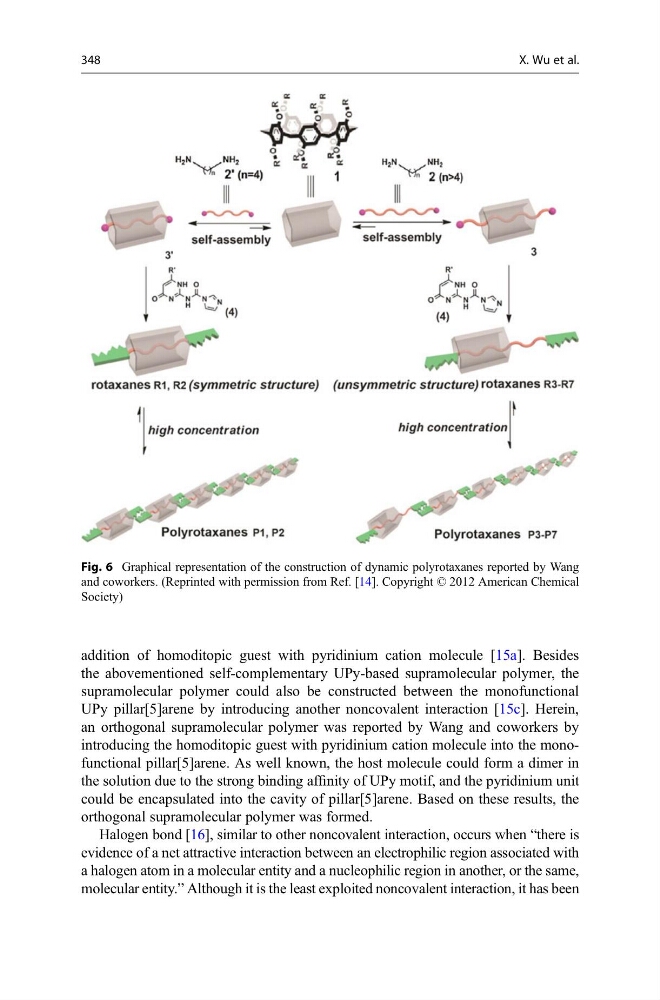
Fig. 6 Graphical representation of the construction of dynamic polyrotaxanes reported by Wang
and coworkers. (Reprinted with permission from Ref. [14]. Copyright © 2012 American Chemical
Society)
348
X. Wu et al.
the abovementioned self-complementary UPy-based supramolecular polymer, the
supramolecular polymer could also be constructed between the monofunctional
UPy pillar[5]arene by introducing another noncovalent interaction [15c]. Herein,
an orthogonal supramolecular polymer was reported by Wang and coworkers by
introducing the homoditopic guest with pyridinium cation molecule into the monofunctional pillar[5]arene. As well known, the host molecule could form a dimer in
the solution due to the strong binding affinity of UPy motif, and the pyridinium unit
could be encapsulated into the cavity of pillar[5]arene. Based on these results, the
orthogonal supramolecular polymer was formed.
Halogen bond [16], similar to other noncovalent interaction, occurs when “there is
evidence of a net attractive interaction between an electrophilic region associated with
a halogen atom in a molecular entity and a nucleophilic region in another, or the same,
molecular entity.” Although it is the least exploited noncovalent interaction, it has been
Fig. 6 Graphical representation of the construction of dynamic polyrotaxanes reported by Wang
and coworkers. (Reprinted with permission from Ref. [14]. Copyright © 2012 American Chemical
Society)
348
X. Wu et al.