

polymer systems (Fig. 6) [14]. Due to the self-complementary nature of UPy motif,
a series of UPy interlocked rotaxanes has been successfully synthesized using the
strategy of “diamine threading followed by endcapping with UPy units,” in which
the pseudorotaxane was firstly formed between the diamines and pillar[5]arenes
followed by the endcapping reaction to form the UPy motif. In such novel dynamic
polyrotaxanes, the UPy motifs particularly played quite important roles in the
reversible formation of main-chain backbones of supramolecular polymers.
The stepwise and one-pot strategies would provide a novel and efficient methodology for the smart design and construction of new types of higher-ordered architectures and sophisticated molecular devices.
Wang and coworkers also reported other types of supramolecular polymer by
modifying the UPy motif on the side ring of pillar[5]arene to form the bifunctional
UPy pillar[5]arene, which could self-assemble into the linear supramolecular polymer by hydrogen bonding [15]. In this self-assembly manner, the cavity of pillar[5]
arene was not occupied by other guest molecules. Therefore, the addition of the
corresponding guest molecules would produce different topological self-assembly
manners. The polypseudorotaxane could be constructed by adding diamine into the
pillar[5]arene polymer [15b], and the polymer network could be formed by the
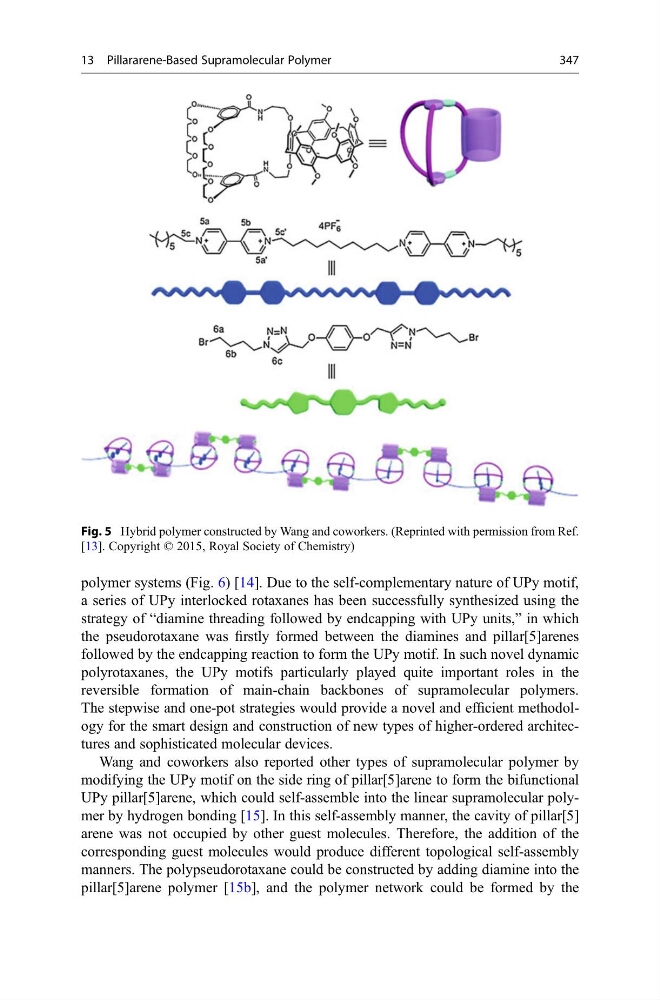
Fig. 5 Hybrid polymer constructed by Wang and coworkers. (Reprinted with permission from Ref.
[13]. Copyright © 2015, Royal Society of Chemistry)
13 Pillararene-Based Supramolecular Polymer
347
a series of UPy interlocked rotaxanes has been successfully synthesized using the
strategy of “diamine threading followed by endcapping with UPy units,” in which
the pseudorotaxane was firstly formed between the diamines and pillar[5]arenes
followed by the endcapping reaction to form the UPy motif. In such novel dynamic
polyrotaxanes, the UPy motifs particularly played quite important roles in the
reversible formation of main-chain backbones of supramolecular polymers.
The stepwise and one-pot strategies would provide a novel and efficient methodology for the smart design and construction of new types of higher-ordered architectures and sophisticated molecular devices.
Wang and coworkers also reported other types of supramolecular polymer by
modifying the UPy motif on the side ring of pillar[5]arene to form the bifunctional
UPy pillar[5]arene, which could self-assemble into the linear supramolecular polymer by hydrogen bonding [15]. In this self-assembly manner, the cavity of pillar[5]
arene was not occupied by other guest molecules. Therefore, the addition of the
corresponding guest molecules would produce different topological self-assembly
manners. The polypseudorotaxane could be constructed by adding diamine into the
pillar[5]arene polymer [15b], and the polymer network could be formed by the
Fig. 5 Hybrid polymer constructed by Wang and coworkers. (Reprinted with permission from Ref.
[13]. Copyright © 2015, Royal Society of Chemistry)
13 Pillararene-Based Supramolecular Polymer
347