

6.3.2 Structural Characterization
For macrocycle (Æ)-67, the six benzene rings belonging to the three triptycene
moieties form a large hexagonal prism. The bond vector of the triptycene rim
viewed from the top down the C 3 axis of the macrocycle, that is to say
macrocycle (Æ)-67 has a C 3 symmetrical structure. Its variable-temperature
1 H NMR spectra showed no obvious methylene proton signal changes between
À40 and 120
C, indicating the macrocycle adopted a fixed conformation in
solution over the wide temperature range tested and thus is obviously different
from the behavior of the classical calixarenes and pillararenes. The crystal
structure of (Æ)-67 (Fig. 21) showed the bond angles between the adjacent
triptycene units were 112–114
, which were close to the tetrahedral bond angle
of 109
. The distances between the two centers of opposite aromatic faces in
(Æ)-67 (Fig. 21) were showed 9.0–9.2 Å of the distances between the two
centers of the opposite aromatic rings, which is similar to, or larger than those
in pillar[6]arene, β-cyclodextrin, and cucurbit[7]uril. Moreover, the deepened
cavity of 5.28 Å in (Æ)-67 was found, and it was also far larger than the
longitudinal thickness of triptycene (2.66 Å) [42].
The direction of the triptycene rim was defined by using Cahn–Ingold–Prelog
priority rules, which involve moving from the hydroxy-substituted carbon atom
with greater priority on the phenylene ring toward the methylene-substituted
MeO
OMe
MeO
OMe
MeO
OMe
OMe
MeO
CH 2 OH
(±)- 65
HPLC
on chiral
column
(+)-54
(-)-54
o-DCB,
100°C, 12h
(+)-P-66
(41%)
(-)-M-66
(43%)
FeCl 3
(0.1 equiv.)
+ M-Oligomers-1
(-)-M-66 (10%)
+
M-Oligomers-2
FeCl 3 (0.1 equiv.)
o-DCB, 100°C
MeO
OMe
OMe
OMe
MeO
MeO
o-DCB,
100°C,
12h
+ P-Oligomers-1
FeCl 3 (0.1 equiv.)
(+)-P-66 (10%)
+
P-Oligomers-2
o-DCB, 100°C
FeCl 3
(0.1 equiv.)
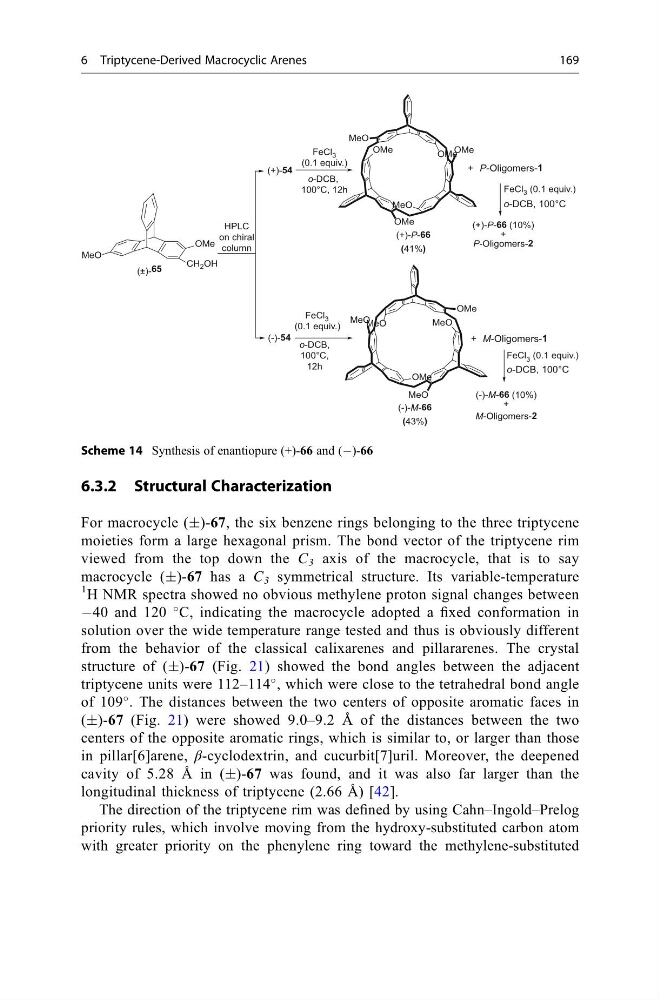
Scheme 14 Synthesis of enantiopure (+)-66 and (À)-66
6 Triptycene-Derived Macrocyclic Arenes
169
For macrocycle (Æ)-67, the six benzene rings belonging to the three triptycene
moieties form a large hexagonal prism. The bond vector of the triptycene rim
viewed from the top down the C 3 axis of the macrocycle, that is to say
macrocycle (Æ)-67 has a C 3 symmetrical structure. Its variable-temperature
1 H NMR spectra showed no obvious methylene proton signal changes between
À40 and 120
C, indicating the macrocycle adopted a fixed conformation in
solution over the wide temperature range tested and thus is obviously different
from the behavior of the classical calixarenes and pillararenes. The crystal
structure of (Æ)-67 (Fig. 21) showed the bond angles between the adjacent
triptycene units were 112–114
, which were close to the tetrahedral bond angle
of 109
. The distances between the two centers of opposite aromatic faces in
(Æ)-67 (Fig. 21) were showed 9.0–9.2 Å of the distances between the two
centers of the opposite aromatic rings, which is similar to, or larger than those
in pillar[6]arene, β-cyclodextrin, and cucurbit[7]uril. Moreover, the deepened
cavity of 5.28 Å in (Æ)-67 was found, and it was also far larger than the
longitudinal thickness of triptycene (2.66 Å) [42].
The direction of the triptycene rim was defined by using Cahn–Ingold–Prelog
priority rules, which involve moving from the hydroxy-substituted carbon atom
with greater priority on the phenylene ring toward the methylene-substituted
MeO
OMe
MeO
OMe
MeO
OMe
OMe
MeO
CH 2 OH
(±)- 65
HPLC
on chiral
column
(+)-54
(-)-54
o-DCB,
100°C, 12h
(+)-P-66
(41%)
(-)-M-66
(43%)
FeCl 3
(0.1 equiv.)
+ M-Oligomers-1
(-)-M-66 (10%)
+
M-Oligomers-2
FeCl 3 (0.1 equiv.)
o-DCB, 100°C
MeO
OMe
OMe
OMe
MeO
MeO
o-DCB,
100°C,
12h
+ P-Oligomers-1
FeCl 3 (0.1 equiv.)
(+)-P-66 (10%)
+
P-Oligomers-2
o-DCB, 100°C
FeCl 3
(0.1 equiv.)
Scheme 14 Synthesis of enantiopure (+)-66 and (À)-66
6 Triptycene-Derived Macrocyclic Arenes
169