

and 40a–d in moderate yields by one-pot reactions of 2,7-dihydroxytriptycene 1b
with 1,3-bisbromomethylbenzene derivatives in the presence of Cs 2 CO 3 and further
obtained two pairs of “basket-like” triptycene-derived homooxacalixarene analogues
41a–b and 42a–b (Fig. 4).
We [29] also designed and synthesized several pairs of novel triptycene-derived
N(H)-bridged azacalixarenes 44–47 by two synthetic routes with
2,7-diaminotriptycene 1c and its analogue 43 containing an o-dimethoxybenzene
subunit as materials. As shown in Scheme 9, the one-pot reaction of 2,7diaminotriptycenes 1c or 43 with 1,5-difluoro-2,4-dinitrobenzene 34b in dry THF
in the presence of DIPEA gave triptycene-derived N(H)-bridged azacalixarenes
44–45 in the yields of 16–27%. By the same reaction conditions, triptycene-derived
N(H)-bridged azacalixarenes 46–47 were obtained by the reaction of 1c or 43 with
1b
OH
OH
Cs 2 CO 3
DMSO, 120 °C
O
O
O
O
N
Cl
Cl
N
Cl
Cl
36a, 25%
+
35a, 19%
O
O
O
O
N
Cl
Cl
N
Cl
Cl
O
O
O
O
O 2 N
NO 2
NO 2
O 2 N
35b, 22%
K 2 CO 3
DMSO, r.t.
+
O
O
O
O
O 2 N
NO 2
NO 2
O 2 N
K 2 CO 3
acetone, r.t.
O
O
O
O
N
N
N
N
N
N
O
O
O
O
N
N
N
N
N
N
Cl
Cl
Cl
Cl
DIPEA
acetone, r.t.
DIPEA, THF, 0 °C
35c (12 %) + 36c (15 %)
O
O
N
N
N
N
N
N
Cl
Cl
Cl
Cl
N
Cl
Cl
Cl
Cl
34a
36b, 15%
O 2 N
NO 2
F
F
34b
+
35c, 12%
N
N
N
Cl
Cl
34c
36c, 18%
Cl
N
N
N
Cl
Cl
34c, 2 equiv.
Cl
37a, 58%
1b
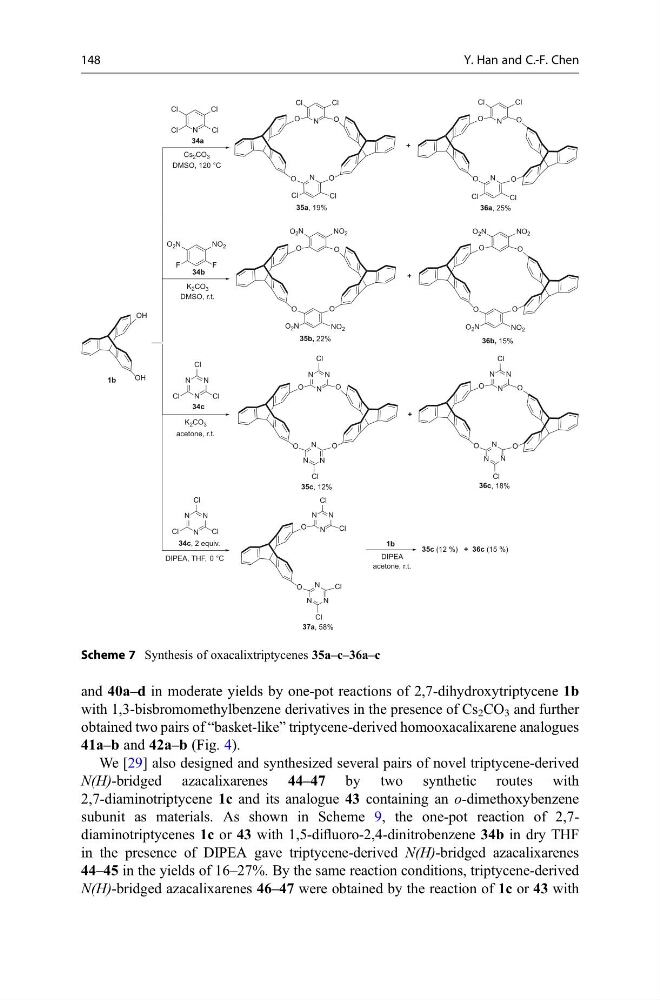
Scheme 7 Synthesis of oxacalixtriptycenes 35a–c–36a–c
148
Y. Han and C.-F. Chen
with 1,3-bisbromomethylbenzene derivatives in the presence of Cs 2 CO 3 and further
obtained two pairs of “basket-like” triptycene-derived homooxacalixarene analogues
41a–b and 42a–b (Fig. 4).
We [29] also designed and synthesized several pairs of novel triptycene-derived
N(H)-bridged azacalixarenes 44–47 by two synthetic routes with
2,7-diaminotriptycene 1c and its analogue 43 containing an o-dimethoxybenzene
subunit as materials. As shown in Scheme 9, the one-pot reaction of 2,7diaminotriptycenes 1c or 43 with 1,5-difluoro-2,4-dinitrobenzene 34b in dry THF
in the presence of DIPEA gave triptycene-derived N(H)-bridged azacalixarenes
44–45 in the yields of 16–27%. By the same reaction conditions, triptycene-derived
N(H)-bridged azacalixarenes 46–47 were obtained by the reaction of 1c or 43 with
1b
OH
OH
Cs 2 CO 3
DMSO, 120 °C
O
O
O
O
N
Cl
Cl
N
Cl
Cl
36a, 25%
+
35a, 19%
O
O
O
O
N
Cl
Cl
N
Cl
Cl
O
O
O
O
O 2 N
NO 2
NO 2
O 2 N
35b, 22%
K 2 CO 3
DMSO, r.t.
+
O
O
O
O
O 2 N
NO 2
NO 2
O 2 N
K 2 CO 3
acetone, r.t.
O
O
O
O
N
N
N
N
N
N
O
O
O
O
N
N
N
N
N
N
Cl
Cl
Cl
Cl
DIPEA
acetone, r.t.
DIPEA, THF, 0 °C
35c (12 %) + 36c (15 %)
O
O
N
N
N
N
N
N
Cl
Cl
Cl
Cl
N
Cl
Cl
Cl
Cl
34a
36b, 15%
O 2 N
NO 2
F
F
34b
+
35c, 12%
N
N
N
Cl
Cl
34c
36c, 18%
Cl
N
N
N
Cl
Cl
34c, 2 equiv.
Cl
37a, 58%
1b
Scheme 7 Synthesis of oxacalixtriptycenes 35a–c–36a–c
148
Y. Han and C.-F. Chen