

Mg
2+ , and Pb
2+ ), suggesting that the system could be used as an excellent selectivity
sensor for K
+ ion (Fig. 20a). Tang et al. [60] constructed an AIE-active supramolecular polymer via the interactions of DB24C8-modified TPE derivatives with
dibenzylammonium-containing TPE derivatives (Fig. 20b). Upon acidification or
basification of the system, the fluorescence of linear supramolecular polymers could
be reversibly switched on and off, owing to the self-assembly and disassembly of the
system.
Yin and coworkers [61] designed a novel fluorescent supramolecular polymer for
Pd
2+ detection (Fig. 21a). The supramolecular polymer was fabricated via the hostguest interactions with dibenzo[24]crown-8-contained TPE and a bis-ammonium
salt, which exhibited much higher fluorescence emission than its monomer due to the
restriction of the intramolecular rotation of the TPE unit. Moreover, the 1,2,3triazole moiety could form metal-ligand complex with Pd
2+ ion, resulting in significant loss of the fluorescence intensity of supramolecular polymer, attributed to an
energy transfer process from the TPE units to Pd
2+ ions. Thus, the results suggest
that the supramolecular polymer can be used to detect Pd
2+ ions. Subsequently, they
constructed a hyperbranched fluorescent supramolecular polymer based on metalligand coordinating interactions and host-guest interactions (Fig. 21d) [62]. Two
functional monomers were designed and prepared by combining DB24C8 and
terpyridine with an alkyl chain and modifying a TPE unit with four
dibenzylammonium salts (DBAS). Based on the host-guest interactions of DB24C8
with DBAS and the metal-ligand coordinating interactions of terpyridine with Zn
2+
,
the hyperbranched supramolecular polymer was obtained. Benefiting from AIE effect
of TPE, the system displayed strong fluorescent emission. In addition, the supramolecular polymer was able to respond to various stimuli, including temperature,
deprotonation/protonation of the ammonium units, the addition/removal of K
+ or
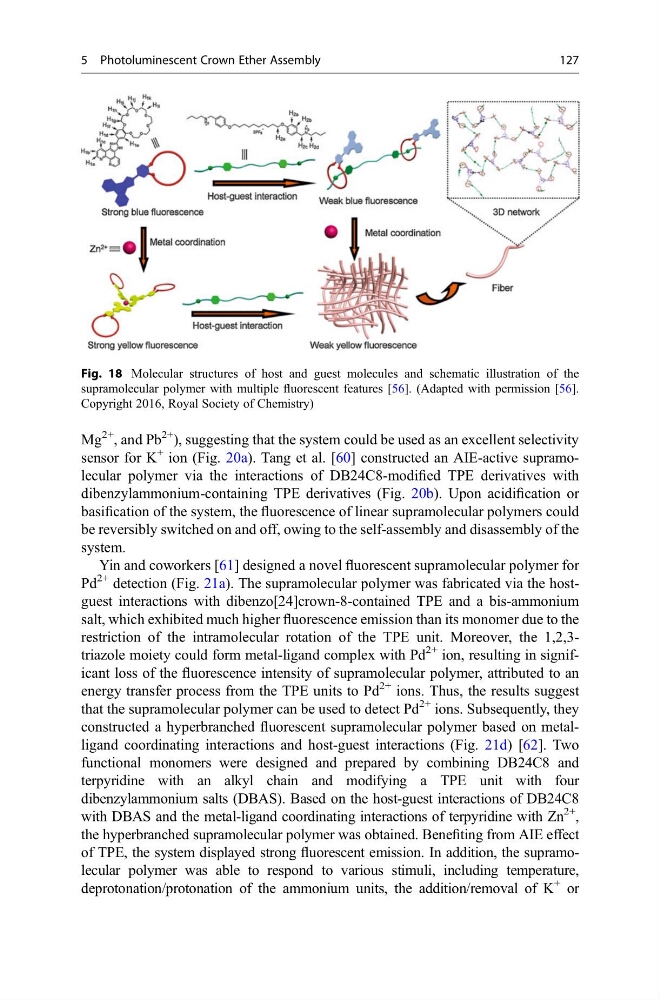
Fig. 18 Molecular structures of host and guest molecules and schematic illustration of the
supramolecular polymer with multiple fluorescent features [56]. (Adapted with permission [56].
Copyright 2016, Royal Society of Chemistry)
5 Photoluminescent Crown Ether Assembly
127
2+ , and Pb
2+ ), suggesting that the system could be used as an excellent selectivity
sensor for K
+ ion (Fig. 20a). Tang et al. [60] constructed an AIE-active supramolecular polymer via the interactions of DB24C8-modified TPE derivatives with
dibenzylammonium-containing TPE derivatives (Fig. 20b). Upon acidification or
basification of the system, the fluorescence of linear supramolecular polymers could
be reversibly switched on and off, owing to the self-assembly and disassembly of the
system.
Yin and coworkers [61] designed a novel fluorescent supramolecular polymer for
Pd
2+ detection (Fig. 21a). The supramolecular polymer was fabricated via the hostguest interactions with dibenzo[24]crown-8-contained TPE and a bis-ammonium
salt, which exhibited much higher fluorescence emission than its monomer due to the
restriction of the intramolecular rotation of the TPE unit. Moreover, the 1,2,3triazole moiety could form metal-ligand complex with Pd
2+ ion, resulting in significant loss of the fluorescence intensity of supramolecular polymer, attributed to an
energy transfer process from the TPE units to Pd
2+ ions. Thus, the results suggest
that the supramolecular polymer can be used to detect Pd
2+ ions. Subsequently, they
constructed a hyperbranched fluorescent supramolecular polymer based on metalligand coordinating interactions and host-guest interactions (Fig. 21d) [62]. Two
functional monomers were designed and prepared by combining DB24C8 and
terpyridine with an alkyl chain and modifying a TPE unit with four
dibenzylammonium salts (DBAS). Based on the host-guest interactions of DB24C8
with DBAS and the metal-ligand coordinating interactions of terpyridine with Zn
2+
,
the hyperbranched supramolecular polymer was obtained. Benefiting from AIE effect
of TPE, the system displayed strong fluorescent emission. In addition, the supramolecular polymer was able to respond to various stimuli, including temperature,
deprotonation/protonation of the ammonium units, the addition/removal of K
+ or
Fig. 18 Molecular structures of host and guest molecules and schematic illustration of the
supramolecular polymer with multiple fluorescent features [56]. (Adapted with permission [56].
Copyright 2016, Royal Society of Chemistry)
5 Photoluminescent Crown Ether Assembly
127