

4.7
Conclusion
In conclusion, we discussed the development process of the designation and construction of mechanically self-locked molecules. These complicated structures at
molecular level have always been a spotlight because of their potential applications
in the field of molecular motion for bionic movement (muscle, etc.). The main
driving forces for the formation of such kind of structures are dynamic noncovalent
binding (hydrogen bonding, π-π interaction, ionic interactions, host-guest interaction, et al.). While how to exploit different kinds of noncovalent interactions
more effectively to realize simpler synthesis of mechanically self-locked molecules
is still a key issue that’s worth paying close attention to. Although various of
structures (pseudo[1]rotaxane, pseudo[1]catenane, figures-of-eight, pretzelane, and
double-lasso molecules, et al.) have been constructed, novel architectures are
still needed to be created for more subtle and hierarchical motions. At the same
time, along with the discovery of new macrocycles and respective guest molecules,
new building units are still waiting to be investigated for mechanically self-locked
architectures. With the fast improvement of this basic study on molecular level, it is
hopeful that supramolecular mechanically self-locked molecules will play an irreplaceable role in the future.
References
1. Corey EJ, Cheng XM (1989) The logic of chemical synthesis. Wiley, New York
2. Nicolaou KC, Vourloumis D, Winssinger N, Baran PS (2000) The art and science of total
synthesis at the dawn of the twenty-first century. Angew Chem Int Ed 39:44–122
3. Eaton PE, Cole TW (1964) Cubane. J Am Chem Soc 86:3157–3158
4. Wasserman E (1960) The preparation of interlocking rings: a catenane1. J Am Chem Soc
82:4433–4434
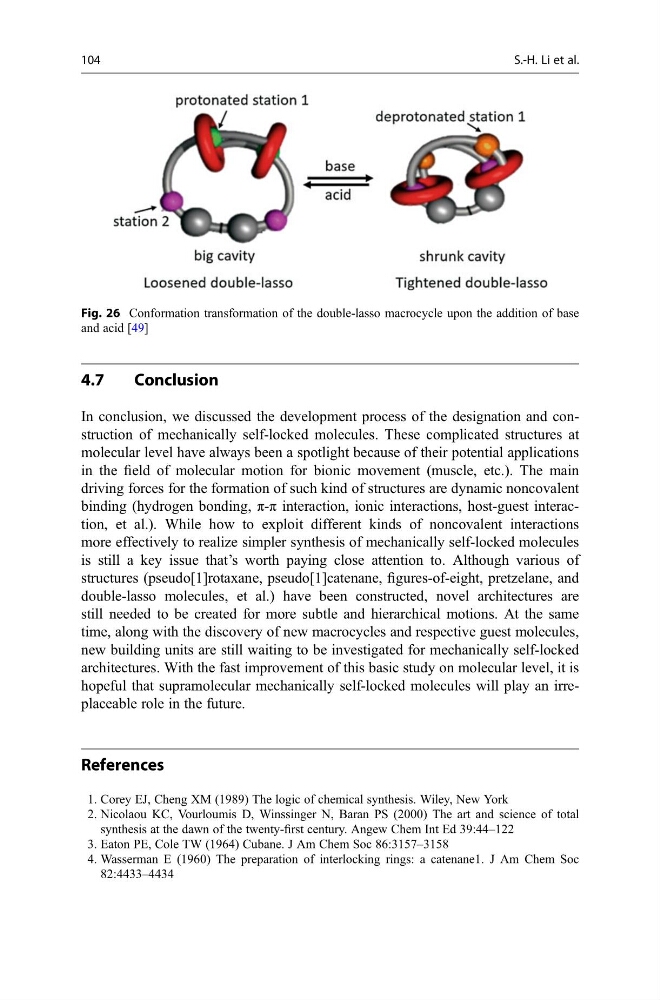
Fig. 26 Conformation transformation of the double-lasso macrocycle upon the addition of base
and acid [49]
104
S.-H. Li et al.
Conclusion
In conclusion, we discussed the development process of the designation and construction of mechanically self-locked molecules. These complicated structures at
molecular level have always been a spotlight because of their potential applications
in the field of molecular motion for bionic movement (muscle, etc.). The main
driving forces for the formation of such kind of structures are dynamic noncovalent
binding (hydrogen bonding, π-π interaction, ionic interactions, host-guest interaction, et al.). While how to exploit different kinds of noncovalent interactions
more effectively to realize simpler synthesis of mechanically self-locked molecules
is still a key issue that’s worth paying close attention to. Although various of
structures (pseudo[1]rotaxane, pseudo[1]catenane, figures-of-eight, pretzelane, and
double-lasso molecules, et al.) have been constructed, novel architectures are
still needed to be created for more subtle and hierarchical motions. At the same
time, along with the discovery of new macrocycles and respective guest molecules,
new building units are still waiting to be investigated for mechanically self-locked
architectures. With the fast improvement of this basic study on molecular level, it is
hopeful that supramolecular mechanically self-locked molecules will play an irreplaceable role in the future.
References
1. Corey EJ, Cheng XM (1989) The logic of chemical synthesis. Wiley, New York
2. Nicolaou KC, Vourloumis D, Winssinger N, Baran PS (2000) The art and science of total
synthesis at the dawn of the twenty-first century. Angew Chem Int Ed 39:44–122
3. Eaton PE, Cole TW (1964) Cubane. J Am Chem Soc 86:3157–3158
4. Wasserman E (1960) The preparation of interlocking rings: a catenane1. J Am Chem Soc
82:4433–4434
Fig. 26 Conformation transformation of the double-lasso macrocycle upon the addition of base
and acid [49]
104
S.-H. Li et al.