

85
and female respondents agreed on the criteria used. Based on the results in Fig. 14,
the majority of respondents still noted that good yields and tolerance of variety to
stress and advice from the universities were important considerations when making
decisions on whether to change cropping patterns as a coping mechanism to
ECV. Other factors considered in making decisions related to cropping patterns
included availability of water (65.4%), market demand (70%), and suitability of soil
and land (60%) (see Fig. 14).
Factors to Consider when Adopting Technologies
As far as the respondents were concerned, being a group member increased the
chances for one to access new technologies. Group membership increased one’s
chances to network with other farmers. According to Mignouna et al. (2011),
belonging to a social group improves social capital, which involves permitting trust,
as well as idea and information exchange. Farmers within a social group benefit
from peer learning and use of a new technology. Uaiene et al. (2009) argued that
social network effects are key for individual decisions, especially in the context of
agricultural innovations, as these enable farmers to share information and learn
from each other. Examining the effect of community-based organization in uptake
of corm-paired banana technology in Uganda, Katungi and Akankwasa (2010)
observed that farmers who were members of community-based organizations were
more likely to engage in social learning about the technology, hence increasing their
likelihood to adopt the technologies. However, even though many authors have
reported a positive association between social group and technology adoption,
Percentage
Factors for consideraƟon
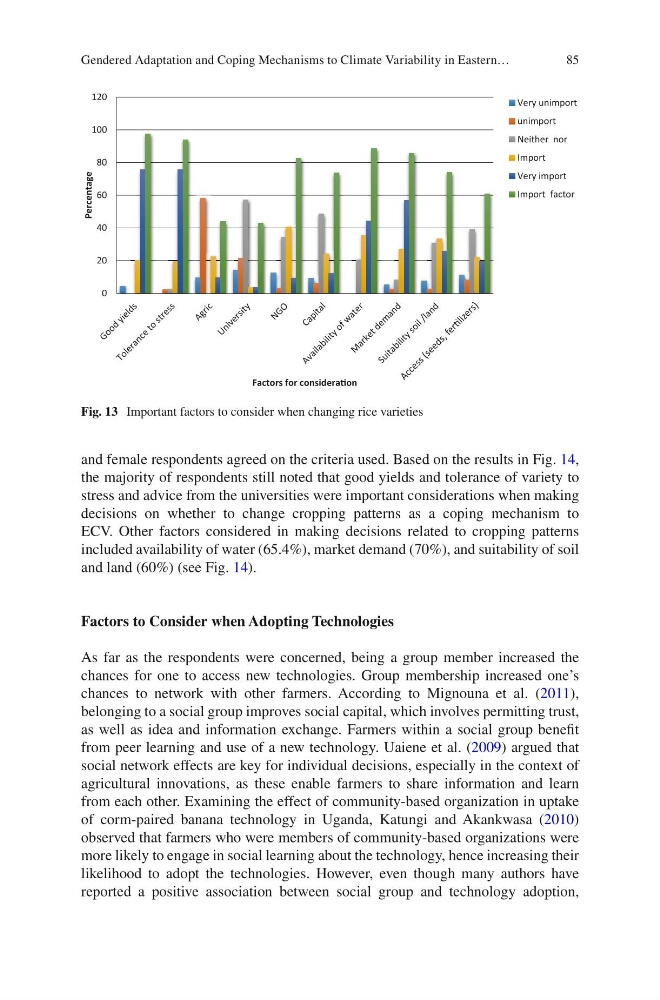
Fig. 13 Important factors to consider when changing rice varieties
Gendered Adaptation and Coping Mechanisms to Climate Variability in Eastern…
and female respondents agreed on the criteria used. Based on the results in Fig. 14,
the majority of respondents still noted that good yields and tolerance of variety to
stress and advice from the universities were important considerations when making
decisions on whether to change cropping patterns as a coping mechanism to
ECV. Other factors considered in making decisions related to cropping patterns
included availability of water (65.4%), market demand (70%), and suitability of soil
and land (60%) (see Fig. 14).
Factors to Consider when Adopting Technologies
As far as the respondents were concerned, being a group member increased the
chances for one to access new technologies. Group membership increased one’s
chances to network with other farmers. According to Mignouna et al. (2011),
belonging to a social group improves social capital, which involves permitting trust,
as well as idea and information exchange. Farmers within a social group benefit
from peer learning and use of a new technology. Uaiene et al. (2009) argued that
social network effects are key for individual decisions, especially in the context of
agricultural innovations, as these enable farmers to share information and learn
from each other. Examining the effect of community-based organization in uptake
of corm-paired banana technology in Uganda, Katungi and Akankwasa (2010)
observed that farmers who were members of community-based organizations were
more likely to engage in social learning about the technology, hence increasing their
likelihood to adopt the technologies. However, even though many authors have
reported a positive association between social group and technology adoption,
Percentage
Factors for consideraƟon
Fig. 13 Important factors to consider when changing rice varieties
Gendered Adaptation and Coping Mechanisms to Climate Variability in Eastern…