

524
they are concentrated in EPAs that are close to urban areas. This makes it very challenging for female farmers to access extension services. In addition, the means of
transport for extension workers are bicycles and motorcycles, and culturally, women
in rural areas do not ordinarily ride motorcycles. But even with a motorcycle, it is
still very challenging to access farmers in very remote areas because of the poor
road network and infrastructure. While male extension workers may overcome
some of these challenges, female extension workers run away from such challenges,
and this further limits the options of female farmers in accessing extension services.
This is why lead farmers play a significant role in providing extension services in
remote areas. Unfortunately, they are few female lead farmers, and most of them
have inadequate capacity to train farmers on new technologies. Providing training
to lead farmers is key to improving extension services.
4 Conclusion and Recommendation
Female farmers have low adaptive capacity that translates into low adoption of technologies. Male farmers adopt technologies that are profitable, marketable and have
short-term benefits, while female farmers adopt technologies that require less input
and are cost effective and labour saving. Although lack of input was listed as the
major constraint for adoption of technologies for both male and female farmers,
there were additional challenges that are more pronounced among female farmers.
These include: limited access to land, high illiteracy levels and low access to facilities that help in accessing information such as radio and cell phone. The results on
adoption of technologies and level of adaptive capacity were similar in patrilineal
and matrilineal societies. This implies that although women have land ownership
rights through customary laws, land user rights and decision-making on technologies and inputs are influenced by gender and adaptive capacity. Overall, the level of
adaptive capacity plays an important role in the adoption of technologies. Households
that have a high capacity to adapt are likely to adopt many technologies, regardless
of whether they are female-headed or male-headed households.
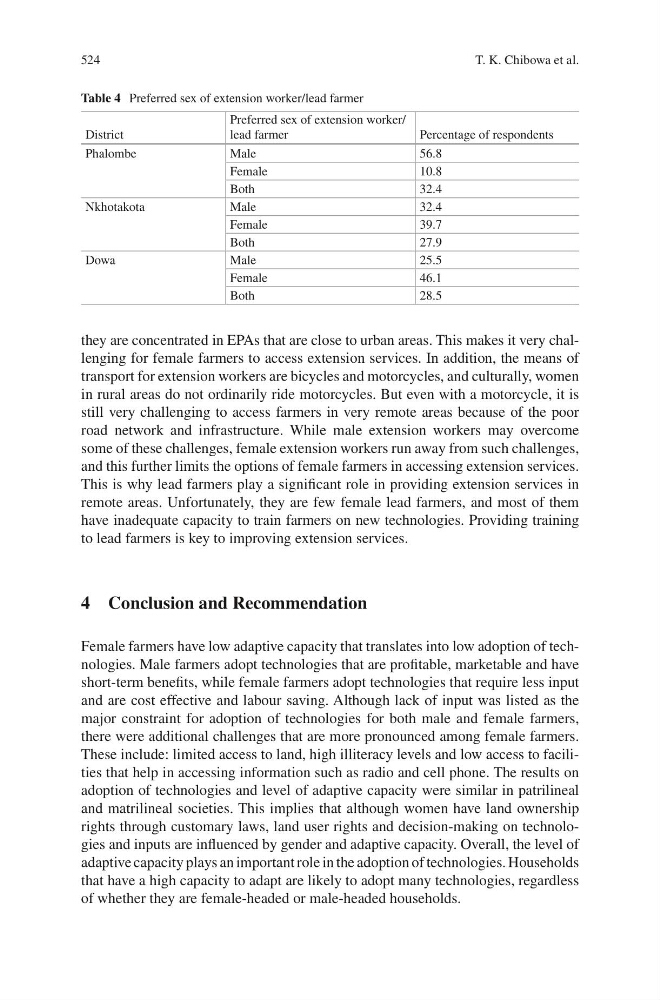
Table 4 Preferred sex of extension worker/lead farmer
District
Preferred sex of extension worker/
lead farmer
Percentage of respondents
Phalombe
Male
56.8
Female
10.8
Both
32.4
Nkhotakota
Male
32.4
Female
39.7
Both
27.9
Dowa
Male
25.5
Female
46.1
Both
28.5
T. K. Chibowa et al.
they are concentrated in EPAs that are close to urban areas. This makes it very challenging for female farmers to access extension services. In addition, the means of
transport for extension workers are bicycles and motorcycles, and culturally, women
in rural areas do not ordinarily ride motorcycles. But even with a motorcycle, it is
still very challenging to access farmers in very remote areas because of the poor
road network and infrastructure. While male extension workers may overcome
some of these challenges, female extension workers run away from such challenges,
and this further limits the options of female farmers in accessing extension services.
This is why lead farmers play a significant role in providing extension services in
remote areas. Unfortunately, they are few female lead farmers, and most of them
have inadequate capacity to train farmers on new technologies. Providing training
to lead farmers is key to improving extension services.
4 Conclusion and Recommendation
Female farmers have low adaptive capacity that translates into low adoption of technologies. Male farmers adopt technologies that are profitable, marketable and have
short-term benefits, while female farmers adopt technologies that require less input
and are cost effective and labour saving. Although lack of input was listed as the
major constraint for adoption of technologies for both male and female farmers,
there were additional challenges that are more pronounced among female farmers.
These include: limited access to land, high illiteracy levels and low access to facilities that help in accessing information such as radio and cell phone. The results on
adoption of technologies and level of adaptive capacity were similar in patrilineal
and matrilineal societies. This implies that although women have land ownership
rights through customary laws, land user rights and decision-making on technologies and inputs are influenced by gender and adaptive capacity. Overall, the level of
adaptive capacity plays an important role in the adoption of technologies. Households
that have a high capacity to adapt are likely to adopt many technologies, regardless
of whether they are female-headed or male-headed households.
Table 4 Preferred sex of extension worker/lead farmer
District
Preferred sex of extension worker/
lead farmer
Percentage of respondents
Phalombe
Male
56.8
Female
10.8
Both
32.4
Nkhotakota
Male
32.4
Female
39.7
Both
27.9
Dowa
Male
25.5
Female
46.1
Both
28.5
T. K. Chibowa et al.