

441
7 Effective Use of Oecophylla longinoda on Cashew Pests
The effective use of the African weaver ants in controlling pests requires a thorough
understanding of the biology, behaviour and habitat of O. longinoda. Weaver ants
live in colonies with clear division of roles and responsibilities among members of
castes. A colony is composed of one or more queens, males, large workers and small
workers (Van Mele and Cuc 2007). The insects reproduce by oviparity, whereby the
queen has the sole responsibility of laying eggs that are tended by small workers,
which nurse them through subsequent juvenile stages until adulthood when they are
capable of fending for themselves and play other roles in the colony (Crozier et al.
2009). The nursing workers also feed the queen. Large workers have roles of foraging and bringing food to the colony and also protecting, defending, maintaining,
constructing nests and expanding the colony (Crozier et al. 2009; Way 1954). Males
are rarely produced, usually to mate with newly produced queens when the queen
mother senses the need for producing daughter queens. Principally the queen is a
mother to all members of the colony; thus, she controls and sustains the colony.
Therefore, the intension to use O. longinoda for pest management must inevitably
ensure the presence of the queen.
African weaver ants are arboreal and aggressive (Van Mele and Cuc 2007). They
construct nests using tree leaves and use them as shelters. In each colony, the queen
would be accommodated in one nest, which is well constructed and always highly
protected (Abdulla et al. 2016; Nene et al. 2017). The protocol for locating O. longinoda queens prior to nest collection has been detailed by Nene et al. (2017).
Harvesting and subsequent introduction of O. longinoda colonies into new fields
requires correct mapping of each individual colony, identification of the colony
queen and harvesting the whole colony nests together with the queen and subsequent introduction into new fields. Details on the colony identification, mapping,
harvesting to introduction and managing of O. longinoda for sustained predation of
the cashew pests have been elaborated (Abdulla 2016).
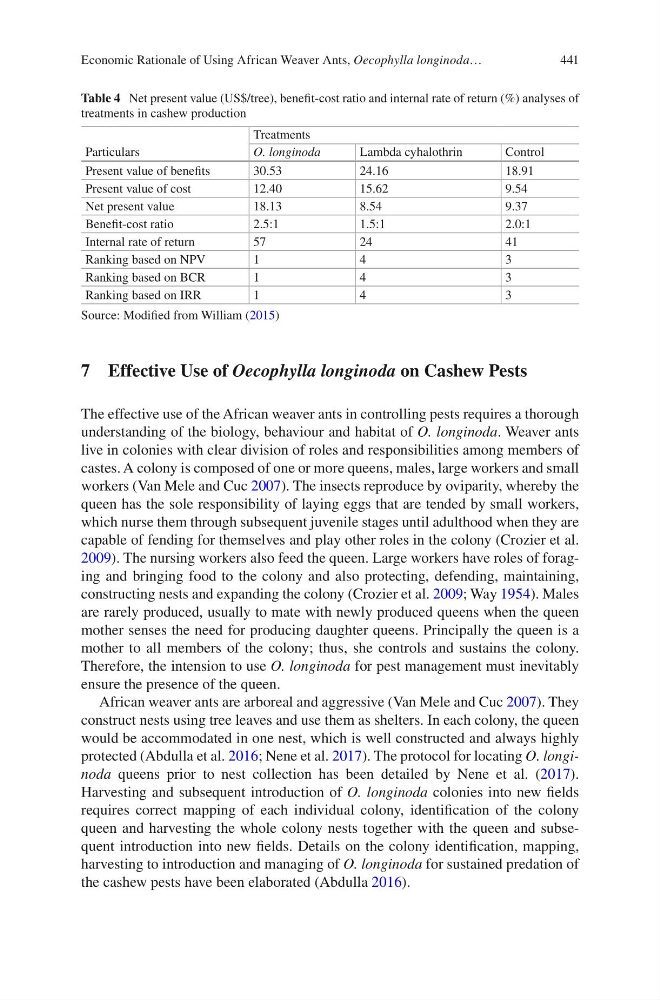
Table 4 Net present value (US$/tree), benefit-cost ratio and internal rate of return (%) analyses of
treatments in cashew production
Particulars
Treatments
O. longinoda
Lambda cyhalothrin
Control
Present value of benefits
30.53
24.16
18.91
Present value of cost
12.40
15.62
9.54
Net present value
18.13
8.54
9.37
Benefit-cost ratio
2.5:1
1.5:1
2.0:1
Internal rate of return
57
24
41
Ranking based on NPV
1
4
3
Ranking based on BCR
1
4
3
Ranking based on IRR
1
4
3
Source: Modified from William (2015)
Economic Rationale of Using African Weaver Ants, Oecophylla longinoda…
7 Effective Use of Oecophylla longinoda on Cashew Pests
The effective use of the African weaver ants in controlling pests requires a thorough
understanding of the biology, behaviour and habitat of O. longinoda. Weaver ants
live in colonies with clear division of roles and responsibilities among members of
castes. A colony is composed of one or more queens, males, large workers and small
workers (Van Mele and Cuc 2007). The insects reproduce by oviparity, whereby the
queen has the sole responsibility of laying eggs that are tended by small workers,
which nurse them through subsequent juvenile stages until adulthood when they are
capable of fending for themselves and play other roles in the colony (Crozier et al.
2009). The nursing workers also feed the queen. Large workers have roles of foraging and bringing food to the colony and also protecting, defending, maintaining,
constructing nests and expanding the colony (Crozier et al. 2009; Way 1954). Males
are rarely produced, usually to mate with newly produced queens when the queen
mother senses the need for producing daughter queens. Principally the queen is a
mother to all members of the colony; thus, she controls and sustains the colony.
Therefore, the intension to use O. longinoda for pest management must inevitably
ensure the presence of the queen.
African weaver ants are arboreal and aggressive (Van Mele and Cuc 2007). They
construct nests using tree leaves and use them as shelters. In each colony, the queen
would be accommodated in one nest, which is well constructed and always highly
protected (Abdulla et al. 2016; Nene et al. 2017). The protocol for locating O. longinoda queens prior to nest collection has been detailed by Nene et al. (2017).
Harvesting and subsequent introduction of O. longinoda colonies into new fields
requires correct mapping of each individual colony, identification of the colony
queen and harvesting the whole colony nests together with the queen and subsequent introduction into new fields. Details on the colony identification, mapping,
harvesting to introduction and managing of O. longinoda for sustained predation of
the cashew pests have been elaborated (Abdulla 2016).
Table 4 Net present value (US$/tree), benefit-cost ratio and internal rate of return (%) analyses of
treatments in cashew production
Particulars
Treatments
O. longinoda
Lambda cyhalothrin
Control
Present value of benefits
30.53
24.16
18.91
Present value of cost
12.40
15.62
9.54
Net present value
18.13
8.54
9.37
Benefit-cost ratio
2.5:1
1.5:1
2.0:1
Internal rate of return
57
24
41
Ranking based on NPV
1
4
3
Ranking based on BCR
1
4
3
Ranking based on IRR
1
4
3
Source: Modified from William (2015)
Economic Rationale of Using African Weaver Ants, Oecophylla longinoda…