

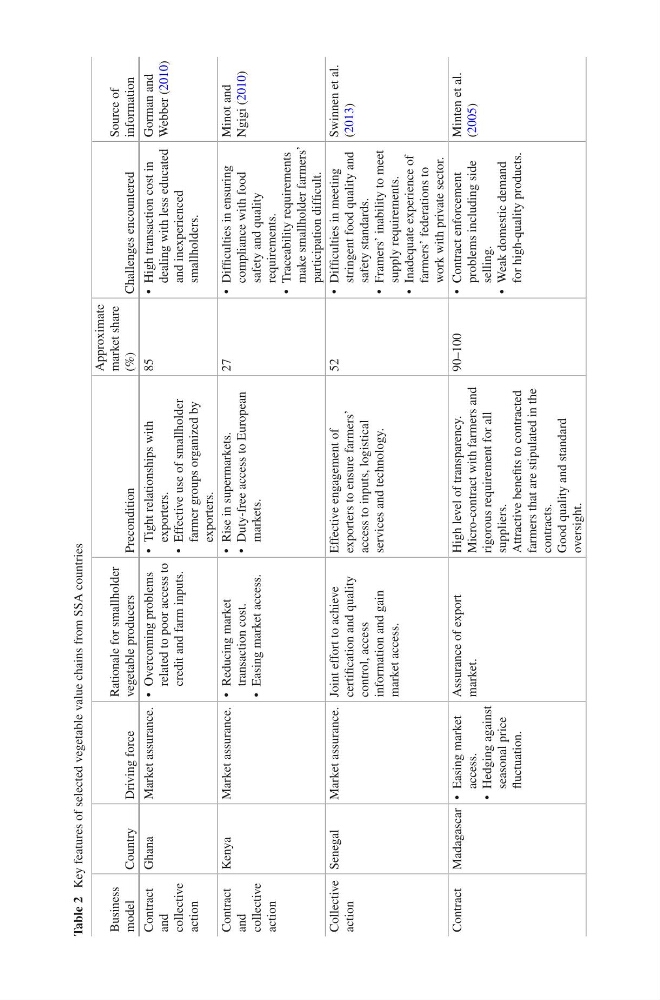
Table 2 Key features of selected vegetable value chains from SSA countries
Business
model
Country
Driving force
Rationale for smallholder
vegetable producers
Precondition
Approximate
market share
(%)
Challenges encountered
Source of
information
Contract
and
collective
action
Ghana
Market assurance. • Overcoming problems
related to poor access to
credit and farm inputs.
• Tight relationships with
exporters.
• Effective use of smallholder
farmer groups organized by
exporters.
85
• High transaction cost in
dealing with less educated
and inexperienced
smallholders.
Gorman and
Webber (2010)
Contract
and
collective
action
Kenya
Market assurance. • Reducing market
transaction cost.
• Easing market access.
• Rise in supermarkets.
• Duty-free access to European
markets.
27
• Difficulties in ensuring
compliance with food
safety and quality
requirements.
• Traceability requirements
make smallholder farmers’
participation difficult.
Minot and
Ngigi (2010)
Collective
action
Senegal
Market assurance. Joint effort to achieve
certification and quality
control, access
information and gain
market access.
Effective engagement of
exporters to ensure farmers’
access to inputs, logistical
services and technology.
52
• Difficulties in meeting
stringent food quality and
safety standards.
• Framers’ inability to meet
supply requirements.
• Inadequate experience of
farmers’ federations to
work with private sector.
Swinnen et al.
(2013)
Contract Madagascar • Easing market
access.
• Hedging against
seasonal price
fluctuation.
Assurance of export
market.
High level of transparency.
Micro-contract with farmers and
rigorous requirement for all
suppliers.
Attractive benefits to contracted
farmers that are stipulated in the
contracts.
Good quality and standard
oversight.
90–100
• Contract enforcement
problems including side
selling.
• Weak domestic demand
for high-quality products.
Minten et al.
(2005)
Business
model
Country
Driving force
Rationale for smallholder
vegetable producers
Precondition
Approximate
market share
(%)
Challenges encountered
Source of
information
Contract
and
collective
action
Ghana
Market assurance. • Overcoming problems
related to poor access to
credit and farm inputs.
• Tight relationships with
exporters.
• Effective use of smallholder
farmer groups organized by
exporters.
85
• High transaction cost in
dealing with less educated
and inexperienced
smallholders.
Gorman and
Webber (2010)
Contract
and
collective
action
Kenya
Market assurance. • Reducing market
transaction cost.
• Easing market access.
• Rise in supermarkets.
• Duty-free access to European
markets.
27
• Difficulties in ensuring
compliance with food
safety and quality
requirements.
• Traceability requirements
make smallholder farmers’
participation difficult.
Minot and
Ngigi (2010)
Collective
action
Senegal
Market assurance. Joint effort to achieve
certification and quality
control, access
information and gain
market access.
Effective engagement of
exporters to ensure farmers’
access to inputs, logistical
services and technology.
52
• Difficulties in meeting
stringent food quality and
safety standards.
• Framers’ inability to meet
supply requirements.
• Inadequate experience of
farmers’ federations to
work with private sector.
Swinnen et al.
(2013)
Contract Madagascar • Easing market
access.
• Hedging against
seasonal price
fluctuation.
Assurance of export
market.
High level of transparency.
Micro-contract with farmers and
rigorous requirement for all
suppliers.
Attractive benefits to contracted
farmers that are stipulated in the
contracts.
Good quality and standard
oversight.
90–100
• Contract enforcement
problems including side
selling.
• Weak domestic demand
for high-quality products.
Minten et al.
(2005)