

401
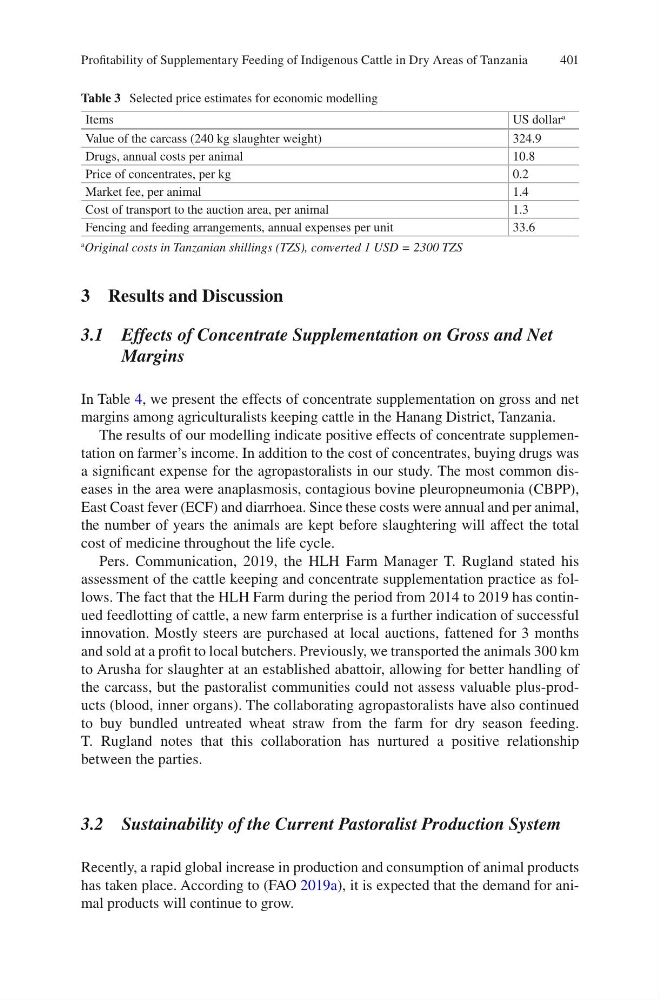
Table 3 Selected price estimates for economic modelling
Items
US dollar
a
Value of the carcass (240 kg slaughter weight)
324.9
Drugs, annual costs per animal
10.8
Price of concentrates, per kg
0.2
Market fee, per animal
1.4
Cost of transport to the auction area, per animal
1.3
Fencing and feeding arrangements, annual expenses per unit
33.6
a
Original costs in Tanzanian shillings (TZS), converted 1 USD = 2300 TZS
3 Results and Discussion
3.1 Effects of Concentrate Supplementation on Gross and Net
Margins
In Table 4, we present the effects of concentrate supplementation on gross and net
margins among agriculturalists keeping cattle in the Hanang District, Tanzania.
The results of our modelling indicate positive effects of concentrate supplementation on farmer’s income. In addition to the cost of concentrates, buying drugs was
a significant expense for the agropastoralists in our study. The most common diseases in the area were anaplasmosis, contagious bovine pleuropneumonia (CBPP),
East Coast fever (ECF) and diarrhoea. Since these costs were annual and per animal,
the number of years the animals are kept before slaughtering will affect the total
cost of medicine throughout the life cycle.
Pers. Communication, 2019, the HLH Farm Manager T. Rugland stated his
assessment of the cattle keeping and concentrate supplementation practice as follows. The fact that the HLH Farm during the period from 2014 to 2019 has continued feedlotting of cattle, a new farm enterprise is a further indication of successful
innovation. Mostly steers are purchased at local auctions, fattened for 3 months
and sold at a profit to local butchers. Previously, we transported the animals 300 km
to Arusha for slaughter at an established abattoir, allowing for better handling of
the carcass, but the pastoralist communities could not assess valuable plus-products (blood, inner organs). The collaborating agropastoralists have also continued
to buy bundled untreated wheat straw from the farm for dry season feeding.
T. Rugland notes that this collaboration has nurtured a positive relationship
between the parties.
3.2 Sustainability of the Current Pastoralist Production System
Recently, a rapid global increase in production and consumption of animal products
has taken place. According to (FAO 2019a), it is expected that the demand for animal products will continue to grow.
Profitability of Supplementary Feeding of Indigenous Cattle in Dry Areas of Tanzania
Table 3 Selected price estimates for economic modelling
Items
US dollar
a
Value of the carcass (240 kg slaughter weight)
324.9
Drugs, annual costs per animal
10.8
Price of concentrates, per kg
0.2
Market fee, per animal
1.4
Cost of transport to the auction area, per animal
1.3
Fencing and feeding arrangements, annual expenses per unit
33.6
a
Original costs in Tanzanian shillings (TZS), converted 1 USD = 2300 TZS
3 Results and Discussion
3.1 Effects of Concentrate Supplementation on Gross and Net
Margins
In Table 4, we present the effects of concentrate supplementation on gross and net
margins among agriculturalists keeping cattle in the Hanang District, Tanzania.
The results of our modelling indicate positive effects of concentrate supplementation on farmer’s income. In addition to the cost of concentrates, buying drugs was
a significant expense for the agropastoralists in our study. The most common diseases in the area were anaplasmosis, contagious bovine pleuropneumonia (CBPP),
East Coast fever (ECF) and diarrhoea. Since these costs were annual and per animal,
the number of years the animals are kept before slaughtering will affect the total
cost of medicine throughout the life cycle.
Pers. Communication, 2019, the HLH Farm Manager T. Rugland stated his
assessment of the cattle keeping and concentrate supplementation practice as follows. The fact that the HLH Farm during the period from 2014 to 2019 has continued feedlotting of cattle, a new farm enterprise is a further indication of successful
innovation. Mostly steers are purchased at local auctions, fattened for 3 months
and sold at a profit to local butchers. Previously, we transported the animals 300 km
to Arusha for slaughter at an established abattoir, allowing for better handling of
the carcass, but the pastoralist communities could not assess valuable plus-products (blood, inner organs). The collaborating agropastoralists have also continued
to buy bundled untreated wheat straw from the farm for dry season feeding.
T. Rugland notes that this collaboration has nurtured a positive relationship
between the parties.
3.2 Sustainability of the Current Pastoralist Production System
Recently, a rapid global increase in production and consumption of animal products
has taken place. According to (FAO 2019a), it is expected that the demand for animal products will continue to grow.
Profitability of Supplementary Feeding of Indigenous Cattle in Dry Areas of Tanzania