

137
with Duncan et al. (2013) who noted that mixed crop-livestock systems produce
50% of global cereals, 34% beef and 30% milk.
It is important to realise that when cereal crop residues are left on the field, it may
take them a season to mineralise and release nutrients to the plants. The process may
be enhanced by incorporation of inorganic fertiliser or through decomposition in
composting processes (Okalebo et al. 2006). However, this process may also take
place in the rumen of a cow at a lower cost. Some smallholder farmers who do not
keep livestock, especially those growing rice in Dihombo and Mkula villages, burn
most of the cereal crop residues to pave the way for the cultivation of the next crop
or to avoid free-range grazing livestock that graze on the residues and destroy their
farm soil structure. Introduction of appropriate rice straw feeding technologies
could enhance crop-livestock integration and sustain the environment better under
smallholder farmers than burning the straw.
3.2 The Chemical Composition of the Maize Stover
from Different Demonstration Sites
The chemical composition of the maize stover from different demonstration sites is
shown in Table 6. Generally at Ibumila village, there was no significant difference
(P > 0.5) between FP and YSS. At Matiganjola village, however, significant
(P < 0.05) improvement of N content in maize stover due to YSS treatment was
observed in 2012 and 2013, whilst that of Ca was observed in 2013 and 2014 and
Cu and Zn contents were significantly depressed by YSS in 2014. In 2012 at Welela
village, YSS improved P and depressed Zn and in 2013 depressed N, Cu and Zn
contents in maize stover. Nitrogen content in the maize stover was improved in 2014
at Kichiwa village, whilst at the same village P content was improved in 2012 and
2013 and Cu and Zn contents were depressed in 2014. Regardless of years, K, Mg
and S contents were improved and Fe, Mn and Mo contents were depressed by YSS
in Welela village (Figs. 1 and 2). The depression of N content in Welela village and
generally micronutrient contents in YSS treatment could be due to the soils of
Welela that had some complications with fertiliser applications. Soil samples of the
demonstration sites analysed before the study showed the lowest soil pH levels (4.1)
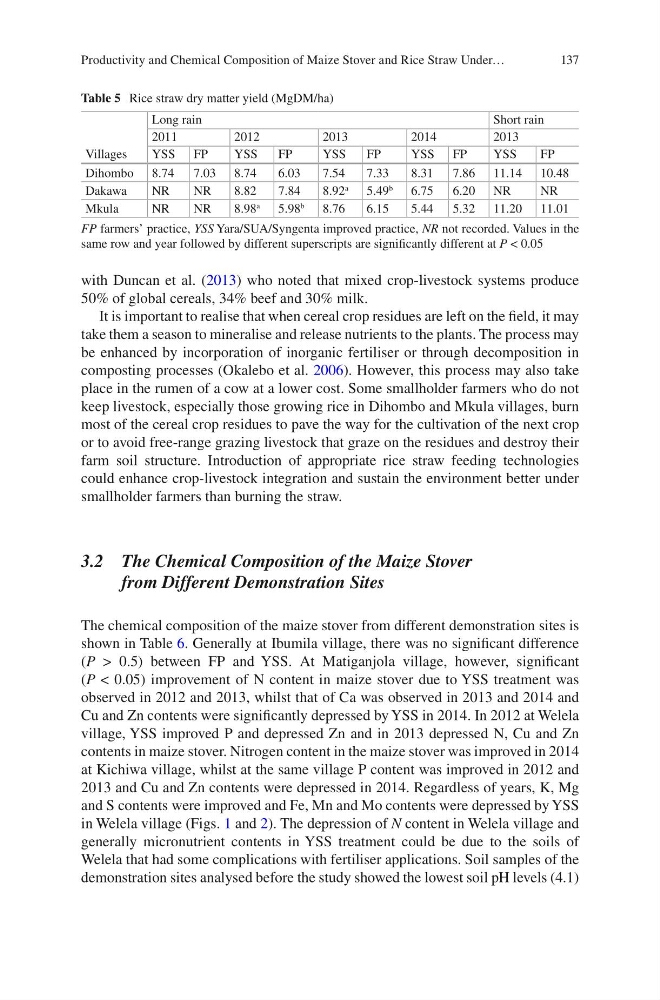
Table 5 Rice straw dry matter yield (MgDM/ha)
Villages
Long rain
Short rain
2011
2012
2013
2014
2013
YSS FP
YSS
FP
YSS
FP
YSS FP
YSS
FP
Dihombo 8.74
7.03 8.74
6.03
7.54
7.33
8.31
7.86 11.14 10.48
Dakawa
NR
NR
8.82
7.84
8.92
a
5.49
b
6.75
6.20 NR
NR
Mkula
NR
NR
8.98
a
5.98
b
8.76
6.15
5.44
5.32 11.20 11.01
FP farmers’ practice, YSS Yara/SUA/Syngenta improved practice, NR not recorded. Values in the
same row and year followed by different superscripts are significantly different at P < 0.05
Productivity and Chemical Composition of Maize Stover and Rice Straw Under…
with Duncan et al. (2013) who noted that mixed crop-livestock systems produce
50% of global cereals, 34% beef and 30% milk.
It is important to realise that when cereal crop residues are left on the field, it may
take them a season to mineralise and release nutrients to the plants. The process may
be enhanced by incorporation of inorganic fertiliser or through decomposition in
composting processes (Okalebo et al. 2006). However, this process may also take
place in the rumen of a cow at a lower cost. Some smallholder farmers who do not
keep livestock, especially those growing rice in Dihombo and Mkula villages, burn
most of the cereal crop residues to pave the way for the cultivation of the next crop
or to avoid free-range grazing livestock that graze on the residues and destroy their
farm soil structure. Introduction of appropriate rice straw feeding technologies
could enhance crop-livestock integration and sustain the environment better under
smallholder farmers than burning the straw.
3.2 The Chemical Composition of the Maize Stover
from Different Demonstration Sites
The chemical composition of the maize stover from different demonstration sites is
shown in Table 6. Generally at Ibumila village, there was no significant difference
(P > 0.5) between FP and YSS. At Matiganjola village, however, significant
(P < 0.05) improvement of N content in maize stover due to YSS treatment was
observed in 2012 and 2013, whilst that of Ca was observed in 2013 and 2014 and
Cu and Zn contents were significantly depressed by YSS in 2014. In 2012 at Welela
village, YSS improved P and depressed Zn and in 2013 depressed N, Cu and Zn
contents in maize stover. Nitrogen content in the maize stover was improved in 2014
at Kichiwa village, whilst at the same village P content was improved in 2012 and
2013 and Cu and Zn contents were depressed in 2014. Regardless of years, K, Mg
and S contents were improved and Fe, Mn and Mo contents were depressed by YSS
in Welela village (Figs. 1 and 2). The depression of N content in Welela village and
generally micronutrient contents in YSS treatment could be due to the soils of
Welela that had some complications with fertiliser applications. Soil samples of the
demonstration sites analysed before the study showed the lowest soil pH levels (4.1)
Table 5 Rice straw dry matter yield (MgDM/ha)
Villages
Long rain
Short rain
2011
2012
2013
2014
2013
YSS FP
YSS
FP
YSS
FP
YSS FP
YSS
FP
Dihombo 8.74
7.03 8.74
6.03
7.54
7.33
8.31
7.86 11.14 10.48
Dakawa
NR
NR
8.82
7.84
8.92
a
5.49
b
6.75
6.20 NR
NR
Mkula
NR
NR
8.98
a
5.98
b
8.76
6.15
5.44
5.32 11.20 11.01
FP farmers’ practice, YSS Yara/SUA/Syngenta improved practice, NR not recorded. Values in the
same row and year followed by different superscripts are significantly different at P < 0.05
Productivity and Chemical Composition of Maize Stover and Rice Straw Under…